
















EthnoGuessr














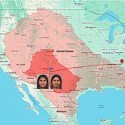
What are you actually reading when two smooth composite faces are the only information you get? In EthnoGuessr, each round hands you a male average and a female average for one ethnic group and asks you to drop a pin on the world map where that group comes from, historically. The scoring rewards closeness, so a confident guess in the right region beats a lucky hit in the wrong one. The sections below explain how a round works and where players get tripped up.
Reading Male and Female Facial Averages in EthnoGuessr
The faces on screen are Facial Averages, composite images built from anthropological data rather than photos of single people. Every round shows two of them, one male and one female, and the pairing matters. When two groups look alike, the second face is often what separates them. Some daily sets also include a group where one sex’s average is far easier to recognize than the other, so ignoring either image costs you points.
After you lock in a pin, the game reveals the group’s name along with some background information. That reveal is the moment players remember, because you see exactly how far your guess landed from the primary map region. Early in a daily set, the reveal teaches more than the guess itself.
Beginners tend to lock onto the face that feels more familiar and ignore the other one. Comparing both before placing a pin is the simplest habit that improves scores.
Historical Origin Versus Where People Live Today
The prompt asks where the ethnic group originates from, historically, and that wording changes everything. You are not placing people where they live now, but where the group traces back to. Players coming from other map-pinning games often drop their pin on a modern population center and lose points right away.
A good habit is to think in regions first and points second. Decide which part of the world the group belongs to, then aim for the middle of that region instead of the nearest coastline. Geography veterans usually pick this up quickly, but they also tend to overthink borders that the scoring does not care about.
A separate Countries mode exists for players who prefer modern nations over historical groups. It uses different data and rewards a different kind of knowledge, so skills from one mode do not always transfer cleanly to the other.
How Distance Scoring Shapes Your Strategy
Points are proportional to how close your pin lands to the primary map region, so every round is a trade between confidence and safety. A guess that is slightly off still earns something, while a wild swing across the map earns almost nothing. That makes the game forgiving to careful players and punishing to gamblers.
- When the region is clear, place the pin near its center rather than at an edge.
- When two groups look similar, use the male and female pair to rule one of them out.
- When nothing stands out, a pin in the middle of the most likely continent beats a random corner.
Advanced players also practice meta-guessing, which means spotting visual artifacts in the composite images that have nothing to do with human biology. It can raise a score, but some players feel it goes against the educational spirit of the game.
The Daily Set of Ten and the Leaderboard Race
Every day brings a new set of ten groups, and the Classic Daily mode is what most regulars play. Because everyone faces the same ten, comparing results with friends is easy, and the conversation after a round usually centers on the one group nobody placed correctly.
The global Leaderboard ranks players by accuracy and speed, which adds pressure to a game that otherwise rewards slow, careful thinking. Players who check the leaderboard before their own round tend to rush, and rushed guesses are exactly the ones that land in the wrong hemisphere.
A Challenge mode pushes completionists further by asking them to cover every major group the game recognizes. Daily-routine players mostly skip it, but it is where the dataset’s real breadth shows.
Debates Around Pattern Recognition and Education
The most common debate is whether EthnoGuessr teaches anthropology or only trains memory. Some players argue that after a few weeks you are recognizing image patterns, not learning anything about people or history. Others point to the reveal screen and its background information as the educational part.
A second concern is that a composite average flattens variation inside a group. A Facial Average describes a statistical picture, not any individual, and treating it as a rule for judging real people is a misuse the game does not support. Anthropology students tend to enjoy the dataset while being the first to point out these limits.
A third argument is about categories themselves. Ethnic groups do not have clean borders on a map, and the scoring, which uses one primary map region per group, simplifies a messier picture. That simplification is the price of making a scored game out of the subject.
Questions Players Ask About EthnoGuessr
- How many groups do you get each day? The Classic Daily mode gives a new set of ten groups every day. Each round shows a male and a female Facial Average, and you place one pin on the map before the reveal shows the group’s name.
- Should you guess where the group lives now? No, the game asks where the group originates from historically. Your score depends on how close the pin lands to the primary map region, so thinking in historical regions is what works.
- Is meta-guessing allowed? Nothing stops you from using image artifacts in the composite faces as hints, and some players do exactly that. Others consider it against the educational idea behind the reveal screen, so the community is split on whether it counts as skill.
EthnoGuessr rewards players who treat each pair of Facial Averages as a clue about a region instead of a puzzle about individuals. The primary map region, the daily set of ten, and the reveal screen all push you toward thinking in historical origins, not modern borders. That is the real skill the game builds, and the reason the Leaderboard keeps regulars coming back each morning.
Comments
There are no reviews yet. Be the first one to write one.
