











Tunnel Rush








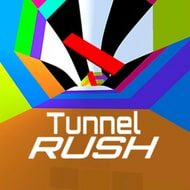
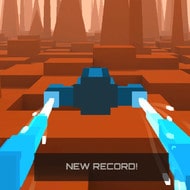
Ever wondered how far you could actually get before the tunnel walls catch up with you? Tunnel Rush throws you into a rotating 3D shaft where the only job is staying alive against a track that never stops accelerating, and most players find out within the first ten seconds that dodging left and right is harder than it sounds.
| Genre | Reflex / Endless Dodge |
| Platform | Browser (HTML5) |
| Category | Puzzle Games |
| Difficulty | Easy, Medium, Hard |
There’s no jumping or braking, and no way to slow the tunnel down once you commit to a run. You steer with the left and right arrow keys (or A and D), sliding around the inner ring of the tunnel to slip through gaps between the colored panels rushing at you. Every ten seconds or so the pace ramps up another notch, and the color palette flips every few hundred meters, partly to keep the patterns from feeling memorized.
Reading Tunnel Rush’s Obstacle Rings
What separates a ten-second run from a two-minute one in Tunnel Rush is pattern recognition, not raw reflexes. The obstacle rings are procedurally generated, so no two runs line up the same way, but experienced players learn to track gap shapes a beat ahead instead of reacting to whatever is directly in front of them. Waiting until an obstacle is close before choosing a direction is usually how a clean run ends.
Easy, Medium, and Hard change how tight those gaps are and how fast the speed ramp kicks in. Hard mode strips out most of the breathing room between obstacle rings, so players who jump straight into it often bounce off the game within a few attempts before dropping back to Medium. Score-chasers treat the leaderboard as the whole point, replaying a run just to shave a few meters off a personal best.
- Distance-based scoring, so the counter climbs the longer you survive
- A rotating color scheme to cut down on the visual sameness of a long run
- Optional 2 Player Mode where whoever crashes first loses the shared track
The Dizziness Debate Around Tunnel Rush
Ask around any community thread about Tunnel Rush and the same disagreement comes up: the constant rotation and rising speed genuinely make some players lightheaded after a few minutes, while others barely notice it after the first run or two. It’s not really a flaw, more a side effect of a camera that never holds still.
Casual players usually bounce between Easy and Medium just to see the color transitions without grinding for rank, while the 2 Player Mode crowd sticks to head-to-head races almost exclusively, since comparing runs against a friend feels less repetitive than a solo distance counter.
- Why does Tunnel Rush get faster the longer I survive? The speed ramp is built into the core loop, increasing roughly every ten seconds, which is also why late-run obstacle rings look far denser than the ones near the start.
- What’s the actual difference between Easy, Medium, and Hard? The three settings change gap width and how fast the speed ramp escalates, with Hard giving almost no cushion between obstacle rings compared to the forgiving spacing on Easy.
- Is 2 Player Mode worth trying over a solo run? Yes if you want direct comparison instead of a personal best; both players share the same tunnel layout, and the run ends the moment either side clips a panel.
Tunnel Rush is a single mechanic pushed as far as it can go, with the color-shifting tunnel and the climbing speed ramp doing all the work to keep a run tense from the first obstacle ring to the last. Whether you’re chasing a leaderboard spot on Hard mode or just testing how long you can hold a clean line before the dizziness catches up, the distance counter tells you everything about how the run actually went.
Comments
There are no reviews yet. Be the first one to write one.