















COST OF TRUST


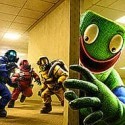





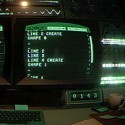




What do you do when the person begging for shelter says exactly the right words, and the smile lands half a second late? Cost of Trust turns that doubt into a job, handing you a terminal behind reinforced glass and a queue of voices that all claim to be human.
| Genre | Job-horror simulation |
| Platforms | Browser and Windows |
| Typical playthrough | 10 to 20 minutes |
| Controls | Mouse, A to allow, R to reject |
A Shift Behind the Glass in Cost of Trust
Cost of Trust drops you into the seat of a checkpoint operator in a booth with reinforced glass, a ticking counter, and a terminal that serves as both workstation and screen. Visitors line up outside and plead for shelter, and your task is to verify each one before deciding whether they enter the safe zone. There is no combat and no map to explore, so every bit of tension comes from the conversation on the terminal and the seconds draining away.
Money drives everything. A correct decision pays the cash you need to survive, while each mistake moves you closer to being fired, and if your balance drops below zero the run ends. Hesitation costs too, which is why even a careful player feels rushed once the queue starts to stack up.
The interface stays minimal on purpose, with the terminal doing the work that a heavy HUD would do in other titles. One player summed up the loop as Papers, Please meets Among Us, and the comparison fits: paperwork-style verification on one side, social suspicion on the other. Fans of That’s Not My Neighbor will recognize the mood immediately.
Reading the Faceless Before the Timer Runs Out
The Faceless are the reason the booth is dangerous. They look like people, they copy human emotions, and they know which words make an operator hesitate, so a heartfelt plea is not proof of anything. Treat every line of dialogue as evidence, because the mimics tend to say exactly what a desperate survivor would say, just a little too neatly.
Anomaly checks run on two tracks. You read what the visitor says, and you study the face and details on screen for something unnatural. The claymation look with its dithered, retro shading is part of the trick, since it makes every face slightly off and forces you to decide which flaws are style and which are warnings.
By shift 4 the non-breathing creatures join the queue, and the question changes from what a visitor says to whether they move naturally at all. Players who love spot-the-difference puzzles will find this stage the most satisfying, while those who rely on gut feeling often get caught by a calm, polite Faceless. Ordinary visitors also drop pieces of lore in their dialogue, so careful reading pays off twice.
Allow, Reject, and the Verdict Loop in Cost of Trust
Every visitor ends in one of two verdicts. You can click the terminal buttons with the mouse, or press A to allow and R to reject, and the keyboard shortcuts become essential once the queue gets long. Fast hands help, but fast eyes matter more.
A quick routine keeps most players alive:
- Listen for lines that sound rehearsed or oddly flattering
- Scan the face for details that feel wrong
- Check whether the visitor breathes once the non-breathing creatures appear
Turning away a real survivor is a mistake just like letting in a Faceless, so rejecting everyone is not a safe strategy. Beginners often swing between extremes, spamming allow in the first shift and spamming reject after their first costly mistake. The sweet spot is a steady habit of checking before choosing, even when the counter feels loud.
How the Shifts Tighten in Cost of Trust
Early in the game the shifts teach one anomaly type at a time, and the developer has said each shift forces its lesson to appear instead of leaving it to chance. That design helps new players learn what to look for without relying on luck. It also means each shift has its own personality, from the first cautious checks to the crowded closing hours.
Randomized visitor queues give the run its replay value, because no two attempts show the same faces in the same order. By the final shift the pressure peaks, and players brag about finishing the last night with only a single wrong call. Newer updates have added more entities, faces, lore, and endings, so returning players meet fresh Faceless.
The whole run stays short, 10 to 20 minutes, which makes it easy to try again after a bad shift. Streamers like it for that reason, since a single mistake becomes a story worth retelling. The short length also means the learning curve has to be steep, and it is.
The Complaints Players Raise About the Booth
Not everything lands. The loss condition is mostly money, and some players feel that watching a balance fall is a weak punishment for letting a Faceless through. Comments ask for more creative consequences, and one player said the stakes were not laid out clearly enough to feel truly tense.
Clarity is the second complaint. When you allow or reject wrongly, the game does not always explain what you missed, so some players finish a shift unsure which detail they overlooked. A short on-screen hint after a mistake is the fix most people propose.
Variety is the third. The soundtrack repeats, and the scare list is thin beyond the toothy-faced visitor that everybody remembers. Horror fans who want constant jump scares may leave underwhelmed, while those who enjoy slow suspicion and detective-style checks will find enough to chew on.
Questions From the Booth
- How long does Cost of Trust take to finish? A playthrough runs 10 to 20 minutes, depending on how many shifts you clear and how often the mimics catch you. Randomized queues mean a second attempt does not repeat the first. Most players loop back after a failed shift because the runs are so short.
- How do you spot a Faceless at the checkpoint? Read the dialogue for lines that sound too perfect, then check the face for unnatural details before the timer runs out. From shift 4, also watch for non-breathing creatures. The terminal gives you only a few tools, so your eyes do most of the work.
- What happens if your money hits zero? The run ends, because falling below zero is the loss condition. Every correct decision earns money and every mistake brings you closer to being fired, so a few wrong verdicts in a row can end a shift fast. Keep an eye on the balance during the busiest part of the queue.
Cost of Trust asks for one thing: stay suspicious without freezing. Between the glass booth, the terminal buttons, and the Faceless who speak just the right words, the short shifts leave you sharper than when you started. Try one more run, trust your read of the dialogue, and see whether the safe zone stays safe.
Comments
There are no reviews yet. Be the first one to write one.