










Beencremental










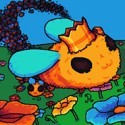
Picture a single queen bee standing at the edge of an overgrown spring meadow, with nothing to her name but a half-empty pollen sac and a hive that hasn’t produced a drop of honey yet. That’s where every run of Beencremental starts. There’s no tutorial character explaining lore, just a cursor to follow and a field full of flowers waiting to be stripped bare.
| Genre | Incremental / Idle Management |
| Core Mechanic | Guide the queen to gather pollen, then risk it in a Plinko machine for honey |
| Setting | Four seasonal flower fields, starting with Spring |
| Key Resources | Pollen, Honey, Make-a-Wish Dandelions |
| Progression System | Tech Tree upgrades unlocked through dandelion wishes |
Every run in Beencremental starts the same deceptively simple way: you steer the queen with your mouse from flower to flower until pollen starts accumulating. Flowers aren’t infinite — each holds a finite amount, so early skill in Beencremental is mostly about not wasting movement on a flower that’s already picked clean. Worker bees join as the hive grows, clipping pollen on their own while you steer the queen toward whatever patch hasn’t been touched yet. Within a couple of minutes, the screen goes from a lone queen in a bare meadow to a small cloud of bees working the same flowerbed in parallel.
Raw pollen by itself doesn’t do much, though. It just sits there as a number until you feed it into the machine that actually defines the game.
The Plinko Machine and Where the Honey Comes From
Pollen doesn’t convert straight into honey. Instead it gets funneled into a Plinko machine, the same pachinko-style board of pegs you’d recognize from a game show, and it literally drops through as physical balls. Where a ball lands determines the honey payout — the center pays out modestly and consistently, while the outer edges can spike into much bigger returns or whiff completely. That randomness is the entire personality of Beencremental’s economy, a sharp turn from most incremental games, where output is a predictable formula.
This is also the part of Beencremental that generates the most player chatter, and not always positively. Some enjoy the tension of watching a ball tumble toward an edge slot and either paying off huge or bricking the run. Others find the variance frustrating precisely because it undercuts the sense of control the rest of the hive-management loop is built on — you can optimize your flower routes perfectly and still get a mediocre haul because the board didn’t cooperate.
Honey isn’t just a score number sitting in a corner. It’s the currency that keeps the hive fed and functioning, and a slow trickle of it usually signals a run’s Plinko luck has gone cold. Watching the honey counter is the fastest way to tell whether a run is heading somewhere good or whether it’s time to cut losses and start fresh.
- Pollen gathered by the queen and workers feeds directly into the Plinko board
- Ball placement on the board determines the honey payout, not a fixed rate
- Edge slots carry higher risk and higher reward than the center of the board
Make-a-Wish Dandelions and the Tech Tree
Make-a-Wish Dandelions are the rarer pickup scattered across the field, distinct from the ordinary flowers the queen strips for pollen, and they exist for one purpose: upgrading the Plinko machine itself. Dandelions unlock the bigger structural changes — widening favorable slots, adding extra rows of pegs, or boosting the payout multiplier across the whole board. Spending one feels like cashing in a stroke of luck for a permanent edge, which fits a game built around a gambling machine at its core.
Above the dandelion spending sits the Tech Tree, the broader upgrade structure tying hive growth, worker capacity, and Plinko improvements into one connected web. Two players working through the same Spring field can end up with noticeably different hives by the time they hit their first real honey surplus. Some push hard into worker count early, flooding the field with bees before touching a single Plinko upgrade; others hoard dandelions and rush the board upgrades first, betting a stronger machine will outpace slower, steadier gathering.
None of this matters if dandelions never show up, which is presumably why the drop rate isn’t left entirely to chance. Beencremental guarantees at least one Make-a-Wish Dandelion within every five runs, a soft floor so an unlucky streak doesn’t lock a player out of Tech Tree progress entirely. Most runs turn up a dandelion well before that fifth attempt.
Hive Population and Beencremental’s Unstoppable Swarm
The stated goal of Beencremental is to grow an unstoppable swarm and conquer the four seasons by devouring every flower in the path ahead. Hive population is the clearest measure of whether that’s happening — every worker bee added is another set of wings gathering pollen without direct input, which is where the game leans into its idle-style pacing.
Population growth isn’t purely passive, though. Workers need capacity to support them, and capacity comes from spending resources back into the hive rather than the Plinko board, forcing a constant trade-off. Players chasing the fastest swarm size tend to under-invest in Plinko upgrades early, betting raw worker numbers will outpace whatever honey a stronger board could generate — a debated approach among players comparing notes.
By the third or fourth trip across a well-developed Spring meadow, a strong hive stops looking like a handful of bees and starts looking like the tagline promises — a swarm moving as one cluster, clearing flowers faster than they can visibly regrow. Getting there is the real mid-game challenge, since neither pure worker-stacking nor pure Plinko-chasing gets you there fastest alone.
What the Spring Demo’s Boss Actually Is
Players who’ve spent time with the current build run into something the game presents as a boss encounter near the end of a Spring run, and reactions have been mixed enough to be worth addressing honestly. Some expected a full combat set piece and instead found a comparatively light obstacle, more of a speed bump dressed up as a boss.
The reason has less to do with a design failure and more to do with scope. Spring is the only season currently playable, and the encounter capping it off is standing in for what will eventually be a full roster of seasonal threats. Feedback on the current boss has already shaped how the remaining three seasons are being planned, with hazards specific to each season’s theme rather than reused across all four.
It’s a fair criticism if you’re judging Beencremental purely on its current demo slice, but it reads differently once you know only one of four planned seasons is actually playable right now. A single soft boss capping one season isn’t the same statement as a soft boss capping the entire game.
What New Beekeepers Ask
- Is Beencremental’s Plinko machine rigged in the player’s favor? Not in any guaranteed sense — the board uses real variance, so a run can underperform even with good pollen gathering. Dandelion upgrades exist to shift those odds gradually rather than fix any single unlucky drop.
- Do worker bees need to be managed individually? No, workers act automatically once added to the hive, gathering pollen without direct steering. The queen is the only bee under direct mouse control, which keeps the interaction focused as the hive population grows.
- What happens if a run goes several attempts without a Make-a-Wish Dandelion? Beencremental guarantees at least one dandelion within every five runs, so the Tech Tree can’t be permanently stalled by bad luck. Most players see one well before that floor is reached.
Beencremental is still showing only a fraction of what it’s building toward, but that fraction already has real texture — a queen steered by hand, a Plinko machine that turns pollen into honey through genuine risk, and Make-a-Wish Dandelions that quietly keep the Tech Tree moving even on a cold run. Spring is one season out of four, and the soft boss waiting at the end of it is clearly a placeholder for something bigger, but the loop underneath, from flower field to peg board to swarm growth, is already the reason players keep starting another run.
Comments
There are no reviews yet. Be the first one to write one.