















Sky On Fire : 1940








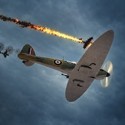
You level out the Spitfire Mk.I after a hard turn over the Channel and realize the Bf 109 E-4 behind you did not fall for it. Your speed is bleeding away, the stick feels mushy, and your next move decides whether you live. That is the pace of Sky On Fire: 1940, a flight simulator built around the early air war, from the Battle of France to the Battle of Britain.
| Genre | Accessible single-player flight simulation |
| Setting | Western European air war, 1940 |
| Playable nations | Germany, France, England, Italy |
| Aircraft | 18 unique airplanes |
| Ways to play | Quick missions, linear campaigns, dynamic campaign, Steam Workshop content |
Airfoil Physics and Stall Control in Sky On Fire: 1940
The first thing to understand about the flight model is that the low-poly look is misleading. The game uses airfoil-based physics, so lift, drag and stalls come from how the wings meet the air instead of from a scripted turn rate. Pilots arriving from arcade-style flight games tend to haul the stick all the way back, and the aircraft answers by shuddering, bleeding speed and dropping out of the turn. Early in the game that is the most common way to lose a dogfight without taking a single hit.
Energy is the real currency, and speed is how you spend it.
Landing is where the realism shows most clearly. Gear, flaps and bomb bay doors are all separate controls, and the landing practice option in the quick mission setup exists for good reason. Flight sim veterans with a HOTAS or TrackIR will find full support for both, while everyone else can lean on the accessible sim approach, which keeps the systems readable without turning every sortie into a checklist exercise.
Spitfire Mk.I, Hurricane Mk.I and Bf 109 E-4: Picking an Aircraft
The roster covers 18 unique aircraft from the western European theater of 1940, and the differences between them matter more than the nameplates suggest. A rough map of the main groups looks like this:
- Spitfire Mk.I and Hurricane Mk.I, the British fighters most tied to the Battle of Britain
- Bf 109 E-4, the Luftwaffe fighter those two spend most of their time fighting
- Dewoitine D.520, the French fighter that gives the Battle of France missions their own flavor
- Bf 110, Ju 87, Ju 88 and He 111 H, the heavier fighters and bombers
- B.P. Defiant, the odd one out with its turret behind the pilot
In practice the Spitfire Mk.I and Hurricane Mk.I are where most players settle in, because their handling forgives the stall mistakes described above. The Bf 109 E-4 rewards boom and zoom habits: dive, fire, climb away, and never get dragged into a slow turning fight with a Spitfire Mk.I.
The B.P. Defiant is the strange one. Its armament sits in a turret behind the pilot rather than in the wings, which flips the usual logic of fighter combat and makes it best flown with the crew in mind. A player who enjoys oddball aircraft and a bit of historical irony will find it a memorable detour.
Gunners, Bombardiers and Handing the Stick to the AI
Multicrew is the feature that sets this game apart from most flight sims at this scale. You can take over any crewmember in your aircraft, from the pilot to the bombardier to the defensive gunners, and the rest of the crew carries on under AI control. Fly an He 111 H and the whole mission becomes a juggling act between the nose, the guns and the bomb run.
The moment worth trying first is the handoff. You let the AI hold the pilot seat, jump to the rear gun, and suddenly the cockpit view is gone, the fight is a gunnery problem, and a Bf 109 E-4 on your six looks very different through a gunner’s sights. It feels less like flying and more like running a small crew under pressure.
Air raids and anti-ship attacks add another layer. Anti-aircraft fire is noticeable during bomber raids and torpedo runs against ship convoys, and players who have flown them describe a light volume of fire that lands more accurately than expected. Anyone who loves bomber crews and large formation intercepts will find the most depth here, since intercepting bomber formations is a mission type in its own right.
Four Ways to Play Sky On Fire: 1940, From Quick Missions to Workshop Content
The game offers four distinct ways to play, and they suit different moods. Quick missions let you set up a dogfight, attack ground targets or practice landings in seconds. Linear campaigns follow historical events and real squadrons, which gives the Battle of France and the Battle of Britain a proper story instead of a loose collection of sorties.
By the time you reach the dynamic campaign, you are no longer flying isolated sorties. You influence the tide of a much larger simulated conflict, and the results of your missions feed into what happens next. It is the mode that suits patient pilots who want their kills and losses to mean something beyond a single mission.
Then there is the mission editor and Steam Workshop content. You can build anything from a 1v1 duel to a huge battle with dozens of aircraft, and the photo mode with an unlocked camera lets you save the best moments. Players who like building scenarios will spend as much time in the editor as in the cockpit.
Where Players Disagree: AI Behavior and the Aircraft Wish List
The honest complaint players raise most often is AI behavior. Reviewers on mobile have reported AI aircraft randomly flying into the ground, which breaks the illusion of a tough opponent and can make a fight feel anticlimactic. The game describes its AI as challenging, and most of the time it is, but these glitches are part of the conversation.
Aircraft wish lists are the other recurring debate. Players ask for the Mosquito, the Beaufighter, the P-51 and other American aircraft, and some want modern jets. The setting is the early war, so those requests sit outside the 1940 theater, though the store page mentions 20+ aircraft across the 1940 and 1944 theaters, which suggests the roster is meant to grow beyond 18.
The low-poly style divides opinion too. Players coming from War Thunder often praise how much simulation is packed into a stylized look, while others would prefer more visual detail. Both camps agree the flight model is better than the graphics suggest.
Questions Players Ask About Sky On Fire: 1940
Can you control the gunners in Sky On Fire: 1940?
Yes. The multicrew system lets you switch between the pilot, the bombardier and the defensive gunners in your aircraft. A common trick is to give the AI the pilot seat in a bomber such as the He 111 H and man a rear gun while enemy fighters line up behind you.
Does Sky On Fire: 1940 support HOTAS and TrackIR?
The store page lists full HOTAS and TrackIR support, so a joystick with throttle and head tracking both work for the Spitfire Mk.I or Bf 109 E-4. Players without that hardware can still fly with standard controls, since the accessible sim approach is designed to keep stalls and landings manageable.
Which aircraft should a beginner fly first in Sky On Fire: 1940?
Most newcomers start with the Spitfire Mk.I or Hurricane Mk.I, the two British fighters at the center of the Battle of Britain. Begin in quick missions, practice landings with gear and flaps down, and move to the Bf 109 E-4 once stall recovery feels natural.
Sky On Fire: 1940 rewards pilots who respect the stall, learn the roster from the Spitfire Mk.I to the Ju 87, and are willing to swap seats when an He 111 H needs its guns manned. Between the dynamic campaign, the mission editor and Workshop content, the game gives a single-player pilot plenty of reasons to keep flying after the first dogfight.
Comments
There are no reviews yet. Be the first one to write one.