















Window Seat



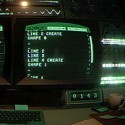



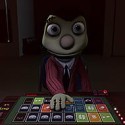





What happens in Window Seat when your only permitted job is wiping glass, and one of the windows frames a murder scene? You are a Scrubber in a grime-dark city, hired to keep the view clean for people who never look at you. The setup teaches restraint first, because the safest move is to clean and move on. It then teaches that restraint is exactly what a detective game cannot afford.
| Genre | First-person detective, puzzle |
| Setting | Grime-dark future city under the Acrid Fog |
| Role | Scrubber |
| Core loop | Clean windows, observe, deduce |
| Mode | Single-player |
| Content note | Aftermath of a murder scene |
The Scrubber’s Job in Window Seat
You play one of the city’s noble Scrubbers, a worker whose entire duty is keeping the windows of the elite spotless. Clean glass is a privilege in this world, which tells you everything about who the customers are and how little they think of the person doing the scrubbing. The Acrid Fog presses against every pane, so the job never truly ends, and that sense of endless chore gives the setting its grim humour.
The starting rule is simple and slightly ominous: keep your eyes where they belong.
That rule is a trap for the curious. A first-person detective game depends on noticing things, so every window you clean is also a small piece of evidence you were told to ignore. Players who enjoy the tension of doing the wrong thing politely will feel at home, because the setup keeps nudging you to look at exactly what the job says you should not.
Reading Floors Through Dirty Glass
Each scenario is organised around the floors of a tall building, and the demo covers two of them. That structure turns the building into a vertical case file, where each window shows a different room and a different slice of the story. Cleaning is how you reveal that information, so progress and investigation are effectively the same action.
Newcomers tend to treat floors as separate puzzles, which wastes the vertical layout.
Steam players tag the game with Hidden Object and Time Management, which suggests that spotting small details and watching the clock both matter. Four things are worth checking at every window:
- The state of the glass itself, since grime stands between you and the room
- The people and objects visible on that floor
- How much in-game time has passed during the scenario
- Any sign that Sloane Industries is paying attention to you
Routine inspection of those four points makes the second pass through a floor much faster than the first.
Logical Deduction Over Guesswork in Window Seat
The store page describes the game as one of logical deduction and window cleaning, and the deduction half is the part that sets it apart. You are expected to connect what you observe across different floors into one account of who did what, instead of clicking on a highlighted suspect. Detective fans who dislike hand-holding will appreciate that framing, while players who prefer a clear marker on screen may find it demanding.
A common mistake is to gather details in the order you see them and never compare floors. Rooms that look unrelated often belong to the same story, and a murder rarely stays politely inside a single room.
The Alternate History and Time Travel tags hint that the mystery may bend the usual order of events, so it helps to note when you saw something as well as what you saw. That is an inference from how the page presents the project, so treat it as a lead and not a rule.
Sloane Industries and the Cost of Looking
The advice on the store page is blunt: avoid the gaze of Sloane Industries. That line turns looking itself into a risk, because the same curiosity that solves the case also puts a Scrubber in danger. The tension between wanting to see more and needing to stay unnoticed is the emotional engine of the premise.
Conspiracy and Capitalism are also among the community tags, which fits a story where a single company shapes who gets a clear view of the city. Players who enjoy social-commentary noir will find plenty to chew on in the idea that clean windows are a status symbol.
The honest limit is that the demo touches only two floors, so it cannot show how deep the conspiracy goes. Anyone judging the whole mystery from that small slice is guessing, and it is better to wait for more floors and characters before deciding how well the plot holds together.
Noir Mood and the Gap Between Demo and Full Mystery
The atmosphere leans hard on noir: smothered streets, stained windows and a city that keeps its secrets behind glass. The store lists full English audio, so characters speak instead of being reduced to text, which should help the mystery feel like a conversation with suspects and not a pile of notes.
The developers flag that the game depicts the aftermath of a murder scene, so it suits adult noir fans more than younger players.
The demo is a sample scenario that runs around seven minutes of in-game time across two floors, giving a focused look at the core mechanics. The full release is described as having many more floors, a wide range of characters and a complex, restructured mystery. Seven minutes is enough to prove the idea but not the pacing, so replaying the demo once to compare floors is a sensible way to test it.
What New Scrubbers Ask About the Demo
These are the three questions that come up most before a first shift.
- How long is the Window Seat demo? The demo covers two floors and roughly seven minutes of in-game time, built as a sample of the core mechanics. That is enough to learn how cleaning, observation and deduction connect, but not enough to judge the full mystery.
- What exactly does a Scrubber do? A Scrubber cleans windows for the city’s elite and is told to keep out of the residents’ business. In practice, the glass you wipe is also your only view into rooms where something may have gone wrong.
- Is it a detective game or a cleaning game? It is both at once, since the store page calls it a first-person detective game about logical deduction and window cleaning. Cleaning reveals the clues, and deduction turns them into an answer about the murder.
Window Seat works best when you accept that the Scrubber’s polite silence is the thing worth breaking. The Acrid Fog, the stained floors and the watching eye of Sloane Industries make every wiped pane feel like a small act of defiance, because a clear view does not guarantee a clear conscience. Start with the demo, compare what you saw on both floors, and decide whether you want to follow that glass all the way to the answer.
Comments
There are no reviews yet. Be the first one to write one.