
















People Playground













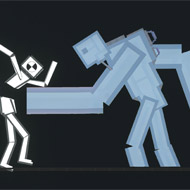
In People Playground you start with an empty, flat map and a spawn menu stuffed with Humans, Androids, weapons, machines and syringes, which matters because nothing tells you what to do with any of it. There are no levels, no missions and no score — just a detailed ragdoll simulation that reacts to everything you throw at it.
| Genre | Physics sandbox |
| Core Mechanic | Spawn characters and objects, then experiment with detailed physics and injury simulation |
| Key Categories | Biological, Machinery, Firearms, Explosives, Melee, Vehicles |
| Player Mode | Single player |
| Best For | Tinkerers who enjoy building contraptions and testing reactions |
What the Spawn Menu Actually Gives You
The spawn menu in People Playground is organized into categories, and each one opens a different kind of experiment. The Biological section holds Humans, Androids and Gorse — a creature whose strange yellow tissue behaves very differently from human flesh. Machinery includes motors, pistons, thrusters and wiring parts. Firearms, Explosives and Melee cover everything from pistols to grenades to swords.
Spawning is quick: click an item, click the map and it appears. Picking it up with the drag tool lets you move it, rotate it and drop it on something else.
The context menu is where depth hides. Right-clicking a Human gives options that most beginners never notice at first, and right-clicking machinery lets you activate it, change settings or connect it to other parts. Spending a few minutes in these menus explains half of what experienced players do in their videos.
Why the Ragdolls in People Playground Feel Different
A Human in People Playground is not a simple stick figure with a health bar. Each limb has its own bones, muscles, skin and blood flow, and damage is tracked separately for every part. A broken leg means the character cannot stand properly, heavy bleeding lowers consciousness over time and a hit to the head can knock someone out before any other injury matters.
Characters also react on their own. They try to keep their balance, grab their wounds and stumble when hurt, which makes the simulation feel strangely alive.
Androids behave differently again. They are made of metal and wiring, so they do not bleed and react to damage in their own way, which makes them useful for testing weapons without the mess. Gorse is the most unusual biological spawn, and experimenting with how it reacts to heat or impact is a small hobby of its own within the community.
Syringes, Wires and Contraptions
Syringes are one of the most popular tools. The Life Syringe heals injuries, the Adrenaline Syringe keeps a character conscious through damage and other syringes push the simulation in stranger directions. Injecting a Human and watching the effect spread through the body is something nearly every new player tries within the first ten minutes.
Wire tools turn the sandbox into an engineering set. Ropes, springs, cables and fixed connections let you join objects together, while activation wires link buttons to motors, pistons and weapons. With a few connections you can build moving machines, elevators, automated turrets or whole vehicles.
The pin tool fixes an object in place so it cannot fall or move. Pinning a frame and attaching moving parts to it is the basic technique behind almost every working contraption shared by the community.
Learning Curve From First Session to Big Builds
Early in the game, most players simply spawn items and see what happens. That stage is chaotic and fun, but it rarely lasts long once the wire tools click.
By the time you start connecting motors to frames, the bigger challenge becomes stability. Contraptions with too many connected parts can jitter or fall apart, and objects under heavy force sometimes clip through each other. Learning which joints are rigid and which ones flex saves a lot of frustration. Builders tend to spend most of their time here, testing a machine over and over until it moves exactly as intended.
A common beginner mistake is spawning dozens of heavy objects at once. Performance drops quickly with large piles of physics objects, so clearing the map regularly keeps everything smooth.
The Divisive Side of People Playground
People Playground is open about being violent. Injuries are shown in detail, blood pools on the floor and weapons do realistic damage, which puts off some players right away. Others play it mostly for the engineering side and barely use the weapons at all.
The lack of goals is the other point of debate. Players who need objectives can find the sandbox empty after an hour, while creative players treat that emptiness as the whole point.
Community-made content fills the gap for many people. Mods add new items, characters and whole tool sets, and the community vocabulary — contraptions, ragdolls, builds — reflects that most long-term players spend their time creating rather than destroying.
You get a Human, an Android, a bag of syringes and a set of wires, and then the simulation steps aside. Whether you use the Life Syringe to patch up a test subject or pin together a working machine, every result in People Playground comes from what you decided to build.
Comments
There are no reviews yet. Be the first one to write one.
