
















Pax Historia











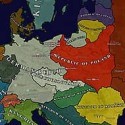
What happens when you type a plan to seize Greenland and an AI has to decide how Britain, the Soviet Union, and a dozen other nations react? In Pax Historia the answer changes every time, because the game has no fixed rulebook and no scripted outcomes. You pick a country and a moment in history, write what you want to do in plain language, and the map reacts to the consequences.
| Genre | Alternate-history grand strategy sandbox |
| Platform | Web browser |
| Starting point | Any country at any moment, or a custom scenario |
| Core input | Plain-language actions and diplomatic chats |
| Other nations | Controlled by AI models |
| Cost model | Token-based credits for AI calls |
How Pax Historia Replaces the Rulebook
The AI is the game engine itself. Instead of clicking through a tech tree or a menu of fixed commands, you state your intent and the AI works out what that means for the nations around you. The map is the main interface, and as the scenario moves forward it shows territory shifting in response to what you and the AI-controlled nations have done.
That is a very different feel from classic grand strategy, where you learn a system and then optimize it. Here the system is a conversation, and history enthusiasts tend to enjoy it most because they can test their own what-if theories without a designer deciding which options are allowed.
The game has two core modes, Create and Play. Create lets you design scenarios and maps, and Play drops you into one. Starting points range from realistic pivots like a surviving Soviet Union or Rome never falling, to stranger setups such as a zombie outbreak or an alien invasion.
Actions, Diplomatic Chats and Presets in Pax Historia
Actions. An action is whatever you decide your nation does this turn, written in plain language, such as invading Greenland. Early in a scenario, small and specific actions usually give cleaner results than sweeping ones, because the AI has more room to misread a vague order.
Diplomatic chats. You can talk directly to other nations, and the AI answers in character, whether you are proposing a free trade agreement or demanding concessions. Once a rival replies, their reaction often shapes your next move more than any action you took yourself.
Presets. Players publish their own maps and scenarios as presets, and anyone can load them. That community pipeline is why the game keeps offering new starting points, and why browsing presets can be as entertaining as playing one.
Where Pax Historia Gets Messy
The same flexibility that makes the game fun also makes it unpredictable. Because the AI interprets intent, two players can type nearly identical actions and get different outcomes. Results also depend on which AI model is running the scenario, and the game offers dozens of them, so quality and consistency vary from model to model.
Fiction writers usually forgive that, since surprising outcomes are raw material for a story. Strategy players who care about tight, repeatable systems often struggle more, because a plan that worked once may not work again.
Cost is the other point players debate. Every AI call spends tokens, so long campaigns with many diplomatic chats use more credits than short ones. The game is still in an alpha stage, and reports have pointed to roughly 35,000 daily players, which shows demand is real even while the rough edges remain.
Common Questions About Pax Historia
- How does the AI work in Pax Historia? The AI acts as the game engine and as every other nation on the map. When you submit an action or send a diplomatic chat, it decides how countries like Britain or the Soviet Union respond, then updates the map to match.
- Can you play as any country? Yes, you can choose a nation and a moment in time, or load a preset that sets one for you. Custom scenarios from the community can even move you outside real history, into setups like a zombie outbreak.
- Does Pax Historia cost money? It uses token-based credits, and each AI call consumes some of them, so heavy use of actions and diplomatic chats costs more than light use. Because the game is still in alpha, pricing and access can change, so check the current terms before planning a long campaign.
Pax Historia gives you a blank map, a handful of diplomatic chats, and the nerve to ask what would happen if history went differently. Whether you load a community preset or try to claim Greenland yourself, the fun comes from watching an AI-run world answer back.
Comments
There are no reviews yet. Be the first one to write one.
