















HANDS OVER



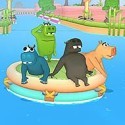
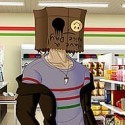

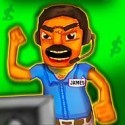


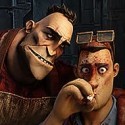
In HANDS OVER you start seated at a table with four other players, a dangerous device in front of you and a hand you would very much like to keep. That detail matters from the very first turn, because every simple challenge at the table can cost someone their place.
| Genre | Multiplayer horror party game |
| Players | Up to five |
| Core Challenge | Table-based mini-games, such as pressing the teeth |
| Support Tools | Influence cards |
| Penalty | Lose a hand and your seat at the table |
| Status | Early Access |
Taking a Seat at the Table in HANDS OVER
The setup is a cruel show. Players are trapped and forced to take their seats, facing warped versions of games that once seemed like harmless fun. Up to five people share the table, and the rules are simple enough to explain in a few seconds. The pressure is another matter, because every turn puts someone under the spotlight and nobody gets to sit back and simply watch.
The setting leaves no doubt that this is horror for adults. Matches take place in dark, oppressive rooms among cruel devices and uneasy characters, with the constant feeling that something is waiting for your next mistake. The focus never drifts from the essentials: the table, the players, the device and the next terrible decision.
The game is described as co-op horror, yet sabotage is part of the toolkit, so cooperation here means facing the ordeal together rather than playing nicely. That contradiction is exactly what makes the table so tense, since the person sitting next to you is both a fellow prisoner and a potential threat.
The Teeth Challenge and Other Warped Games
The clearest example of the idea is the teeth challenge. You press the teeth one by one, and one of them is the wrong one. Nothing about it needs a tutorial, which is the point: you understand the whole concept in seconds and the dread begins immediately afterward, when you realize your turn is coming and nobody can tell which tooth is safe.
The design takes instantly readable mini-games and turns them into sinister multiplayer mind games, where every simple action can change the match. Early in a match the challenges feel almost manageable. Once the first hand is lost and influence cards have started flying, the same challenge carries far more weight than it did a few turns earlier.
The Early Access description says the game is built around short multiplayer challenges, and that rhythm suits it well. Rounds stay punchy, a safe-looking move can become a disaster in seconds, and nobody has long to rest before the pressure moves to someone else.
Influence Cards: Bluffing, Protection and Sabotage
Between turns, players use influence cards to change the odds. This is where the game stops being a pure test of nerve and becomes a game of reading the people around you. Bluffers will feel at home here, since a calm face and a well-timed card can matter as much as any challenge result.
Protection: some cards exist to save you, shielding you from the consequences of a challenge you were about to lose. Holding one changes how bravely you take your turn, and everyone at the table can sense when you are playing with a safety net.
Sabotage: other cards break someone else’s plan or turn a safe-looking move into a problem. A card played at the right moment can make the player who felt secure the next target.
Chaos: certain influence cards trigger chaotic events that shake up the whole table. A desperate player can use them to turn everyone against someone else, which is why alliances at this table never last long.
What Beginners Get Wrong at the Table in HANDS OVER
Many newcomers treat influence cards like emergency buttons, saving them for the moment things go wrong. The cards are designed to change the odds before disaster strikes, so a player who only reacts is usually a step behind the one who plans around the next challenge.
Hesitation is the second trap. One extra second of doubt can make you the next target, because a table full of nervous players reads uncertainty as weakness. Committing to a move, even a risky one, often looks stronger than dithering over the safest option.
The third mistake is forgetting that the table remembers every move. Players who sabotage others early and loudly tend to become the obvious target later, so a little subtlety can keep you in the match longer than a bold play that wins one round.
Why HANDS OVER Works for Groups and Clip Makers
The game is easy to understand, tense to play and fun to watch, and that last part is deliberate. Every punishment is visible and clear, made for moments players will want to record, share and replay. Anyone who makes clips will find plenty of material in a hand-loss moment or a sudden betrayal across the table.
For a group of friends the appeal is different. Five seats means everyone is involved, and the shifting alliances produce the kind of moments people talk about long after the match ends: the bluff that worked, the card that backfired, the friend who sold you out at the worst possible moment.
Because rules are simple, a new person can join without a long explanation. The depth comes from the people, not from the manual, which makes the game easy to bring to a casual evening and still satisfying for groups that play it repeatedly.
Where HANDS OVER Still Divides Players
The game is launching in Early Access, and the core match loop, the multiplayer systems and the card-based interactions are already in place. More challenges and modes are planned, along with an expanded influence card system and progression with additional characters, customization options and unlockable content. The developers expect the Early Access period to last roughly 6 to 12 months, so content variety is the obvious limit for now.
The tone will not suit everyone. The developers describe stylized horror violence, blood and scenes of hand injury caused by a fictional mechanical device. It is presented in a non-realistic style, but sensitive players may still find some moments disturbing.
Luck plays a large part as well. Matches are built around luck, nerves and trust, so players who want purely skill-based competition may find results swingy. Groups who enjoy chaos and betrayal will see that unpredictability as the whole point, and the planned balance and pacing work during Early Access may smooth some of the roughest edges.
Questions Players Ask About HANDS OVER
How many players can join a match?
Matches support up to five players at one table. The Early Access state already includes the core match loop and the multiplayer systems, so a full table is the intended way to play.
What do influence cards actually do?
They change the odds between turns. You can use them to protect yourself, sabotage opponents or trigger chaotic events, which is why a safe-looking move can turn into a disaster within seconds.
What happens when you make a mistake?
A bad move can cost you a hand and knock you out of the round. Players are eliminated one by one until a single person remains at the table, and that last survivor is the one who gets to smile.
HANDS OVER is built on a simple promise: easy rules, tense decisions and a table that never feels safe. Between the teeth challenge, a well-timed influence card and the dread of being the next player to lose a hand, every round gives you something to laugh about, or something to regret.
Comments
There are no reviews yet. Be the first one to write one.