
















Roguecraft DX (ZX Spectrum Next)













You pick your hero, step onto the first floor of Mordecoom, and a chicken stares at you from across the room. Laughing at it is the first mistake Roguecraft DX punishes. This turn-based dungeon crawl on the Spectrum Next gives you exactly one life, so every careless step on floor one follows you all the way down. The loop is simple on paper: find keys, survive monsters, drink what you probably should not, and keep descending.
Zendar and the Three Heroes of Mordecoom
You play as Zendar, and the game lets you decide whether Zendar is a fighter, a mage, or, as the game itself awkwardly admits, a rogue. Each of the three heroes has special abilities and a different playstyle, so your first pick changes how you read every room afterwards. Most newcomers start with the fighter, since a sturdier hero forgives the mistakes you will make while learning how keys, turns, and monsters fit together. Mage and rogue runs tend to attract players who return for a second and third attempt, hunting for ways their abilities bend the dungeon.
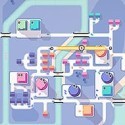
A full descent runs through 15 procedurally generated levels, so no two attempts share a layout. A single run takes about half an hour.
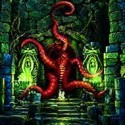
Early in the game the dungeon feels almost polite. Floors are compact, rooms are readable, and you can afford to poke at things. By the time you reach the maze-like depths of Mordecoom, monsters hit harder, potions matter more, and one wrong turn can end a run that looked safe three floors earlier. Somewhere at the bottom waits a tentacle-toting boss on the final level, and reaching it is the goal that makes every cautious step worthwhile.
Turn-Based Movement and Key Hunting in Roguecraft DX
Everything moves when you move. Because combat is strictly turn-based, standing still counts as an action, and monsters answer every step you take. That makes spacing the real skill: you decide where to stand before a fight starts, not while it is happening. Beginners often sprint for the way down and drag three monsters behind them, turning a quiet floor into a crowded one.
Progress depends on careful inventory choices and the constant search for keys that open the way down. The key is the real objective of every floor, which means clearing each corner is optional, and knowing when to stop exploring is what separates a lucky run from a repeatable one.
Greed ends more runs than bad luck does. Players who treat every floor as a loot pile learn that lesson quickly.
Potions, Secret Rooms, and Risk Management in Roguecraft DX
The potions are unlabelled, and the dungeon never explains them. Drinking one is a gamble, and the game’s own warning about potions you probably should not drink is more honest than it sounds. Roguecraft DX adds more potion effects than the original Amiga release, so veterans of the older edition cannot lean on memory alone.
- Test unknown potions at full health, and only after the room is clear.
- Hold a key before you gamble on anything else.
- Treat secret rooms as bonuses, not debts the dungeon expects you to repay.
Secret rooms reward curiosity, and the chickens punish it. The chicken is a genuine monster, unnervingly aggressive, and there is a particular moment when you realize the creature you ignored has been given a turn too. Once the first chicken lands a hit, you stop laughing and start counting steps.
Players who enjoy puzzle-like deduction get the most from this part, because each potion is a small experiment with real consequences. Completionists will keep tapping walls, hoping to uncover one more secret room.
Where the Dungeon Stays Deliberately Small
Not everyone loves the compact design. The system is deliberately small, so players who want sprawling character builds, enormous item pools, or hundreds of hours of variety will run out of road sooner than in larger roguelikes. Permadeath also stings even in a half-hour run, because dying on a late floor still means starting again on floor one. Whether a single life is thrilling or simply cruel is a debate the game invites by design.
That trade-off is also the point. A short run means a loss costs you a lunch break, not an evening, and the “just one more run” pull is what keeps the game appealing to retro fans.
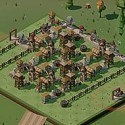
The strongest argument for this approach is how little friction there is. You can learn the rules in about five minutes, and the rest of your time goes into reading rooms, choosing when to leave, and deciding which unlabelled flask is worth the risk. Retro hardware fans, meanwhile, get a modern roguelike with glorious pixelated isometric graphics made for machines like the Spectrum Next.
Roguecraft DX is at its best when you stop treating Mordecoom as a place to conquer and start treating it as a place to survive for half an hour at a time. Zendar’s strongest runs come from carrying a key before gambling on a potion, respecting every chicken, and leaving rooms alone when the odds turn against you. If that rhythm clicks, fifteen floors become a loop you will want to run again.
Comments
There are no reviews yet. Be the first one to write one.
