
















Moon Sweepers

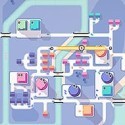












You step onto the lunar surface with a Toothbrush in your hand and an entire Moon of Dust stretching out in front of you, and Moon Sweepers makes its joke clear within seconds: the Lunar Surface Department sent you to handle a gigantic job on a tiny budget. A few brushstrokes clear some dirty hexes, your carrying capacity fills almost at once, and the walk back to the Depot starts to matter more than the sweeping itself. That small loop of cleaning, hauling and getting paid is the foundation of everything the game builds on later.
| Genre | Cleaning simulation with incremental upgrades |
| Players | Solo or co-op lobbies of up to 16 |
| Starting Tool | Toothbrush |
| Money Loop | Collect Dust, deposit it at the Depot, launch shipments |
| Long-Term Goal | Clean 100% of the Moon |
| Achievements | 33 |
The Toothbrush Phase: Where Every Moon Sweepers Run Begins
The opening stretch of the game is slow on purpose. The Toothbrush lifts Dust in tiny amounts, and an early manual deposit can be as small as half a kilogram, which gives you a quick sense of how much Moon is left. Nothing here is mechanically hard, but patience is required, and some players admit the first rounds of income feel painfully thin before the first upgrade lands.
What beginners get wrong is range. With almost no capacity, wandering far from the station means a long walk for a handful of Dust, so the sensible habit is to sweep the dirty hexes closest to the Depot first and deposit often. Short loops pay better than ambitious ones, and a short route back matters more than any early tool you could buy.
Each pass leaves visibly cleaner ground behind, and that small visual reward carries the early grind better than the numbers ever could. Casual players who simply enjoy watching dusty terrain change tend to settle into this rhythm happily.
Depot Runs and the Shipment Loop
Dust in your storage is not money yet. You carry it to the station, use the Depot deposit interaction, and the material has to actually reach the Depot’s receiving system before it counts. A small Deposited confirmation appears when the drop succeeds, and new players who never watch for it often wonder why their cash is not moving. Once the Dust is in, shipments get launched and the payment arrives, which funds every tool and structure that follows.
The store page itself points toward placing depots near the area you are cleaning, and that advice matters more than it sounds. Moving the point of delivery closer to your work shortens every Depot run, which effectively raises your income without spending a cent on a tool. Players who treat Depot position as a decision rather than a given tend to ramp up faster.
Long-term goals stretch far past the early runs. Completionists chasing all 33 achievements start with 100 Depot deposits, which roughly half of players reach, and the heavy end of the list asks for 10,000 deposits, $1 million earned and spent, and 100% of the Moon cleaned.
Upgrade Order: Household Broom, Capacity and Knowing When to Stop
The Household Broom is the usual stepping stone away from the Toothbrush. A Household Broom container upgrade costs $30 and raises capacity to 6 kg, and it requires you to own the broom first, so the early shopping order is mostly decided for you. Compared with the half-kilogram deposits of the opening, that jump changes how far you can safely wander from the Depot.
These inexpensive tools are transitional purchases, and the common advice is to stop sinking money into hand-tool upgrades once you begin saving for vehicles. Earnings multipliers look tempting, but their value only shows when you are carrying large loads across several upgraded tools. If Dust is piling up without reaching the Depot, fixing delivery comes before any multiplier.
A rough buying order that fits how the money loop works looks like this:
- Capacity upgrades while Depot runs are still frequent
- Cleaning speed once you stop filling up so quickly
- Earnings multipliers after Dust reliably reaches the Depot
- Vehicles as the target that ends heavy hand-tool spending
The idea behind the order is simple: improve the activity you repeat most, then buy the upgrades that scale that work.
From Garage Vehicles to Robot Vacuum Mk I Lines
Early in the game you do everything by hand, but once the Garage opens up vehicles and the Robot Vacuum Mk I appears, the job changes shape. Vehicles collect Dust differently from handheld tools, with loads handled through Silo and Conveyor equipment rather than carried to the station. Achievement hunters get a nudge here too, since cleaning while driving a vehicle is one of the 33 goals.
The automated chain is easy to describe and easy to break: dirty hexes feed a Robot Vacuum, the Robot Vacuum sends capsules to its Output Dock, and a Conveyor carries them to the Depot. The most common failure is a belt that stops just short of the Depot’s receiving area, so capsules pile up and nothing gets paid. Conveyor cost depends on distance to the Depot, which is one more reason to keep depots close to your work.
Processing machines extend the loop further. A Pressure Chamber turns Dust into Moon Sand, needs power, and has an inlet whose orientation matters, so the Dust Conveyor must feed it from the correct side before a second Conveyor carries Moon Sand onward. Optimizers who enjoy routing belts will find this the most rewarding stretch, while players who came for hands-on sweeping sometimes feel the game turns into logistics paperwork at this point.
Co-op Lobbies of Up to 16 Players in Moon Sweepers
The game supports co-op lobbies of up to 16 players, and the design assumes you will either spread out or work the same patch together, because there is enough Dust to keep everyone busy. A big lobby clears dirty hexes far faster than a solo player, and Depot runs turn into a tiny supply chain with some people breaking off to deliver while others keep sweeping. The scale of the Moon finally makes sense with a full lobby.
The store page jokes that the operation grows if your friends actually help, and that joke is also the honest limitation. In a large lobby someone will always wander off or stand near the Depot doing nothing, and big groups only work when everyone pulls their weight. Agreeing on roles early, such as one person managing Conveyor lines while the rest clear hexes, keeps a session productive.
Solo play works as well, though early income is slower without extra hands. Groups who treat a session as a chaotic cleaning night out tend to enjoy it most, and starting a session with at least one other player is even one of the achievements.
Questions Players Ask About Moon Sweepers
How do you deposit Dust at the Depot in Moon Sweepers?
Carry your loaded Toothbrush or Household Broom back to the station and use the Depot deposit interaction. Wait for the Deposited confirmation, because the Dust has to reach the Depot’s receiving system before it counts toward shipments. Short trips with small loads work best while your capacity is still low.
What should you upgrade first?
Start with the Household Broom and its container upgrade, which raises capacity to 6 kg for $30. Avoid overspending on hand tools once vehicles are within reach, and fix any delivery problem before buying an earnings multiplier. Capacity helps most while you are still making frequent Depot runs.
How do Robot Vacuums and Conveyors connect to the Depot?
The chain runs from dirty hexes to a Robot Vacuum, then to its Output Dock, then along a Conveyor into the Depot’s receiving area. If capsules gather without payment, the belt probably ends short of the Depot. Processed output such as Moon Sand follows the same logic, with a Pressure Chamber placed in the middle of the line and powered.
Moon Sweepers rewards the player who treats the Toothbrush as a stepping stone rather than a lifestyle. Move from Household Broom upgrades to Robot Vacuum Mk I lines and a powered Pressure Chamber before the Depot runs get dull, bring friends who actually carry Dust, and the Lunar Surface Department’s tiny budget slowly turns into a real cleaning operation.
Comments
There are no reviews yet. Be the first one to write one.
