















Immortal Coil












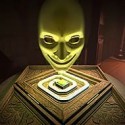



The Icon Deck in Immortal Coil does not behave like a normal draw pile: you assemble a second, tiny deck of 2 to 5 cards and draw one Icon every 3 turns starting on Round 3. That single rule explains a lot about why this lane-based strategy card game rewards planning over luck, and why one guaranteed unit or spell can hold a whole deck together.
| Genre | Lane-based strategy card game with deckbuilding |
| Modes | Adventure Mode and Gauntlet Mode |
| Card Pool | Over 365 cards |
| Colors | Pink, Gold, Teal, Purple and Rust |
| Icon Deck | 2 to 5 cards |
| Adventure Length | 25 zones across 3 Acts |
| Gauntlet Formats | 30 card or 50 card decks |
Reading the Lanes in Immortal Coil
Battles are fought across lanes, so where a unit sits matters as much as what it does. Units, spells, auras and items all come from a roster of over 365 cards, and placement is what turns a decent hand into a good one or a wasted one. The first thing new players notice in the opening minutes is that the enemy does not simply wait its turn: each time you play a card, the enemy has a chance to do the same.
That back-and-forth makes timing the real skill. Dropping your best unit at the first opportunity can leave you without an answer when the enemy responds, while holding back for a turn can let you choose a better lane. Players who enjoy tactical, turn-based card battlers will recognize the push and pull right away.
Enemy decks are built from the same pool of cards you collect, which means every threat you meet is something you could also play. Learning that pool is the surest path to improving, and it is also why the same card can feel unfair in an opponent’s hands and brilliant in yours.
Five Colors, One Icon Deck and the Search for Synergy
Cards come in five colors, Pink, Gold, Teal, Purple and Rust, and you can combine any of them, even all five at once. The variety is the main pitch of the game, and deckbuilding is where most of your time and thinking goes. Common approaches look like this:
- Pink and Gold lean toward raw aggro, pushing damage as fast as possible.
- Teal, Purple and Rust can form a control deck that schemes to take over the board over time.
- Going all in on a single color maximizes that color’s key strategies.
The Icon Deck sits on top of whichever colors you choose. Because you draw an Icon on a fixed schedule rather than at random, it is the place to put the card you cannot afford to miss: your most powerful unit, a spell that removes a threat or the piece that makes a synergy work. Combo hunters tend to treat it as the keystone of the entire deck.
The honest downside is volume. Five colors and hundreds of cards can feel overwhelming before you have a feel for the pool, and wild synergies are only exciting once you understand what they combine with. Expect a learning curve rather than instant brilliance.
Adventure Mode: World Cards, Edicts and the Tyrant Gods
Adventure Mode is the roguelike run. You begin by combining two starter deck kits and choosing an Edict power for that run, then pick your first destination. Each zone has encounters focused on particular color identities, and you wind through 25 zones across 3 Acts to confront the Tyrant Gods.
Between battles you play World Cards to visit bazaars, find Augments, feast and recover HP, remove cards from your deck or trigger special events. Each time you play a World Card you draw another, so navigating the map becomes its own small strategy puzzle. Roguelike fans will appreciate that the route you take is a decision, not a formality.
Early in a run you are shaping the deck, trading cards at bazaars to add new colors or sharpen the ones you already have. Augments provide game-altering abilities, and beating a boss lets you upgrade your Edict power. As you level up and open card packs you unlock new starter decks, up to 30 in total, which is why two runs can feel drastically different.
Gauntlet Mode: Building From Your Own Collection
Gauntlet Mode is a tower of battles you ascend with a deck built from the cards you have collected. It strips out the game-altering mechanics of Adventure Mode, so the test is purely your deckbuilding and your play. Whatever you bring is limited by what you have unlocked, which gives the collection real weight.
You can play it in two formats, with 30 card decks or 50 card decks. Victories earn Sigils, and Sigils buy card packs that expand your collection, so every climb feeds the next one. Players who prefer a constructed, collection-driven approach will likely settle here after a few Adventure runs.
Climbing the difficulties eventually unlocks Exalted mode for the ultimate challenge. Boards and card sleeves round out the customization, though the real draw is how much skill expression the system leaves you.
What Beginners Get Wrong in Immortal Coil
The most common mistake is stacking colors without a plan. Using all five is possible, but a deck with too many ideas rarely does any of them well, and starting with one or two colors makes it far easier to see what your cards are trying to do.
The second mistake is treating the Icon Deck as an afterthought. Round 3 is your first planning marker, and every 3 turns after that you get something you chose in advance, so filling those 2 to 5 slots carelessly wastes the most reliable part of the system.
Not everyone will stay. Hundreds of cards, layered systems and an enemy that answers every play add up to a lot of information, and some players will bounce off before the strategy clicks. A demo is available for anyone who wants to test the lanes and the Icon Deck before committing.
Questions Players Ask About Immortal Coil
Most questions before a first run come down to modes, the Icon Deck and how much there is to unlock. These are the three that come up most.
- What is the difference between Adventure Mode and Gauntlet Mode? Adventure Mode is a roguelike run where you combine two starter deck kits, pick an Edict power and travel through 25 zones across 3 Acts, while Gauntlet Mode is a tower of battles where you bring a deck built from your collection. Gauntlet removes the game-altering mechanics, so Augments and World Cards are not part of it.
- How does the Icon Deck work? It is a second deck of 2 to 5 cards, separate from your main deck. You draw one Icon every 3 turns starting on Round 3, which makes it the best place for guaranteed units, removal spells or key synergy pieces.
- How many starter decks can you unlock? Up to 30 starter decks unlock as you level up and open card packs. You pair two of them at the start of an Adventure Mode run, which is why each run can look so different.
Immortal Coil rewards players who learn the five colors, respect the Icon Deck and treat every World Card as a choice. Whether you are pairing starter kits for an Edict-driven Adventure run or climbing the Gauntlet toward Exalted mode, the road to the Tyrant Gods is paved with decisions you make before the first card is ever played.
Comments
There are no reviews yet. Be the first one to write one.