







Her Trees: Puzzle Dream








There’s no timer counting down, no fail state waiting to punish a wrong guess, not even a single line of written dialogue — and somehow Her Trees: Puzzle Dream still manages to make a stack of branches feel like the hardest thing you’ve looked at all week. That’s the contradiction at the center of it: a game built entirely around calm, wordless observation that somehow produces the exact same furrowed-brow tension as a much harder puzzle box. Nothing chases you here. You just sit with an image until it stops being an image and starts being a code.
| Genre | Point-and-click puzzle |
| Series position | Third entry, playable standalone |
| Visual style | Monochrome, hand-drawn |
| Puzzle count | Over 40 |
| Text/dialogue | None — fully non-verbal |
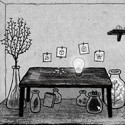
The premise is simple to state and considerably harder to execute well: every room hides a code among a cluster of ordinary objects, and the job is to find it by looking, moving things, and layering them over each other until a pattern surfaces. There’s no inventory to manage, no dialogue tree, no combat of any kind. Her Trees: Puzzle Dream strips the point-and-click formula down to its most essential gesture — pick something up, place it somewhere else, see what changes — and then builds forty-plus rooms’ worth of variation on that single idea.
Objects That Refuse to Snap Into Place
The first thing that separates this from a typical room-escape game is how the objects behave once you grab them. Nothing snaps to a grid or locks into a predetermined slot. Branches, dice, torn scraps of paper, and other scattered items drag loosely across the scene with no fixed anchor, which means the solution to a given puzzle often isn’t a location so much as an overlap — laying one leaf-covered branch directly on top of another until the shapes that were hidden underneath both become readable together. It’s a small technical choice that changes the whole feel of solving something, because the game never confirms a placement is “correct” the way a snapping mechanic would. You have to trust your own eyes.
That looseness is also where the friction shows up. Because nothing locks into place, it’s entirely possible to have the right idea and still miss the exact alignment that makes a hidden pattern click into visibility, and Her Trees: Puzzle Dream doesn’t go out of its way to correct a near-miss. Players used to more forgiving room-escape logic sometimes find this stretch of trial-and-adjustment more tedious than clever — precision-based overlap puzzles built on unconstrained dragging are always going to have this tension between deliberate difficulty and simple visual imprecision.
Hidden Codes, Bookmarks, and the Answer Grid
A good chunk of the puzzle variety comes down to a handful of core ideas the game keeps recombining rather than one single trick repeated forty times. The bookmark is one of the clearest examples: dropped onto a page dense with scattered, jumbled text, it highlights a specific sequence of letters buried in the visual noise, which then gets typed into a small answer grid sitting nearby to unlock the next step. It’s a deceptively simple loop — spot the marked sequence, transcribe it, move on — but the game is patient about hiding that sequence in ways that reward slow scanning over quick clicking.
Other rooms lean less on text and more on pure object logic: matching silhouettes, counting repeated shapes, or noticing which item in a cluttered pile doesn’t belong to the pattern the rest are forming. None of it depends on sound, and none of it depends on color, since the entire game runs in monochrome — a deliberate accessibility choice as much as an aesthetic one, since it means colorblind players are solving the exact same puzzles everyone else is, with nothing lost in translation.
Third in a Series Built on the Same Bones
Her Trees: Puzzle Dream is the third entry following Her Trees: First Puzzle and Her Trees: The Puzzle House, and the through-line across all three is consistent enough that returning players will recognize the DNA immediately: black-and-white hand-drawn scenes, room-scale puzzles, and solutions built from moving and overlapping objects rather than solving arithmetic or logic-grid puzzles. What changes across entries is scope and confidence — Puzzle Dream carries more rooms and noticeably more elaborate overlap puzzles than the series opener did, which tracks with a developer getting more comfortable with the format rather than reinventing it.
Series veterans move faster through the opening rooms since the visual grammar is already familiar — they already know to drag things onto other things before assuming a puzzle needs a new idea. First-time players usually spend longer in the first couple of rooms just learning that objects can overlap at all, since nothing in the presentation explicitly tells you.
Monochrome by Design, Not by Budget
It would be easy to mistake the black-and-white palette for a limitation, but it functions as a genuine design constraint that shapes how every puzzle gets read. Shapes, shading, and negative space carry the information color would normally handle, forcing a kind of visual attentiveness a full-color game rarely demands. The dreamlike, faintly unsettling mood reviewers keep circling back to — somewhere between melancholic and quietly eerie — comes almost entirely from that restraint rather than any explicit horror or story beat, since there isn’t one.
The Branch Puzzle Everyone Argues About
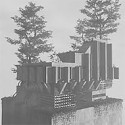
Not every puzzle lands cleanly, and it’s worth naming the one that comes up most in player discussion: a room built around two dark leafy branches and one lighter, white leafy branch, where the visual read of the pieces can plausibly suggest a different solution than the one the game actually wants. It’s the clearest example of the overlap system’s core risk — when the intended answer depends on a precise visual read, an ambiguous one trips people up through no fault of their own. Some players shrug it off as one rough edge in an otherwise tightly designed set of forty-plus rooms; others point to it as proof the difficulty sometimes comes from unclear presentation rather than genuine cleverness.
A Hint System That Waits Instead of Explaining
Rather than offering hints on demand, Her Trees: Puzzle Dream unlocks guidance only after a player has spent a certain stretch of time stuck on a room, and even then the hint nudges rather than solves outright. That pacing choice matters more than it sounds like it should: it keeps the wordless, observation-first tone intact instead of breaking it with an explicit walkthrough the moment someone gets frustrated. Patient players who like sitting with a puzzle tend to barely notice the system exists, while anyone prone to rushing will likely bump against that timer more than once across a full run.
A full playthrough runs somewhere between one and a half and three hours depending on how much the branch-style ambiguity slows a given player down, with the standalone demo offering a five-to-ten-minute taste of the same systems before committing further. That range holds up whether you’re a series completionist or someone who picked it up on a whim.
- Do you need to play the earlier Her Trees games first? No — Her Trees: Puzzle Dream is built to work as a standalone entry, though returning players who finished First Puzzle and The Puzzle House will recognize the overlap-based puzzle logic immediately rather than learning it from scratch.
- Is there any text or dialogue to read? None. Every puzzle in Her Trees: Puzzle Dream communicates entirely through imagery, which also means language ability has no bearing on whether a room can be solved.
- What happens if a puzzle like the branch room feels unsolvable? The delayed hint system eventually offers a nudge without spelling out the full answer, and it’s specifically tuned for exactly this kind of visually ambiguous room where the intended overlap isn’t obvious at a glance.
What Her Trees: Puzzle Dream ends up proving is that a puzzle game doesn’t need dialogue, color, or stakes to hold someone’s attention — it just needs objects worth looking at twice. Between the bookmark’s hidden letter sequences and the branch puzzle everyone still argues about, it’s a short, occasionally frustrating, mostly quiet game that trusts players to slow down and actually look.
Comments
There are no reviews yet. Be the first one to write one.