












Drifter Star: Evolution

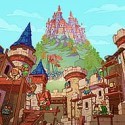











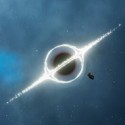
You start Drifter Star: Evolution with nothing but a lone sun sitting in empty space, and the whole game is built around one repeated decision: absorb the drifting matter around you, or let it pass and stay small. There’s no opening cutscene explaining why any of this matters — you’re simply handed a sun and left to decide how big you want it to get.
| Genre | Space sandbox and incremental builder |
| Platform | Browser |
| Controls | Mouse only, click to absorb and place |
| Best For | Fans of sandbox and incremental space games |
Mass Points and God Points: The Two Currencies That Run Everything
Everything runs through two resources: Mass Points from steering your sun into asteroids and drifting matter, and God Points from completing objectives and breaking down rival systems, spent unlocking new orbital slots.
The split matters — chase only Mass Points and you’ll have material with nowhere to put it; chase only God Points and you’ll unlock slots with nothing to fill them.
Spending Mass Points early tends to work out better than hoarding, since an unfilled orbit generates nothing while even a cheap rock planet starts contributing right away. None of this is explained in-game — it circulates through players comparing notes after a session.
Building Orbits: Rock, Gas, and Star Planets
Once a slot is unlocked, Drifter Star: Evolution lets you populate it with one of three planet types, and the game doesn’t spell out the tradeoffs directly.
- Rock planets: cheapest to place, immediate but modest value.
- Gas planets: higher Mass Point cost, better long-session scaling.
- Star planets: the most expensive, tied to overall system standing.
Placement isn’t purely cosmetic — where a planet sits relative to your sun affects how efficiently it contributes. Plenty of players admit to prioritizing a system that looks good over one that’s efficient.
Absorbing Rivals and the Grind Debate
Rival systems aren’t scripted; they’re other suns growing under the same rules as your own. The most divisive part of Drifter Star: Evolution is how directly it ties progress to repetition — players who enjoy incremental games call it relaxing, while others call the slower middle stretch a grind.
Absorbing a rival plays out like a slow contest of scale rather than a battle, where the larger sun gradually pulls matter away from the smaller one; it still requires actively steering into the contested space rather than waiting for it to resolve itself.
Losing a contested absorption doesn’t erase progress outright, but the matter your sun was pulling toward itself goes to the rival instead, setting back whatever orbit that income was funding.
Drifter Star: Evolution never asks for more attention than you’re willing to give it — a sun, a handful of orbits, and the slow accumulation of Mass Points and God Points until a rock planet or a hard-earned star planet finally has somewhere to sit. The system you end up with says more about how you spent those two currencies than any tutorial ever explains.
Comments
There are no reviews yet. Be the first one to write one.