
















CRACK


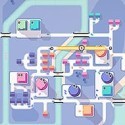
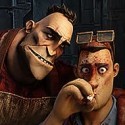
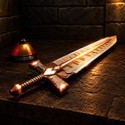






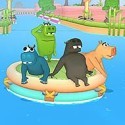


You come to inside the lab, a flat robotic voice announces that your shift has started, and a few steps later you are standing in front of a giant Egg with a pickaxe in your hands and no explanation for why. That is how CRACK begins, and the joke works because nobody around you ever questions the job.
| Genre | Co-op incremental adventure with workplace comedy |
| Players | 1 to 4, solo shifts supported |
| Setting | A secret laboratory built around one giant Egg |
| Core task | Break the shell shift by shift and upgrade your tools |
| Mood | Dry humor with a mystery underneath |
The First Shift in CRACK: One Egg, One Pickaxe, No Briefing
The loop is simple enough to explain in one breath and surprisingly hard to put down. Each shift you work toward the center of the Egg, finish the tasks the lab hands you, and spend your earnings on upgrades that make the next shift faster. Early in the game you carry only two tools: the pickaxe cracks the shell, and the chisel pries loosened pieces away so they can be detached. Neither feels powerful, and that is deliberate, because an incremental game depends on the first upgrade feeling like a real event.
Most new workers swing wherever the shell looks weakest. That scattershot habit is the first thing that slows a crew down.
The Egg rewards focus instead. Hitting the same spot again and again fills the progress gauge much faster than spreading strikes across the surface, so the smartest opening move is to agree on one patch and stay on it. Players who love optimizing routes will enjoy this right away, since even a bare pickaxe and chisel leave a better and a worse way to spend a shift. Pick a spot, call it out over voice, and let everyone else fall in around you.
Pickaxe, Chisel, Dynamite: What Better Tools Change
Upgrades are the heartbeat of the whole adventure, and the lab spreads them across the facility instead of hiding them in a single menu. You earn money by completing work orders, then buy gear that hits harder, reaches farther, or breaks the shell in new ways. Dynamite is the gadget everyone wants to try first, because nothing says progress like blasting at an Egg that never asked to be opened. Whether it works the way you imagine is another question.
- Pickaxe: cracks the surface of the shell
- Chisel: pries pieces loose so they can be detached
- Dynamite: a loud gadget for forcing the shell open
- Scaffolding kit: lets the crew reach higher sections across several levels
- Scanning gear: tracks how the Egg changes as the shell weakens
Treat that list as a ladder, not a shopping spree. Each new tool changes how the crew divides the work.
Once hidden rooms start opening, the lab stops being a backdrop and becomes part of the puzzle. Rooms unlock through tasks and exploration, which pulls players away from the shell between swings, and the facility keeps hinting that its own story is stranger than the Egg. Completionists will chase every room before touching the next work order, while everyone else just wants to know who built the place and why you were put to work inside it.
Proximity Chat and Scaffolding: Four Workers Around One Egg in CRACK
CRACK uses proximity voice chat, so what your teammates hear depends on how close they stand to you. In a crew of up to four, that makes coordination feel physical: you shout a plan, walk to the spot, and the people beside you are the ones who answer. The co-op crowd has a word for this wave of chaotic, friend-driven games, friendslop, and the Egg fits the label cheerfully.
The construction kit matters more than it looks. It lets the crew put up multi-level scaffolding around the Egg, so nobody is stuck chipping away at the bottom.
Solo players get an answer to the first question most people ask: yes, you can work a shift alone. The tasks stay the same, only slower, because one pair of hands has to be pickaxe, chisel, and scaffold crew in turn. You lose the chaos of shared voice chat, but you gain a calmer view of exactly how each upgrade changes your pace across a day.
Work Orders, the Spinning Wheel, and Breaks Away From the Egg
Work orders are how the lab pays you. Filling them completes tasks and quests, which funds tools and opens the next stretch of the facility. The spinning wheel is the other source of money, and it is the part everyone argues about, because it can add to your pocket or take away from it. Gambling with company funds is a very on-brand way to pay for a pickaxe upgrade.
The wheel makes every purchase feel a little more earned. It also makes a bad spin the easiest thing in the lab to blame on a teammate.
When a break arrives, the pace changes completely. You can walk away from the Egg to play basketball or just relax, which gives the crew time to talk through what happened and decide what to buy. By the time a few shifts have passed, those breaks are the part players remember, since they are the only calm moments in the facility. The Egg, meanwhile, reacts to people and events around it, so listening closely during work pays off.
What Splits Opinion About CRACK and Its Egg
The incremental loop is the first point of disagreement. Hitting a shell, banking money, and buying a better tool is a satisfying cycle, but players who want constant variety can feel the repetition once the first upgrades stop being new. The game leans on its jokes, its wheel, and its mystery to carry those stretches, and how well that works depends heavily on who is in your crew.
The mystery is the other split. The lab deliberately explains very little about why you work there.
What is inside the Egg is the question everyone asks, and the honest answer is that you have to reach the center to find out. Early reactions from players are strongly positive, with a large majority of the first few hundred reviews recommending the game, which suggests the slow reveal is doing its job. Anyone hoping for a spoiler here will not get one, because the whole point of the job is to find out for yourself.
CRACK works best when the whole crew commits to the joke: agree on one patch of shell, get the scaffolding up, spin the wheel at your own risk, and keep an ear on the Egg while the pickaxe does its slow work. The best nights come from the shared shift itself, and one more round of work orders is usually how an evening with friends turns into a late one.
Comments
There are no reviews yet. Be the first one to write one.
