
















Volatiles

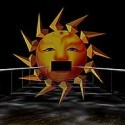
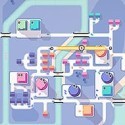












You place your first tile and the arena grows by exactly one piece, changing where the alien hordes can reach you. Volatiles builds its entire top-down action roguelike around that choice: every level-up hands you a new piece of the battlefield, and every piece decides whether your own dream becomes a weapon or a trap.
| Genre | Top-down action roguelike |
| Setting | Analog sci-fi nightmare inside your own mind |
| Core mechanic | Each level-up places a new arena tile |
| Opposition | Alien hordes |
| Progression | Wake in the sensory tank with new abilities |
| Mode | Single-player |
Starting on a Single Tile in Volatiles
Every run begins with a single tile. You fight through alien hordes, gather experience and place new pieces of the arena as you level up, so the map is something you author while under attack. Early in a run the space is tiny, which makes every dodge matter, and the first few placements decide whether you get breathing room or a cramped pocket.
Beginners tend to place tiles wherever they fit, and the result is an arena that serves the swarm better than it serves you.
Players who enjoy top-down shooters will feel the pressure immediately, because movement and layout are the same problem here. The tone leans into an analog sci-fi nightmare, and the hordes grow increasingly challenging as the run continues, so a weak early layout gets exposed sooner than most players expect.
Open Arenas or Narrow Paths: Shaping the Battlefield
You can keep the battlefield open, connecting distant parts of the map and creating room to dodge, or you can build narrow paths that turn the swarm against itself. Neither approach is correct on its own. The better choice depends on what the rest of your build looks like and how much risk you are willing to carry.
Open layouts reward mobility and clean dodging, while tight corridors reward defenses and firepower that punishes crowded hordes. Planning the arena around the strengths of your build is the habit that separates a good run from a lucky one.
The honest warning is that careless building backfires. Build carelessly and your own dream turns into a nightmare, and with a difficult reputation among the tags, players should expect to lose some runs to their own layout rather than to the aliens alone.
Tiles as Build Choices: Weapons, Upgrades and Risky Synergies
Tiles do more than shape the arena. Each one also brings something to the build, which means every placement is a layout decision and a loadout decision at once.
- Weapons and tools expand how you fight and how you handle the swarm.
- Upgrades and defenses make the build sturdier as the hordes thicken.
- Healing gives you a cushion when the layout turns against you.
- Risky synergies offer the biggest payoffs and the biggest chances of wrecking your own arena.
Roguelike veterans will see the appeal quickly: the best pick is rarely the strongest stat on its own, but the piece that fits the arena you have already laid out. By the time the hordes reach their toughest stretch, the layout you built earlier is doing as much work as any weapon.
Waking Up in the Sensory Tank: The Mold and the Lab in Volatiles
The story begins when you wake up in a covert lab with no clear memory of how you got there. The people around you call it treatment, but every dive into the sensory tank raises more questions than answers. Something called the Mold is buried in your mind, feeding you visions, broken memories and battlefields that should not exist.
Death in the dream is not the end. You wake up in the cold, water-filled sensory tank, unlock new abilities, strengthen your mind and return with a better plan.
Between runs you search for fragments of the truth and decide whose help to trust, because strangers in the lab are watching closely and whatever is growing in your mind is learning how to take control. Story-focused players get a reason to keep diving even after a bad run, and the full English audio gives the lab scenes more weight.
Tile, Tank and Mold Questions Answered
- How does tile placement work? You begin with one tile and place a new piece of the arena each time you level up. Each tile brings weapons, upgrades, healing, tools, defenses or risky synergies and also reshapes the space where you fight.
- What is the Mold? The Mold is something buried in your mind that feeds you visions, broken memories and impossible battlefields. Between runs you search for fragments of the truth about it while the people in the lab keep calling the sensory tank dives treatment.
- What happens when you die? Death in the dream sends you back to the cold, water-filled sensory tank rather than ending the story. You return with new abilities and knowledge, so a lost run still pays off in the next dive.
Volatiles rewards the player who treats every tile as a promise about the next wave, balancing open arenas against narrow paths and risky synergies against safe defenses. The Mold keeps learning between dives, and the sensory tank keeps handing you another chance, so the real question is whether the arena you build will protect your mind or hand control to whatever is growing inside it.
Comments
There are no reviews yet. Be the first one to write one.
