







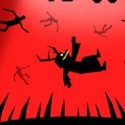




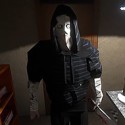


Five New-Fangled Nights

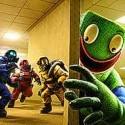






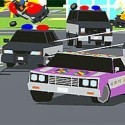
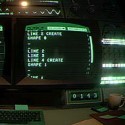




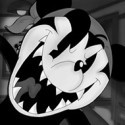
The office door light is the only thing keeping your hands steady, the monitor still booting its camera feed while a vent ticks somewhere down the corridor of the Huggy Lee Mansion Hospital. In Five New-Fangled Nights the first ten seconds of a shift are already a test: the power meter reads full, and it will not stay that way for long.
| Title | Five New-Fangled Nights |
| Genre | Horror survival, security management |
| Setting | Huggy Lee Mansion Hospital |
| Main Threats | Huggy Lee, Granny Grandmother |
| Core Systems | Camera network, electricity meter, doors, lights |
| Shift Length | Six hours per night |
| Structure | Five nights, one office |
Five New-Fangled Nights Begins in the Mansion Hospital Office
Every shift starts in the same cramped office inside the Huggy Lee Mansion Hospital. You have two doors, a tablet for the camera network, and a meter that ticks down every time you use either one. New guards tend to click through every camera just to get their bearings, burning power they will want later.
The office has no weapons and no way to fight back directly. Your only real tools are observation and denial: know where a threat is, then close the correct door before it reaches you. Five New-Fangled Nights layers enough uncertainty into the camera feeds that a camera might catch Granny Grandmother mid-step in one hallway and show nothing the next time you check it.
It is a small setting by design: one office, a handful of monitored rooms, and a clock counting toward six. That restraint is why the tension holds together instead of dissolving into a bigger, messier map.
Reading Huggy Lee Through the Camera Network
Huggy Lee is the more active of the two threats, and most of your camera time on an early night goes toward tracking him. He moves between camera zones in a way that rewards guards who check frequently but punishes anyone who leaves the tablet up too long, since every second spent staring at footage drains the meter. Players describe the rhythm as a camera-flip habit: glance, confirm, close, glance again.
A genuine question players ask early on is whether Huggy Lee follows a fixed route or a randomized one. His movement is not on rails; he can stall in one room for a long pause, then close the distance to your door in a couple of quick jumps, which keeps the camera network from becoming a routine you can memorize.
There are a few recognizable signs that tend to show up right before he closes in, and most guards learn to read them quickly:
- A camera feed that stays empty in a hallway he was just visible in seconds earlier.
- Audio that gets noticeably louder without a matching visual on the tablet.
- The door-adjacent camera flickering or losing signal for a moment.
- A sustained pause where nothing moves, usually meaning he is about to.
None of those signs are a guarantee, and that uncertainty is the point. Relying on the cameras alone, without ever trusting your ears, tends to end a shift early.
Granny Grandmother’s Approach and Why It Differs
Granny Grandmother does not behave like Huggy Lee, and treating her as a second copy of the same threat is a mistake new players make on night one. Where he commits to a hallway and pushes, she is patient in a way that reads almost passive until she suddenly isn’t. Guards who split their camera checks evenly tend to catch her early; guards who fixate on whichever threat scared them last get caught by the one they stopped watching.
She is frequently the answer to the question players ask after their first jumpscare: which one is actually harder to manage, Huggy Lee or Granny Grandmother? There is no universal answer. Some argue Huggy Lee is scarier in the moment because he closes ground fast once spotted, while others say Granny Grandmother is more dangerous over a full shift because she punishes inattention rather than slow reaction time.
What both threats share is a dependence on your power management. Neither one cares whether you ran out of electricity on purpose or by accident.
The Electricity Meter and the Six-Hour Clock
Every action in the office costs power: checking a camera, closing a door, turning on a hallway light. The meter only goes down over the six-hour shift, and if it hits zero before hour six, both doors deactivate and you have no way left to keep Huggy Lee or Granny Grandmother out. That single rule turns Five New-Fangled Nights from a reflex test into a budgeting problem.
The divisive part is how aggressively the meter drains once you start relying on the doors instead of the cameras as an early warning system. Some players feel the power burns unfairly fast once you start closing doors reactively. Others see that same drain as correct design, arguing that if door-spamming were cheap, the camera network would stop mattering by night two.
By the fourth hour on most nights, the meter is usually low enough that every remaining decision carries weight it did not have at the start of the shift. That late stretch, watching the clock crawl toward hour six while the meter creeps toward empty, is where most runs are decided.
Doors, Lights, and Split-Second Calls
The two doors are your only hard stop against either threat, and the lights mounted outside them serve a second purpose beyond visibility. Flicking a hallway light on when something is near the doorway will often make it retreat, buying you a moment to decide whether closing the door is necessary. That light-first, door-second habit is worth learning early.
- Check the last confirmed camera position for whichever threat is unaccounted for.
- Flash the corresponding hallway light rather than immediately sealing the door.
- Only close the door if the light doesn’t produce a retreat or the feed goes dark again.
- Reopen the door the moment it’s safe, since a held door drains faster than almost anything else in the office.
Skipping straight to step three under panic is understandable and extremely common on a first night. It is also usually the fastest way to hit hour four with no power left and two entities still very much interested in the office.
Five Nights and the Power-Drain Debate
The five-night structure changes what kind of attention the shift demands. The opening night is mostly about learning the office layout without either threat pressing hard, which is why new players get caught off guard later. By night three, the gaps between confirmed sightings tend to shrink, and guards coasting on light management alone start burning through power reserves faster than on night one.
Clearing all five nights back to back is treated as a real benchmark inside the community, distinct from beating any one night in isolation. Losing on night four after cleanly beating the first three is a well-known flavor of frustration, since a habit that worked early, like leaning too hard on one door, finally catches up once both threats have more room to punish it.
That escalation feeds into the game’s most argued-about point: whether the power economy is tuned fairly. Completionist players defend the current balance as the core skill test the loop is built around, while casual players describe the same drain as punishing before the camera patterns are familiar.
Who Keeps Coming Back to Five New-Fangled Nights
The office loop in Five New-Fangled Nights attracts a specific mix of players once you look past the jumpscare hook. There are guards chasing the clean five-night clear, treating every hour-four power reading as data to refine for the next attempt. There are also players who mostly want to see Huggy Lee or Granny Grandmother up close on camera and are happy losing on night one afterward.
A third group shows up to compare notes on which threat is worse, restarting shifts to test whether their door-versus-light instincts hold up against both Huggy Lee and Granny Grandmother. All three approaches are common enough that none gets treated as the correct way to play.
Whichever group a given guard falls into, the six-hour clock and the shared power meter tie every approach back to the same core tension in Five New-Fangled Nights. By the time the meter dips into its last sliver of charge on any given night, everyone is making the same kind of decision: trust the cameras, flash the light, or gamble on the door. Huggy Lee and Granny Grandmother do not care which reason brought you into the Huggy Lee Mansion Hospital office in the first place.
Comments
There are no reviews yet. Be the first one to write one.