











Sticky Business










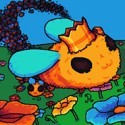
You open Sticky Business expecting a shop counter and a client waiting on stickers, and instead you’re staring at a pile of flower petals, curled leaves, and cut fruit pieces spread across the screen like someone dumped out a craft drawer. There’s no cash register, no queue of customers, no delivery van to load. What’s actually in front of you is a design table: pick the good petals, toss the bruised ones, and build something out of what’s left. It’s a strange bait-and-switch if you came in expecting the sticker-shop version of the name, but once you stop looking for a storefront and start treating it as a collage table, the appeal clicks fast.
| Genre | Creative design / casual sorting |
| Core Mechanic | Select high-quality petals, leaves, and fruit pieces; discard flawed ones; arrange the rest into a collage |
| Materials | Flower petals, fallen leaves, cut fruit pieces |
| Session Style | Open-ended, no fixed levels or timer |
| Difficulty | Casual, approachable for younger players |
Sorting the Good Petals from the Flawed Ones
The loop starts with a single click labeled SELECT, and it’s more particular than it sounds. Every batch of petals or leaves mixes clean pieces with damaged ones, torn edges, browned tips, odd discoloration, and you’re expected to notice the difference before building anything. Pick a flawed petal for the princess dress design and it sits wrong next to the clean ones, a visible seam in what should be a smooth gradient of color.
It’s a slower rhythm than most casual design games bother with. Rather than handing you a finished set of assets to drag around, Sticky Business makes sorting itself the first real decision, and within the first minute of picking through a leaf pile you develop a quick eye for what’s usable and what’s filler.
Players who gravitate toward collecting-and-sorting mechanics tend to linger here, working through an entire leaf pile to keep anything flawed out of the final arrangement. It’s a small compulsion loop, but the one the rest of the game is built on.
What Sticky Business Actually Puts in Your Hands
Once you’ve got clean material, the design work opens. The two signature builds are a princess dress assembled entirely from flower petals and an animal portrait built from leaves, and both ask you to think about shape as much as color. A petal that reads as a shoulder seam in one spot looks wrong rotated ninety degrees, so most of the play is trial placement: rotate, nudge, compare, before a piece earns its spot. Cut fruit pieces round things out as accent color, oranges and reds dropped in wherever a composition needs a jolt neither petals nor leaves supply.
The color palette matters more than it first appears. Petals skew toward pinks, reds, and whites; leaves run through greens, browns, and the occasional yellow. Mixing the two families in one design is where the more ambitious collages start looking composed rather than just assembled, since nothing nudges you toward a “correct” layout.
Newer players often approach it like a coloring book, filling space just to finish, and only on a second or third design start treating petal shapes as material worth arranging deliberately. That shift, from filling to composing, is where the game gets more interesting than its premise suggests.
Turning Fallen Leaves into Animal Portraits
The leaf-based animal designs ask the most of you, mostly because leaves are less naturally shape-cooperative than petals. A rounded maple leaf reads well as an ear or a wing, a narrower willow-shaped leaf works better as a tail or a limb, and figuring out which leaf goes where without a labeled guide is most of the challenge. There’s real satisfaction in laying down a leaf and having it click into place as, say, the curve of a fox’s back.
The discard pile matters more here than in the petal designs. A leaf with a torn edge might work fine buried in a dress pattern, but on an animal outline every silhouette edge shows, so the earlier quality-sorting step pays off directly in how clean the finished portrait looks.
Some players skip the animal builds entirely and stick to dresses, finding the leaf shapes harder to read at a glance, which is a fair criticism. The leaf pieces genuinely ask for more spatial reasoning than the petals do, and nothing bridges that gap for players who find it frustrating.
Why Sticky Business Never Hands You a Score
There’s no scoreboard, no star rating, no completion percentage anywhere in Sticky Business, and that’s the detail players argue about most. Every design just sits there, done because you decided it was done, not because a meter filled up. For some, that’s the point: a low-pressure creative space where a rushed choice or a mismatched petal costs nothing.
For others it’s the biggest weakness. Without a fail state or a target to hit, a handful of players lose interest after two or three designs once the SELECT mechanic’s novelty wears off, since nothing pushes toward a fourth. It’s a fair complaint, and the honest tradeoff of building a game around open-ended crafting instead of progression.
Play counts on the pieces this design is built from run well past 240,000, and roughly eight in ten players rate it favorable, suggesting the lack of scoring isn’t a dealbreaker for most of its audience, even if it leaves competitive-minded players cold.
- Do you need to finish a whole leaf or petal pile before starting a design? No, Sticky Business lets you jump straight into arranging pieces at any point, though sorting a full pile first tends to leave you a cleaner selection of usable petals and leaves to build from.
- What happens if you use a flawed petal or leaf by mistake? Nothing stops you from placing it, but a torn or discolored piece stays visibly rough at the edges of the finished dress or animal portrait, so most players remove it and swap in a clean one from the pile.
- Is Sticky Business built more for kids or for players who want a real challenge? It leans toward younger and casual players, with a simple SELECT interaction and no timer or fail state, though the leaf-based animal designs demand enough spatial reasoning to hold older players who enjoy open-ended crafting.
Strip away the mismatched expectations around the name and Sticky Business is a patient little crafting toy, built around picking good material out of a flawed pile and turning it into a princess dress, a leaf animal, or a fruit-accented collage nobody is grading. The SELECT mechanic never gets more complicated than it is on your first petal, but the judgment calls around it, which leaf reads as a tail, which petal ruins the seam, keep it from feeling shallow even after several sessions.
Comments
There are no reviews yet. Be the first one to write one.