















The Ruins of Calaworm












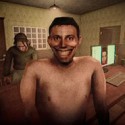



Casual controls, hardcore consequences — The Ruins of Calaworm strips away spellcasting, ranged combat, and complex stat sheets entirely, and somehow that simplification makes the moment a monster finally corners you feel more dangerous, not less.
| Genre | Turn-based dungeon crawler |
| Combat Style | Bump into things |
| Protagonist | Plague Doctor |
| Optional System | Sanity |
Playing as the Plague Doctor
You play as a Plague Doctor investigating a nearby fortress in The Ruins of Calaworm, and that Lovecraftian framing colors everything from the enemy design to the eventual introduction of an optional Sanity system tracking your mental condition as the descent continues. Beginners often approach combat expecting some hidden depth beneath the simple bump-to-attack mechanic, when the actual skill ceiling comes from positioning and route planning rather than any concealed stat system.
Bumping Into Things as Combat
- Attacking simply means moving into an enemy’s tile, and this streamlined system is a deliberate homage to the pre-Rogue dungeon crawlers The Ruins of Calaworm reworks from its 90s German source material
- Weapons like the Blunderbuss and the Alien Energy Coil change how bump combat resolves without adding complex stat interactions on top
- Players who’ve adapted to the simplicity describe combat encounters as feeling more like tactical puzzles about approach angles than traditional stat-check battles
Wisteria Widdershin and the Ghost Walk Tutorial
Wisteria Widdershin appears as one of the game’s more memorable threats, tied specifically to the Ghost Walk tutorial mechanic — a legacy system from the original game that was originally left as an undocumented secret for players to stumble onto. The developer has acknowledged that some players near the end of the game could genuinely escape Wisteria Widdershin without ever discovering this mechanic, and has committed to clearer guidance around it going forward.
Praying at Shrines to the Old Gods
Shrines scattered through the dungeon let players pray to the Old Gods for various boons, adding a layer of risk-reward decision-making distinct from the combat and exploration loop. Combined with keys, rare artifacts, and Arcane Barriers blocking certain paths, these shrines give The Ruins of Calaworm’s procedurally assembled maps genuine reasons to explore fully rather than beelining toward the next objective.
The Plateau of Leng and Beyond
The icy Plateau of Leng exists as a separate layer accessed through Portals, and getting there means accepting you’re genuinely lost until you find your own way back to the Ruins proper — a deliberately disorienting design choice that mirrors the cosmic horror tone running through the rest of the game.
What does the optional Sanity system actually track?
It monitors the Plague Doctor’s mental condition as a consequence of prolonged exposure to the dungeon’s horrors, adding a metagame layer of challenge for players who choose to enable it rather than functioning as a mandatory core system.
Is there a way to design custom maps for The Ruins of Calaworm?
Yes — a map editor lets players create their own layouts and feed them into the same pool the generator draws from, meaning community-made maps can appear alongside the handcrafted ones during normal play.
How different is Hardcore Mode from the standard experience?
Hardcore Mode strips back several of the accessibility features introduced during the rework, limiting available respawn points specifically to emulate the tougher, more punishing pace of the original 90s source material.
The Ruins of Calaworm succeeds by respecting exactly what made its obscure German source material worth reviving — bump-into-things combat, shrines to the Old Gods, and a Plague Doctor who’s never quite safe from something like Wisteria Widdershin waiting just beyond the next Arcane Barrier.
Comments
There are no reviews yet. Be the first one to write one.