















Slender The Eight Pages











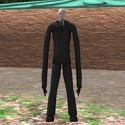
What actually happens the moment you catch a glimpse of him and don’t look away fast enough? Slender The Eight Pages answers that question by draining something the game never bothers to label clearly on screen, and by the time you understand what’s happening, the damage is already done.
Ten Landmarks, Eight Pages, No Guarantees
The forest holds ten fixed landmarks — vehicles, a building, a giant tree, rock formations, a brick wall, a stone pillar, a tunnel, felled trees, and fuel tanks — but only eight of them will actually be hiding a page on any given run, meaning two spots are dead ends every single time. Every page found carries the same frantic, scrawled handwriting, the words “HELP ME” repeated across the sheet in a way that never quite loses its effect no matter how many times you’ve seen it before.
The sanity meter is the mechanic Slender The Eight Pages never explicitly shows you, but it governs the entire back half of a run: staring at the Slender Man drains it, and running out ends things immediately, which is why experienced players train themselves to glance and disengage rather than study him even for a second longer than necessary.
A Flashlight That Costs You Either Way
Keeping the flashlight on drains its battery for good with no way to recharge it mid-run, while switching it off conserves that battery at the direct cost of spotting danger before it’s already close enough to matter. Newer players almost always leave it running out of pure instinct, which means by the time the later, more dangerous pages roll around, they’re left navigating half-blind with nothing left in reserve.
Jogging Until Sprinting Stops Being an Option
A sustained jog covers ground safely, and a sprint exists for the moments that actually demand it, but every sprint chips away at a stamina pool that doesn’t refill quickly, so the same burst of speed that felt free on the second page will leave you audibly out of breath and slower by the sixth. That stamina drain works as a second, quieter tension system running underneath the more obvious dread of not knowing where he currently is.
Reading the Signs Before He’s Actually Visible
His presence gets announced through sudden strings or a jarring piano hit layered under creeping static, and unlike a conventional stalking enemy, he doesn’t walk toward you so much as simply appear closer than he was a moment ago. Fog thickens with every page collected, static builds faster, and by the last couple of pages the ambient sound design alone is usually enough warning that he’s near before your eyes ever confirm it.
Finishing all eight pages doesn’t actually end the encounter cleanly — a stretch of total silence follows, and then he appears directly behind you regardless of how carefully you played, closing the game out with a slow fade into static rather than a sudden cutoff. Whether switching the flashlight off is worth it stays a genuinely open question in the community: it buys extra battery and a slightly longer window before he becomes unbearable to look at, but it also strips away the early warning that visibility gives you against his unpredictable positioning. And the trick advanced players lean on once static starts climbing is placing a tree or rock formation directly between themselves and him, since breaking line of sight lets the static recede instead of building toward a game over.
Slender The Eight Pages built an entire subgenre out of what it refuses to give you — no weapon, no health bar, just ten landmarks, a flashlight burning down to nothing, and the growing certainty that the eighth page is going to demand more composure than the first one ever did.
Comments
There are no reviews yet. Be the first one to write one.