















Pikabuu: STOP
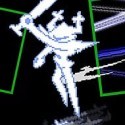

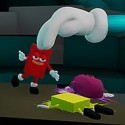
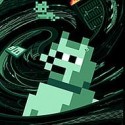

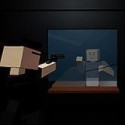





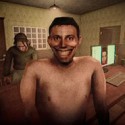



In Pikabuu: STOP! you follow Beni, a husband and father whose ordinary family life with Nadia and Kaila is disrupted by one decision. The game is a dark visual novel with walking-simulator elements, so the emphasis is on narrative, dialogue, atmosphere, and movement rather than combat or complicated puzzles.
| Genre | Dark visual novel, psychological horror |
| Platforms | Windows, Android |
| Controls | WASD, Shift, Space, E |
| Core mechanic | Explore story scenes, interact with objects, and advance dialogue |
Beni, Nadia, and Kaila in Pikabuu: STOP!
Beni’s role as a husband and father is central to the tone. Nadia and Kaila establish the family stakes before the story becomes darker, so ordinary domestic moments carry more weight than they would in a conventional action game. The game uses movement to place the player inside those scenes rather than presenting everything through static dialogue screens.
Beginners sometimes expect a horror game to provide a large number of mechanics, but Pikabuu: STOP! deliberately keeps the interaction narrow. WASD handles movement, Shift allows running, Space advances dialogue, and E is used for interaction. The simplicity leaves attention on the story.
Players who prefer visual novels will recognize the emphasis on dialogue and pacing, while walking-simulator players may appreciate the ability to move through the scenes. Horror-focused players should approach it expecting a narrative build rather than combat encounters.
Exploration and Dialogue in Pikabuu: STOP!
Exploration is intentionally modest, with locations serving the narrative rather than functioning as large puzzle spaces. Interacting with the environment can reveal context that would be easy to overlook if the player rushed directly toward the next dialogue prompt.
A useful habit is to pause after entering a new area and look for interactable objects before advancing the conversation. Because the game is story-driven, small environmental details can reinforce what Beni, Nadia, and Kaila are experiencing.
The divisive point is exactly this limited interactivity. Players looking for action or complex puzzles may find the pace slow, while players who want a focused emotional horror story can see the restraint as part of the design.
The Family Crisis
The story’s central pressure comes from the consequences of an accidental decision. Rather than relying on a conventional monster loop, the game builds tension by making the player’s understanding of Beni’s situation increasingly uncomfortable.
One noticeable playing detail is the contrast between movement and dialogue. Walking through a quiet space can feel ordinary until the next conversation changes the meaning of what the player just saw. That transition is where the psychological side of the horror becomes strongest.
By the time the later scenes unfold, the important question is no longer what action button to press but what information the player has understood. That makes the game closer to interactive fiction than to a traditional survival-horror title.
Pikabuu: STOP! and Player Expectations
The community vocabulary around the game naturally centers on story-driven horror, walking simulator, psychological horror, dialogue, and multiple interpretations of character decisions. Those terms describe the experience better than action-game language would.
Players who enjoy narrative games can take their time with the environments, while players who normally prefer faster horror can use running to move through familiar areas more quickly. The difference in preferred pace changes how the same scenes feel.
Pikabuu: STOP! is deliberately intimate rather than expansive. Its strongest material comes from Beni’s family situation and the gradual shift from ordinary life toward danger, not from a large inventory or combat system.
What are the controls in Pikabuu: STOP!?
WASD moves Beni, Shift is used for running, Space advances dialogue, and E interacts with objects. The control scheme is intentionally simple because the game puts most of its attention on narrative scenes.
Who are Beni, Nadia, and Kaila in Pikabuu: STOP!?
Beni is the central family figure, while Nadia is his wife and Kaila is his daughter. Their ordinary family relationship establishes the emotional context for the dangerous chain of events that follows.
Is Pikabuu: STOP! focused on combat?
No. The game is presented as a dark visual novel with walking-simulator elements, and its core interaction is movement, dialogue, and environmental interaction rather than combat or complex puzzle solving.
Pikabuu: STOP! builds its horror around Beni, Nadia, and Kaila instead of relying on constant action. Simple movement and interaction leave room for the family story to become increasingly disturbing as the consequences of Beni’s decision unfold.
Comments
There are no reviews yet. Be the first one to write one.