















Mimic Party

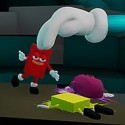












In Mimic Party you start with a microphone, a stranger’s reference clip you’ve never heard before, and exactly one attempt to reproduce it before the table hears whatever you actually managed to produce, which matters more than it sounds like it should for a game built around making people laugh.
Nobody Gets a Warm-Up Take
Each round plays a short reference sound to everyone at once, and after a brief countdown every player records their own attempt simultaneously, with no option to redo a bad take before the group hears it played back. Beginners consistently underestimate how little time this gives to actually process the sound’s rhythm, and the first couple of rounds in any new session tend to be rougher than what the same group produces once they’ve internalized the pace.
Scored by an AI That Doesn’t Care How Hard You Tried
A local grading system compares each recorded attempt against the original clip’s melody, rhythm, and attacks, turning the result into a score out of 100 that’s visible to the whole table immediately. Enthusiasm alone doesn’t move that number — players who track pitch shifts and pauses in the reference sound consistently outscore louder, more committed attempts that ignore timing entirely.
What the Wheel Does to You Between Rounds
- A shared wheel spins after each round, distributing bonuses, score multipliers, and sabotages across the table without warning anyone in advance.
- A sabotage attaches itself to one specific player’s next recording, and that player has no idea their voice is about to come out saturated, echoing, chopped into pieces, or replaced outright until the playback actually starts.
- Chasing a multiplier the wheel just handed out means accepting the same wheel might hand a sabotage right back on the very next spin, which keeps even a commanding lead from feeling secure.
Building a Table Out of Sound Packs
The base game ships with its own themed packs, though most of the community’s long-term variety comes from the Steam Workshop, where anyone can publish a custom pack for others to download. A lobby won’t start a round built around an unfamiliar pack until every player has finished downloading it, and the interface makes that wait state visible rather than leaving players guessing why the match hasn’t begun.
Playing Mimic Party Without a Full Table
Just Play exists purely for loose, low-stakes warm-up rounds, Survival pushes toward a personal best score run, and a rotating Today’s Stage challenge gives solo players something new to attempt without needing four other people logged in at once. Sound-pack creators lean on these solo modes constantly, less to chase a score and more to hear how their own published clips actually land before releasing them to a full lobby.
Reading the Reference Clip Instead of Just Reacting to It
Players who consistently score well describe listening for where a clip pauses or bends in pitch rather than treating the whole four seconds as one continuous sound to copy, since the grading system rewards matching those specific shifts far more than raw volume.
- How many people does Mimic Party actually need to play? The game supports solo sessions through Just Play and Survival as well as full tables of up to five, so a missing fourth or fifth player doesn’t rule out a session entirely.
- What exactly does the local AI grade when scoring a take? It measures how closely a recording matches the reference clip’s melody, rhythm, and attacks, converting that comparison into a score before the wheel applies any bonuses or sabotages on top.
- Does a sabotage affect more than the one round it lands on? No — a sabotage only distorts or replaces the very next recording from its targeted player, and normal play resumes immediately afterward regardless of how that particular take turned out.
Mimic Party gets its replay value from refusing to let any single player stay comfortable for long — the wheel decides who gets sabotaged next, the countdown never waits for anyone to feel ready, and once a garbled, echo-drenched recording plays back to a table that’s already laughing, nobody’s really tracking the scoreboard anymore.
Comments
There are no reviews yet. Be the first one to write one.