















Jelly Truck














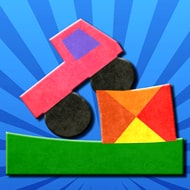
Jelly Truck looks like a goofy driving toy but plays like a balance exam, where one twitchy tap on the accelerator can undo an entire run you’d spent two minutes building.
| Genre | Physics-based driving puzzle |
| Core objective | Reach the finish line without the truck flipping or breaking apart |
| Controls | Arrow keys on desktop, touch swipes on mobile |
| Level count | Roughly 15 to 20 stages, depending on the version you’re playing |
What the Jelly Truck Actually Rewards
The truck’s soft, wobbling body isn’t just a visual gimmick — it’s the entire game. Every acceleration, brake, and landing deforms the truck slightly, and that deformation carries into the next obstacle whether you account for it or not. This is why a level that looks easy on the first attempt can still end in a flip: the truck arrives at a ramp already stretched from the last bump, and that leftover motion changes how it launches.
Wobble Over Speed
Most beginners lose runs by treating the truck like a normal vehicle and gunning it toward every gap. Jelly Truck punishes that instinct almost immediately, since a fast approach to a ramp sends the truck into an uncontrolled spin more often than a slow, deliberate one does. Momentum carry-over: the stretch left in the truck’s body from your last move, which decides whether the next ramp launches you cleanly or sends you spinning.
Why does the truck keep flipping even on stretches that look flat? Usually it’s this carry-over effect rather than the obstacle itself — a hard brake right before a slope leaves the truck compressed, and releasing the brake at the wrong moment snaps it forward with more force than the slope was designed for.
Reading the Terrain Before You Commit
Early stages ease you into this by keeping ramps gentle and gaps narrow, giving you room to feel out how the truck responds before the terrain gets punishing. By the time a run reaches its steeper inclines, the margin for error shrinks fast, and players who never slowed down in the early stretch usually pay for it here.
Ramps, Gaps, and Moving Platforms
Beyond the basic slopes, later levels mix in moving platforms that require timing on top of balance, since jumping a fraction of a second early or late puts the truck’s landing point somewhere the platform no longer is. Gaps test something different — clearing distance without so much speed that the landing snaps the truck’s body past its recovery point.
The combination is what separates a mid-level from a late-level: it’s rarely one hard obstacle, but two or three moderate ones back to back that don’t give the truck time to settle between them.
Patient players who treat each ramp as its own small puzzle tend to clear these stretches faster than players trying to carry speed through the whole section, even though carrying speed looks faster in the moment.
Spikes and Pits
Spikes and pits don’t test balance so much as commitment — once the truck is airborne toward one, there’s no adjusting mid-jump, so the decision has to be made well before the wheels leave the ground.
Checkpoints on Longer Stretches
How do you stop the truck from breaking apart entirely on longer levels? Checkpoints are the answer the game already builds in — they save your progress mid-level so a bad landing costs you the last stretch rather than the whole run, and leaning on them deliberately rather than treating a checkpoint as a failure marker makes the harder stages far less frustrating.
Why Jelly Truck Divides Players
Not everyone enjoys how unpredictable the wobble physics get once inclines steepen, and it’s a fair complaint — there are stretches where a clean run comes down to luck as much as skill, since two identical-looking approaches to the same ramp can produce different landings. That unpredictability is also exactly what keeps a loyal group of players coming back, trading notes on which speed and angle combinations tend to behave consistently.
The Physics Learning Curve
Speedrun-minded players who try to gun it through early levels usually hit a wall once moving platforms appear, and going back to a slower approach after that habit sets in takes real reconditioning. The physics engine doesn’t punish speed itself so much as speed applied at the wrong moment.
Version Differences Across Platforms
How many levels does Jelly Truck actually have? It depends on where you’re playing — most versions land somewhere around 15 to 20 stages, with difficulty and obstacle mix varying slightly between the desktop arrow-key build and the touch-based mobile version, since swipe input changes how precisely you can modulate speed on the tighter turns.
Jelly Truck stays interesting because the truck never stops being the obstacle as much as the terrain is — every checkpoint you lean on and every ramp you take slow instead of fast is a small admission that the wobble, not the track, is what you’re actually racing against.
Comments
There are no reviews yet. Be the first one to write one.