
















Slice & Dice












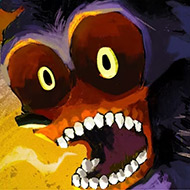



What do you do when three of your five heroes are marked to die before you have even rolled? Slice & Dice puts that question on screen in nearly every boss fight, and the answer comes from dice, rerolls, and careful sequencing rather than luck alone.
| Genre | Tactical dice roguelike |
| Party | Five heroes, each with a personal die |
| Run | Twenty levels ending in a final boss |
| Difficulty | Seven levels from Heaven to Hell |
Five Heroes, Five Dice, One Turn at a Time
Every fight starts with the monsters rolling first. Their intended actions are shown before you act, so you always know who is about to be hit and by what. That open information is what separates the game from a pure gamble.
Then your own dice come out. Each hero owns a die with faces for attacks, shields, heals, and special abilities, and you get two rerolls before you commit. A bad face on your Acolyte when the party needs healing is something you reroll, not something you accept.
Beginners usually spend rerolls on damage faces and forget that survival comes first. Learning to ask which hero must live this turn is the biggest early skill, and the undo option lets you test a sequence before you lock it in.
Hero Classes Worth Learning in Slice & Dice
The roster is huge, with 128 hero classes to unlock, so a few anchors help. Think of them as the vocabulary every run is written in.
Berserker trades safety for damage. The first time a slime queen’s acid volley kills one before it swings, you learn why shields matter.
Student is an apprentice mage who rewards patient upgrades. Early on the spells look modest, but they scale well once you build around them.
Acolyte is a skilled healer, and most stable runs keep one alive. Losing the Acolyte early is the classic way a promising party collapses.
Hexia carries the Pain Mirror ability, which inflicts damage equal to the damage she receives. Surviving a hit turns into a weapon, which makes her a favorite with players who like clever exchanges.
Ludus takes her name from the Latin word for game. It is a small wink that fits a roster built around dice.
Early Levels Versus the Walls Later On
Early in a run the monsters are readable and forgiving, and almost any lineup limps through the first few levels. By the time you reach the later levels, the same sloppy turns start costing heroes.
Seven difficulty levels run from Heaven to Hell, and Raid mode hands you ten heroes while doubling the number of enemies. Players who want a different flavor of challenge tend to jump there once a standard run clicks.
If The Hand turns up as the final boss, its Handicap passive actually boosts your heroes’ dice, which is a rare case of a boss helping you. It is still a long fight, and one lost battle ends the whole run.
Slice & Dice Frustrations Players Admit To
Not everyone loves the loop. A lost fight means a full restart, and with 73 monster types and 473 items in the pool, the early unlocks can feel like a wall of information.
Players also argue about luck. Perfect information about monster actions softens the dice, but a run can still hinge on a reroll that never gives you the face you needed, and skeptics say that is too much randomness for a tactics game.
Tacticians who love puzzle sequencing tend to forgive this, while casual players often bounce off the first boss.
Slice & Dice Questions Before Your First Run
Three questions keep coming up for new players, and the answers shape how you plan a party.
- Is the game just luck? No, because monsters show their actions before you roll and you can reroll before committing. The dice set the menu, but your sequencing picks the meal.
- How many heroes do you control? Five, each with a personal die, such as the Berserker, Student, or Acolyte. Raid mode raises that to ten heroes against twice as many enemies.
- How hard does it get? Seven difficulty levels run from Heaven to Hell, and the final boss arrives after twenty levels. A single lost fight sends you back to the start.
Slice & Dice stays compelling because the dice are only half the story. Sequencing Hexia’s Pain Mirror, protecting your Acolyte, and reading each monster’s telegraphed attack turn a pile of random faces into a plan, and that is why one more run always sounds like a good idea.
Comments
There are no reviews yet. Be the first one to write one.
