
















Refund Me TD






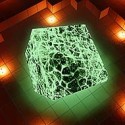






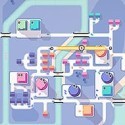

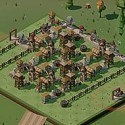
In Refund Me TD you begin with an empty meadow, an entrance for the enemy, an exit they are desperate to reach, and a timer that is already working against you. There is no preset lane, so the route they walk is whatever you decide to build. The run is meant to be finished in two hours of total play across 50 levels, and a victory inside that window leads to a pointed question about getting your money back. The result is a tower defense where planning speed matters almost as much as planning quality.
| Genre | Maze-building tower defense |
| Total Levels | 50 |
| Run Limit | Two hours of play time |
| Tower Types | 8 |
| Players | Single-player |
| Platform | PC |
Turning Open Grass into a Long Road in Refund Me TD
Fences are your main weapon before any tower is placed. Each one bends the enemy route, and a clever layout can stretch a short crossing into something several times longer. Every extra cell they walk is extra time under fire, so a patient maze often does more work than a pricey upgrade. The only limit is that you cannot seal the path shut, though the margin is thin enough to make you nervous.
Players coming from classic custom-map tower defense will recognize this instinctively, but a few habits transfer badly. A winding route is only useful if it keeps passing your towers, and a spiral that wanders out of range wastes its length. Checking the tower preview on a target cell before building shows the real numbers for that exact spot, which saves many wasted placements.
Speed matters too. Because the whole run lives inside a countdown, an elegant layout that takes five minutes to design costs more than a decent one built in one. Most players settle on a few reliable maze shapes early and reuse them.
What Each of the Eight Towers Is For
The Beehive sends out swarming projectiles for dependable single-target pressure, while the Bread Oven fires heavy shots that blast an area and leave a crater behind. Those two form the backbone of most early defenses, because one handles steady threats and the other punishes crowds. Pairing them along a corner of your maze, where enemies bunch up, is a common opening.
The Quench Barrel fills the air with a mist that drags enemy speed down, and the Fire Pit throws embers upward as a lingering damage source. Slowing effects gain value as the route grows, since each slowed enemy spends longer inside every other tower’s range. Cozy-minded players tend to love how readable these effects look on the board.
The Watchtower strikes everything along a straight line, and the Fire Lookout delivers the strongest single blow of any tower. Their real importance shows up later, because they are the only two that can touch airborne enemies. The Windmill strengthens the towers beside it, and the Market Stall exists purely to grow your income. Treat the stall as an investment, because every level spent without it is a level of lost growth.
Reading the Enemy Roster, from Rogues to Mages
Rogues are quick and show up in small numbers, so slowing effects and reliable early damage handle them. Knights and Barbarians move at a crawl but soak up a lot of punishment, which makes them the enemies that test whether your maze is actually long enough. Skeleton minions arrive in bigger groups, and Mages travel with them to keep the pressure varied.
Waves also come in uneven health, so the group stretches out along the route instead of dying together. If you only tune your defense for the leaders, the stragglers walk through untouched. Building overlap across the entire path is the more reliable answer.
Tower defense veterans will already know the lesson, but newcomers learn it the hard way. A defense that kills the front line beautifully and ignores the rear is one slip away from a leak.
Sapper Waves and the Cost of Clustering
Starting at level 8 and repeating every eighth level after, a special wave of Sappers appears. They are a separate kind of enemy, carry explosives, and are noticeably tougher than the regular roster. Their goal is your towers instead of your gate, which makes them the biggest threat to a carefully built defense.
When a Sapper reaches a group of towers, the damage is permanent. Nothing can be repaired, and the lost cluster stays a hole in your layout for the remainder of the run. Players who keep their best towers bunched together feel this the most, while those who spread their strongest pieces across the board lose far less.
By the time level 16 arrives, most players have learned to treat the Sapper levels as scheduled exams rather than surprises. The game announces the threat in advance, so the only question is whether your layout is ready when it lands.
Flyers and Growing Boards Break Your Favorite Layout
Twice during a run, a flock of flyers cuts straight across the meadow from entrance to exit, ignoring every fence you built. Your maze is useless against them, so the burden falls on towers that can hit the air, which means the Watchtower and the Fire Lookout. The game warns you a level early, and players who ignored those two towers up to that point feel the shortage immediately.
The meadow itself also expands six times, adding space to the north, east, south, and west in turn, then both ends together, then every side. These expansions are announced ahead of time and never share a level with a Sapper wave. Each one invites a redesign, because a layout built around the original boundaries rarely suits the larger board.
A rare card can expand all four sides at once, which delights some players and unsettles others. It rewards flexible thinkers and punishes anyone who treats the first maze as permanent.
Drafting Cards and Racing the Clock in Refund Me TD
Towers and upgrades come as cards, and the pool never hands you everything. Because of that, each run develops its own identity, with some players spreading across many tower types and others betting on a small group. The Specialist upgrade is a good example, since it counts the tower types actually standing on the board rather than the ones you have picked in the draft.
The two-hour limit works out to a bit over two minutes per level on average. The timer only runs while the game is open, stops when you quit, and carries over if you begin a new run, so restarting does not buy extra time. Players chasing the refund treat the easy early levels as a time bank for the harder Sapper stretches.
Opinions on the whole concept are mixed but mostly friendly. Some players enjoy the dare as a clever twist, while others see a modest tower defense with a marketing hook. The soundtrack was generated with AI, which the developers disclosed and which some players dislike, and a few reviewers mention trouble clicking the window at launch. Even so, the run is short enough that most people finish deciding for themselves.
Refund Me TD ends up being about tradeoffs: every Watchtower you place, every Sapper you survive, and every extra minute you spend perfecting a maze all draw from the same two-hour pool. Plan for the flyers early, keep your Fire Lookout protected, and the final question about your refund will feel like something you earned.
Comments
There are no reviews yet. Be the first one to write one.
