















That’s Not My Mom!




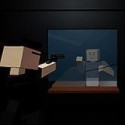





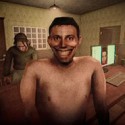

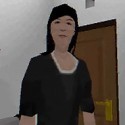

That’s Not My Mom! places a young schoolboy inside a familiar home where small irregularities can signal something much worse. The game is built around anomaly spotting: observe the house, identify what does not belong, and understand that the suspicious behavior of the boy’s mother is only one part of a wider outbreak.
| Genre | Anomaly horror, first-person thriller |
| Platform | Windows |
| Structure | Short repeated observation sequences |
| Core mechanic | Find unusual occurrences around the house and interpret them correctly |
That’s Not My Mom! and Anomaly Spotting
The core loop is simple but attention-heavy. You return home, inspect familiar rooms, and look for something that was not there before or behaves differently from the expected pattern. The game borrows the appeal of anomaly-hunting titles where a tiny visual change can matter more than an obvious scare.
Beginners often search only for dramatic changes. That is exactly what makes subtle anomalies effective: a slightly wrong object, altered position, or strange behavior can be easier to miss than a large visual disturbance. A careful player checks the whole room rather than staring only at the mother.
Players familiar with anomaly games use terms such as anomaly, loop, baseline, false positive, and reset. Those terms fit the structure because success depends on learning the normal state of the house before identifying what has changed.
The House in That’s Not My Mom!
The house functions as a controlled observation space. Its familiarity gives the player a reference point, while repeated visits make small differences increasingly noticeable. The game does not need a huge environment because the challenge is remembering details rather than covering distance.
One practical habit is to scan the room in the same order every time. That reduces the chance of overlooking a change simply because attention moved randomly. Once the player has a reliable visual routine, anomaly recognition becomes faster and less stressful.
The divisive aspect is the scare design. Players looking for sustained action may find the repeated observation slow, while horror fans who enjoy uncertainty can appreciate the quiet tension between obvious events.
Anomaly Outbreak and Difficulty
The difficulty rises as the player becomes responsible for distinguishing meaningful changes from ordinary environmental variation. Early in the game, a strange event can be obvious enough to teach the concept. Later moments rely more heavily on memory and careful comparison.
The most useful advanced technique is to compare object relationships rather than isolated objects. A chair may look normal by itself, but its position relative to a table or doorway can reveal that something changed. That kind of spatial memory is more reliable than waiting for a jump scare.
The story also expands the situation beyond the house, suggesting that the strange events are part of a larger anomaly outbreak. This gives the repeated home visits a purpose beyond simply completing another observation loop.
That’s Not My Mom! and Horror Recognition
The strongest playing moment often arrives when nothing obviously frightening happens but one small detail feels wrong. That recognition can be more effective than a loud scare because the player has to trust their own memory.
Players who enjoy observation puzzles can treat each return as a checklist exercise, while players who prefer horror can focus on atmosphere and sudden changes. A third group, familiar with Exit 8-style anomaly games, will likely approach the house as a visual memory test from the first minute.
That’s Not My Mom! remains intentionally compact, and some players may find the modest scope limiting. The focused structure is also why the game can deliver its central anomaly loop without padding it with unrelated systems.
How do you find anomalies in That’s Not My Mom!?
Learn the normal appearance of each room first, then compare object positions, behavior, and unusual visual details. The mother is an important clue, but the game can hide anomalies elsewhere in the house.
Why is the house difficult to inspect in That’s Not My Mom!?
The challenge comes from memory and comparison rather than complex controls. Rechecking rooms in a consistent order makes subtle changes easier to notice and reduces the chance of missing an anomaly.
What is the main idea behind That’s Not My Mom!?
The game asks the player to identify unusual occurrences during repeated visits home. The suspicious behavior around the mother is connected to a wider anomaly outbreak, so observation becomes part of the story as well as the puzzle.
That’s Not My Mom! turns an ordinary home into a memory test where the smallest change can matter. The boy’s return home, the suspicious mother, and the growing anomaly outbreak give the observation loop a clear horror purpose.
Comments
There are no reviews yet. Be the first one to write one.