















Five Nights at Chuck E Cheese

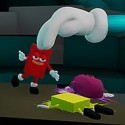


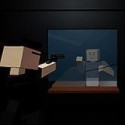





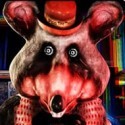
You lock eyes with Chuck E. Cheese through the office monitor, and for a half second everything looks perfectly normal — the yellow shirt, the red jacket, the bowler hat all present and accounted for. Then he isn’t where the camera left him anymore, and Five Nights at Chuck E Cheese stops being a nostalgia trip and starts being a survival horror shift you have to make it through.
| Genre | Survival horror, point-and-click monitoring |
| Antagonist | Chuck E. Cheese |
| Structure | Night-based progression |
| Extras | Custom Night mode |
Chuck E. Cheese as the Threat
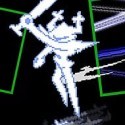
This version of Chuck E. Cheese draws on his portrait-era design — yellow shirt, red jacket, black bowtie, and a red bowler hat — but with unsettling changes bolted on, including a metallic cigar with an orange LED tip and no lower half at all, just a metal post trailing wires where his legs should be. He becomes active starting on Night 1, and his starting position near the front of the building is meant to feel deceptively harmless the first time you clock it.
Night Progression and Rising Difficulty
Each night raises the stakes incrementally, with Chuck E. Cheese’s movement patterns growing more aggressive and less predictable as the shifts continue. Beginners often lean too heavily on camera-checking every few seconds during the earlier nights, burning through resources that later nights demand far more carefully.
Managing the Office
- Monitoring cameras across the building is how you track Chuck E. Cheese’s position before he gets close enough to be a direct threat.
- Closing doors at the right moment buys crucial seconds, but doing it too early or too often drains resources needed to survive the full shift.
- Balancing vigilance against resource conservation is the core tension of every night, and it only gets tighter as the difficulty ramps up.
Custom Night and Replayability
Once the main nights are cleared, Custom Night mode lets players adjust difficulty settings and create harder configurations for replay value beyond the base campaign. This mode is where the community spends most of its long-term time, pushing settings to their limits well after the story nights themselves have been completed.
Community Reactions to the Fan Reworking
Because this is a fan-made project built on established genre conventions, players frequently compare its jump-scare pacing and animatronic design choices against other entries in the same wider fan-game space, with reactions to Chuck E. Cheese’s redesigned look split between those who find it appropriately unsettling and those who feel it strays too far from the source material’s charm.
What night does Chuck E. Cheese first become dangerous?
He’s active starting on Night 1, though his early movements are slower and easier to track than the aggressive patterns that develop across later nights.
What’s the point of Custom Night mode?
It lets players adjust difficulty settings after finishing the main campaign, extending replayability by letting the community build and share harder configurations beyond the standard progression.
Why does Chuck E. Cheese not have a lower body in this version?
The design choice replaces his legs with a metal post and trailing wires, a deliberate visual departure meant to make his portrait-era appearance feel more unsettling than the original mascot design.
Five Nights at Chuck E Cheese earns its place in the crowded animatronic-horror space by leaning fully into how wrong a familiar mascot can feel once his legs are gone and his cigar is glowing in the dark — clearing every night against him, and then chasing harder Custom Night configurations afterward, is exactly the loop this kind of game is built to reward.
Comments
There are no reviews yet. Be the first one to write one.