















Forage Wizard















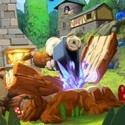
p>In Forage Wizard you start with nothing but a cursor and a patch of forbidden woods to click through, which matters more than it sounds like it should — every stick, ore chunk, and wheat stalk gathered by hand in the opening minutes becomes the seed resource for a fully automated magical factory hours later.
| Genre | Incremental clicker, automation |
| Setting | Forbidden woods and glade |
| Average Playtime | Around 9 hours |
| Progression | Branching skill tree |
Foraging With a Mighty Cursor
Early progress in Forage Wizard revolves entirely around manually clicking to chop wood, mine rocks, and harvest wheat, gathering raw materials that later feed into crafting recipes for buildings and upgrades. Beginners tend to spread their early clicks across too many resource types at once, when focusing on whichever material unlocks the next tier of automation fastest tends to snowball progress far more efficiently.
The Branching Skill Tree
- Skill tree choices genuinely change how the game plays rather than simply adding flat stat bonuses, meaning two players can end up with meaningfully different production strategies by the mid-game.
- Some branches lean toward maximizing automation and idle output, while others favor active play with faster manual gathering and crafting speed.
- Committing early to one branch over another shapes which buildings feel worth prioritizing later, since the skill tree and the blueprint shop are designed to reinforce each other.
Self-Chopping Trees and Elemental Distilleries
Once enough blueprints are unlocked, Forage Wizard lets players build self-chopping trees, chaotic brewing wells, and elemental distilleries that handle resource generation without further clicking. Watching a base transition from manual grinding to a fully humming production chain is the game’s central emotional payoff, and it’s a transition players consistently describe using the same word: satisfying.
Community discussion has flagged one specific pain point fairly consistently — water consumption scales up significantly in the late game, but no dedicated automation building exists for it yet, forcing players to improvise semi-automated solutions using collectors and storage pylons rather than a clean, purpose-built system.
Primordial Cubes and Trading for Gold
Primordial cubes represent some of the rarer materials tucked into hidden locations within the woods, and collecting them ties directly into unlocking some of the more advanced alchemical recipes later in a run. Trading surplus resources for gold rounds out the economy, giving players a reason to keep production running even after their immediate crafting needs are satisfied.
Where Advanced Players Focus Their Optimization
Experienced players plan blueprint purchases several steps ahead, prioritizing buildings that unlock further automation chains rather than ones that simply produce more of a single resource in isolation.
How long does it take to unlock full automation in Forage Wizard?
Reaching a genuinely hands-off production loop typically takes several hours of steady play, since manual foraging remains necessary early on before enough blueprints and skill tree points accumulate to support self-sustaining buildings.
What should I prioritize first on the skill tree?
Branches that unlock early automation buildings tend to compound faster than pure stat-boost branches, since automating even one resource early frees up manual clicking time for whatever material is still bottlenecking progress.
Is there a way to fully automate water production?
Not directly as of the current build — players have found workable semi-automated setups using collectors and chest pylons routed toward crafters, but no dedicated water-generating building exists yet to fully close that loop.
Forage Wizard earns its hold on players by making the shift from manual clicking to automated wizardry feel genuinely earned, and it’s the moment your first elemental distillery starts humming away on its own, freeing you up to go hunt down a primordial cube instead, that makes the whole incremental loop click into place.
Comments
There are no reviews yet. Be the first one to write one.