













Nextbot Graveyard
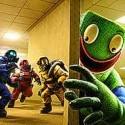















You’re standing in a dim, half-familiar room with a portal glowing somewhere out of sight, a clock already ticking down from a hundred seconds, and heavy, uneven footsteps closing in behind you. That’s the opening of every attempt in Nextbot Graveyard, and it never gives you more than a second or two to get your bearings.
| Genre | First-person survival horror, chase and escape |
| Controls | WASD to move, mouse to look, sprint, hide and unhide |
| Round timer | 100 seconds per level |
| Levels | 6, each harder than the one before it |
| Fail condition | Instant elimination on contact with the pursuing nextbot |
Where You Wake Up
Nextbot Graveyard drops you into its rooms with almost no setup. There’s no lengthy intro explaining why you’re there — just a level layout you haven’t seen before, a portal you need to reach, and a hundred-second window to find it.
That lack of hand-holding is deliberate. The game borrows its structure from the Garry’s Mod nextbot chase sessions it’s built around, where the fun comes from being dropped into unfamiliar space and figuring out the escape route under pressure rather than memorizing it in advance.
The Nextbot Behind You
Whatever is chasing you in a given level moves at a pace just fast enough to punish hesitation. It doesn’t lose interest or wander off once it has a line on you — it simply keeps closing the distance until either you reach the portal or it reaches you.
Contact ends the attempt immediately. The nextbot knocks you away on touch, and there’s no health bar or second chance — one clean hit and the round is over, keeping every level tighter than its hundred-second timer alone suggests.
Idiot, Obunga, and the Rest of the Lineup
Nextbot Graveyard doesn’t reuse a single generic pursuer across all six levels. Several named nextbots rotate through, each pulled from the wider nextbot meme lineage the game leans on directly:
- Idiot, one of the more common early pursuers players run into
- Obunga, probably the most recognizable name in the whole nextbot scene
- Patrick Bateman, Sanic, SpongeBob, and The Preacher, each showing up in later rooms
Recognizing which one is chasing you matters less for strategy than for atmosphere — the pacing and hitbox feel similar across most of them — but players in forums and comment sections talk about individual encounters by name far more often than by level number.
Hiding Without Actually Hiding
Hide and unhide are separate, deliberate inputs rather than an automatic crouch, and that distinction matters. Ducking into a hiding spot at the wrong moment can trap you there if the nextbot happens to pass close by, since breaking out of hiding takes a beat you don’t always have.
Experienced players treat hiding as a last resort rather than a default strategy, since standing still anywhere on the map burns seconds off a clock that’s already unforgiving. It’s more useful for briefly resetting a chase line than for waiting an entire pursuit out.
The Hundred-Second Clock
Every level runs on the same hundred-second countdown, a tighter constraint than it sounds once you’re navigating an unfamiliar room while being chased. Wasted seconds checking a dead-end or backtracking from a wrong turn add up fast against a nextbot that never stops closing ground.
That shared timer across all six levels is one of the more consistent things about Nextbot Graveyard, and most repeat players build a rough internal sense of pacing — roughly how far into the hundred seconds they should already be near a portal rather than still exploring.
Six Levels, Each One Tighter Than the Last
The six levels don’t just reskin the same room with a different nextbot — the layouts get more cramped and the portal harder to spot as you progress. A typical push through them follows a rough pattern:
- The first level or two teach the hide-and-run rhythm in relatively open rooms with an obvious portal
- The middle levels mix in dead ends and longer sightlines for the nextbot to spot you from
- The final levels compress everything into tighter spaces where a single wrong turn usually ends the run
Because there’s no mid-run save between levels, most players treat a full clear as one continuous gauntlet rather than something to chip away at across sessions.
Finding the Right Portal
Reaching a portal isn’t automatically a win — Nextbot Graveyard usually presents more than one, and only one leads out of the level. Guessing wrong wastes seconds you rarely have to spare, so a chunk of the actual skill here is learning to read a room quickly enough to pick correctly on the first try.
This is where a lot of first-time deaths happen: not from being caught mid-chase, but from committing to the wrong portal early and only realizing it once the nextbot is too close to double back safely.
Where Nextbot Graveyard Actually Breaks
Not everything about Nextbot Graveyard holds up cleanly. A recurring complaint among players is a glitch where the game retries or pushes them back out mid-level for no clear reason, cutting a run short without an actual nextbot catching them.
Even with that friction, most players who stick with Nextbot Graveyard consider the core chase loop solid enough to outweigh it. Speedrun-minded players restart immediately after any interruption, while more casual players shrug off a glitched attempt and jump straight into the next portal.
Do the nextbots in Nextbot Graveyard all behave the same way?
Mostly yes in terms of pacing and how contact ends a run, but which named nextbot shows up changes the feel of a level enough that players talk about facing Obunga or The Preacher as distinct experiences rather than interchangeable chases.
What’s the fastest way to lose a run in Nextbot Graveyard?
Picking the wrong portal early is the most common cause, since it burns time you can’t get back. Direct contact is the only outright fail condition, but a bad portal guess is usually what leads to it.
Is hiding ever the better option than running?
Only briefly. Hiding can break a nextbot’s direct line on you for a moment, but committing to it for too long wastes seconds off the hundred-second clock that running toward a known portal wouldn’t cost you.
What keeps players coming back after a glitchy retry or a wrong portal guess is how quickly the next attempt starts in Nextbot Graveyard — no long reset, just another hundred-second clock, a fresh nextbot somewhere in the lineup from Idiot to The Preacher, and a portal waiting to be found before the footsteps catch up.
Comments
There are no reviews yet. Be the first one to write one.