















Reverse T-gotchi


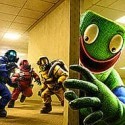
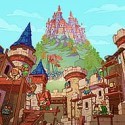




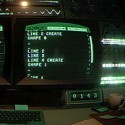




In Reverse T-gotchi you start as a Tamagotchi shut inside a room, with an owner who decides whether you eat, get attention or sit alone with the emptiness, which matters because every need you have now depends on someone else’s mood. Control is limited, and care itself becomes the thing to fear. It is a horror game built from routine instead of monsters, and the dread comes from waiting to see what the owner will decide next.
| Genre | Psychological horror |
| Perspective | First-person |
| Style | PSX-inspired retro visuals |
| Sound | Spatial 3D audio |
| Input | Keyboard and mouse or gamepad |
| Mode | Single-player |
| Platform | PC |
Being the Pet: Who Holds the Controls in Reverse T-gotchi
The premise flips the classic virtual pet. Instead of looking after a creature on a tiny screen, you are the creature, and your owner, called your master in the store text, decides everything. Whether you are fed or starved, noticed or ignored, comes down to their moods. The description calls care the most terrible torture, and that gives even the quietest moments a layer of dread. Anyone who ever forgot to feed a handheld pet will feel the guilt change sides.
The loop ties two things together: keep the owner happy and your own needs get met.
Beginners often assume they can ignore a demand and recover later, but the premise leaves little room for that. Satisfy the owner’s whims and your needs are met; ignore them and they are not. Players who grew up with handheld pets will recognize the routine of checking in, feeding and waiting, while anyone who enjoys systems-driven horror will find a clear loop to read and test.
Exploring Your Room and the Secret Places Beyond It
The second half of the gameplay promise is exploration: you explore your room and discover secret places hidden beyond its borders. The tags add walking simulator, exploration, mystery and lore-rich, so the room is not only a cage but also a puzzle with edges to push against. The first-person view keeps every corner close, which suits the cramped scale of a pet’s world and makes small details feel important.
Early in the game the room is all you have, and learning its layout is the first real skill. Where the owner sits, where the light falls and which corners stay dark all become information. Once you find your first way past the borders of the room, the story widens, and the sci-fi and psychedelic tags hint that the world beyond is stranger than a bedroom shelf.
Lore hunters will want to check every corner, since the store page lists the game as lore-rich and story-rich. The demo lists an average session of about an hour, so a full look around does not demand a long commitment. That short length also makes the secret places feel like rewards instead of chores.
Whims, Needs and Sound: Reading the Owner
Whims. Whims are what the owner wants from you in the moment, and keeping them satisfied is the heart of the loop.
Needs. Your own needs, such as being fed, depend on how well you handle those whims, and leaving them unmet is exactly how the owner’s care turns into something worse.
Attention and emptiness. The description describes the owner giving you attention or leaving you alone with emptiness, and the silence between those moments is where the horror sits.
Spatial 3D sound. The audio design lets you place noises in the dark around you, so headphones help you hear trouble before you can see it.
PSX look. The visuals imitate the grainy, low-polygon look of an older console generation, and the darkness makes it hard to be sure what you are looking at.
Stealth, Physics and Cooking: What the Tags Hint At
The tag list includes stealth, physics and cooking, and the store page does not spell out how each one works, so it is worth reading them as hints instead of promises. Stealth suggests that moving carefully around the room, and past the owner, can matter. Physics suggests that objects in the room may react when you touch them, which fits a first-person game built around a small space.
Cooking is the odd one out. Since the owner decides whether you eat, it is reasonable to expect food to play a part, but how much control you have over it is not stated. This is the kind of detail the demo is useful for, because a short session shows how much of the room you can actually interact with.
Players who like stealth horror will watch for moments when the owner’s attention shifts, while those who prefer walking simulators can treat the room as a place to study. The action tag sits beside all of this, a reminder that the loop is not purely passive, even if the store text stresses how little control you have.
Honest Limits of Reverse T-gotchi
The premise is the draw, and players who want deep mechanics may find the loop of feeding, attention and exploration lighter than the concept promises. Being powerless is the point, which suits horror fans who like helplessness but frustrates anyone who wants agency. The wording of the store page also leaves a lot unexplained, so expectations are best kept modest until you have tried the demo.
The retro PSX style and heavy darkness divide opinion too. Some players love the unsettling grain and the way it hides detail, while others find it hard to read the room. Text is available in nine languages through the interface and subtitles, but there is no full voice acting, so the atmosphere rests on visuals and sound design.
Community opinion is still forming, and the short demo is the safest way to test whether the mood works for you. If the idea of a pet at the mercy of an owner appeals, the game delivers its concept straight away. If you need a long list of systems to stay interested, it may feel thin.
Questions About Life Under the Owner
Do you have any control in Reverse T-gotchi?
Very little, and that is the point. The owner decides whether you are fed or starved, and your job is to fulfill their whims so your own needs are met. You can still explore your room and look for secret places beyond its borders, so movement is the one freedom you keep.
How long does a session last?
The demo lists an average session of about an hour. That covers the opening loop of whims, needs and room exploration, and it is a good way to judge the PSX look and the spatial 3D sound before committing to more.
What does the PSX style mean for the look of the game?
It means the visuals imitate the grainy, low-polygon style of older console games, paired with heavy darkness. The effect is that the room feels worn and unsafe, and what the owner does next is harder to predict.
Reverse T-gotchi turns a nostalgic toy into a cage, and the best moments come from small details: the owner’s mood, the empty feeling when attention stops, and the secret places beyond the walls of your room. Keep the PSX shadows and the spatial 3D sound in mind and you will hear trouble before you see it.
Comments
There are no reviews yet. Be the first one to write one.