



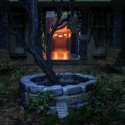










Ashioto Kyofu
















You hear the footsteps before you see anything. A slow, uneven pattern somewhere behind a closed door, the kind of sound that makes you stop moving and just listen. That’s the opening beat of Ashioto Kyofu, and it sets the tone for everything that follows: this is a game built around sound cues and the dread of not knowing what’s making them, more than it is about combat or puzzle logic.
| Genre | Horror |
| Platform | Browser |
| Controls | WASD / mouse look |
| Perspective | First-person |
Worth being upfront about what this text can and can’t tell you. The build running under Ashioto Kyofu is a small, first-person exploration project with almost no outward identity beyond its own title screen — no credited characters, no named setting beyond generic interior rooms, no lore drop explaining what’s stalking the halls. That’s not unusual for this corner of the horror genre; plenty of short footstep-and-chase projects release fast with minimal framing and let atmosphere do the talking. Rather than inventing names or backstory that aren’t in the build, this looks at what the genre Ashioto Kyofu sits in actually asks of a player.
The Sound Design Carries the Whole Thing
Footstep-horror as a genre lives or dies on audio mixing, full stop. If the footsteps behind you are too loud too early, tension collapses because the threat feels obvious and manageable. If they’re mixed too quietly, players miss the cue entirely and the intended scare lands as confusion instead of fear. Ashioto Kyofu leans on this exact mechanic: the footstep cue — an audio signal serving as the main warning that something nearby has moved — which means headphones make a real difference in how the game plays, not just how it sounds. Players used to this style know to turn the volume up and lights down before starting, because half the intended experience is lost otherwise.
The other half of that equation is pacing. Games built around a single audio cue tend to space out encounters more than players expect, letting long stretches of near-silence do the work before anything happens. That’s a deliberate choice in the genre, not a flaw, though it’s also one of the most commonly debated aspects of games like this — some players find the slow stretches unbearably tense in the right way, while others find them padding that stalls a short experience.
What There Isn’t, Honestly
It would be easy to invent a name for whatever is making those footsteps, but that would be dishonest given what’s actually visible in the build. There’s no established antagonist name tied to Ashioto Kyofu anywhere it’s been shared, no discoverable commentary, no community thread breaking down secrets or endings. That absence is itself useful: this isn’t a game with hidden lore to dig through afterward, and expecting a payoff on that front will likely disappoint.
What carries over from the wider footstep-horror genre, and applies here too, is the basic loop players engage with — move carefully, listen constantly, react when the audio cue changes. Genre veterans tend to play with sound as their main instrument, barely watching the screen until something forces a reaction. Newer horror players usually make the opposite mistake, staring at visuals and missing the audio shift meant to warn them first. A third kind of player treats short horror builds like this one as a quick fear check between longer games, which is close to what a game this size is built for.
Do you need headphones to get the intended effect?
Effectively, yes. Ashioto Kyofu depends on directional footstep audio to signal danger, and without decent headphones a lot of the tension simply doesn’t register. Players who’ve tried it on laptop speakers consistently report a flatter, less frightening run than those who play with sound isolated properly.
Is there a story or named threat behind Ashioto Kyofu?
Not one that’s public anywhere the game has been shared. There’s no credited antagonist, no lore document, no ending explanation floating around, so anyone hoping for a payoff there should adjust expectations first.
How long does a full run of Ashioto Kyofu take?
Short horror builds in this footstep-driven style typically run well under half an hour, and Ashioto Kyofu fits that pattern — built for one tense sitting rather than a long session.
That depends entirely on what you’re looking for. As a polished horror experience with named threats and a memorable setting, Ashioto Kyofu doesn’t have much to offer beyond the core footstep tension it opens with. As a quick, low-commitment dose of that specific kind of dread — the not-knowing, the listening, the stopping dead in a hallway because a sound changed — Ashioto Kyofu delivers exactly what that narrow slice of the horror genre promises, no more and no less.
Comments
There are no reviews yet. Be the first one to write one.