















Treacherous Trials

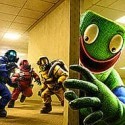


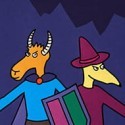








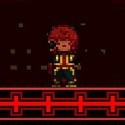
What happens when a demon in training runs out of easy jumps and the level starts demanding precision? Treacherous Trials answers with pixel-art platforming built around Nine Circles, a demon who spends the whole run being tested, retried, and tested again. The page warns about flashing colors, so anyone sensitive to that should keep it in mind before pressing start.
| Genre | Platformer and puzzle |
| Players | Single-player |
| Average session | About an hour |
| Controls | Keyboard, with mobile support |
Nine Circles and the Training Premise Behind Treacherous Trials
Nine Circles carries the whole run, and the setup is simple: he is undergoing intense training and needs help mastering his abilities so he can survive the trials ahead. The story stays light, but the personality shows in the sprites and the short exchanges between levels. The character comes from Geometry Dash fan lore, which is why players from that community grin at the very first screen.
The structure is a run of levels that grow steadily harder, and a recent campaign adds five longer, harder, and much weirder ones. Players who finish the original set tend to keep coming back, and some replay the entire game just to compare times. The update also brought a proper settings menu and save data, so progress no longer disappears between sessions.
Geometry Dash veterans will feel the rhythm of the challenges at once, while casual platformer fans get a gentler onramp than the source material ever offered.
Movement, Jump Timing, and the R Key
Movement works with the arrow keys, WASD, or IJKL, and jumping sits on Space, C, or any up arrow. Pause is P or Tab, M mutes the music, and F4 toggles fullscreen. Because so many layouts are supported, nobody has to rebind anything before the first attempt.
The R key is the real hero of the game. Pressing it restarts the attempt instantly, and holding Ctrl with it performs a full reset. Deaths are cheap by design, so the loop of dying, reading the pattern, and trying again is where most of the hour is spent. Early in the game a death costs a few seconds, but by the time you reach the longer levels each attempt becomes a small performance you want to finish cleanly.
Beginners usually jump too early and blame the level. Gravity is the most debated part of the movement: one player complained that falling speed climbs so quickly that aiming a landing becomes guesswork, and that was their main cause of death.
The Dash Unlock and How It Changes Every Room
Dash is not available at the start. Once it is unlocked, Z, X, or Shift sends Nine Circles sideways, and the levels after that point are clearly built around what the move can cross. Early habits of jumping for everything stop working, and rooms begin to reward planning a route before moving.
New players tend to save the dash for emergencies, which wastes it. The better habit is to treat it as part of the jump rhythm and chain it deliberately.
The honest complaint is reliability: a few players report that the dash key sometimes fails to register, particularly around level 8. Speedrunners care about that most, since a single missed input ruins a clean attempt.
Slaughterhouse and Demon Moment: Where the Difficulty Spikes
Slaughterhouse is the level players name first when they talk about walls, and mobile players in particular describe it as a phone-throwing moment. It asks for tight sequences with almost no room to recover, so the first clear feels earned. Players who push through usually say the level teaches its own rhythm once the opening hazards are memorized.
Demon Moment is the speedrun favorite, where runners fight over tenths of a second and compare splits in the comments. It shows the other side of the game: the same layout that stops beginners becomes a playground once the route is memorized.
The reliable approach is to learn each level in short chunks, master one hazard sequence, and only then stitch the chunks together. Taking short breaks between attempts also helps, because the flashing colors and constant retries can tire the eyes faster than expected.
Cod3breaker, Conveyor Belts, and the Newer Levels
Cod3breaker sits at the top of the newer campaign, and players describe it as a clear step up from Slaughterhouse. One player reported spending 52 minutes on it and still called the process of working out the approach rewarding.
Conveyor belts are the divisive addition. They keep pushing Nine Circles even while he is in the air, which feels wrong to some players and clever to others, and it forces a rethink of every jump that crosses a belt. One player called the air push a nitpick in an otherwise excellent update, which sums up how the community treats it.
Other new ideas include bouncing off swords using the wave, plus quality-of-life additions like save data and a proper settings menu. The redesigned character sprites make the newer levels feel like a deliberate second act. Anyone who cleared the first set and wants more should treat the newer levels as a separate challenge rather than a simple extension.
Questions Before You Start Treacherous Trials
- How long does a run take? The page lists an average session of about an hour for the main levels, and the five newer levels add more on top, especially if Cod3breaker traps you for a while.
- Can it be played on mobile? Yes, the page says the game is playable on mobile, but inputs can get stuck, so the keyboard with arrow keys or WASD is the safer choice for Slaughterhouse.
- Which keys dash and retry? Z, X, or Shift performs the dash once it is unlocked, and R restarts the attempt, with Ctrl held for a full reset.
Treacherous Trials rewards players who treat every death as information, whether they are chasing Demon Moment splits or grinding through Cod3breaker with Nine Circles. The short runtime hides a level design that keeps finding new ways to use the dash, the wave, and the conveyor belts, and that inventiveness is why players keep returning after the credits.
Comments
There are no reviews yet. Be the first one to write one.