















The Additional Dimension
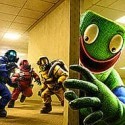











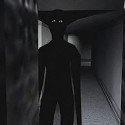


You clip the sensor array into place inside The Additional Dimension and the radio goes silent at the exact same moment. You turn around and the elevator that brought you here is gone, leaving you alone with a hallway that does not seem to lead anywhere. The assignment as an Associate Professor was meant to be routine and honorary, a quick step into a spatial anomaly and back out again. That gap between what you were told and what is actually waiting is the hook that keeps players walking forward.
| Genre | Psychological horror adventure |
| Setting | Soviet research base, 1970 |
| Full playthrough | 30 to 40 minutes |
| Endings | Two |
| Controls | Keyboard and mouse |
| Platforms | Windows, Linux |
The Associate Professor’s Routine Assignment Goes Wrong
The story starts in 1970, when a Soviet collider punches a hole through the fabric of reality. Three hours later the Associate Professor is on the way to becoming the first human to step into a new dimension. On paper the job is simple: walk into the newly discovered spatial anomaly, deploy a sensor array, and come back. The word honorary does a lot of work in that briefing, because nobody expects the mission to matter.
Then the device locks into place. The radio cuts out and the elevator is gone.
Petrov, the supervisor who put the Associate Professor in this situation, is easy to resent from the first minutes. The game frames the whole trip as the fallout of his decision, which gives the quiet corridors a slightly personal edge. Everything afterward is an attempt to understand a place that behaves like a broken equation.
Loops, Darkness, and the Room with Calculations on the Floor
The hallway that loops into itself is the first real test. Players who arrive expecting a straightforward walking simulator learn quickly that a corridor can repeat, and that repeating is the game’s way of saying you missed something. This is where the Backrooms comparison comes from, since the tagline sells the setting as the Backrooms, but Soviet.
The room with calculations on the floor and handprints on the wall marks the turning point. After it, the layout stops behaving like a normal building.
Early in the game, most players try the obvious direction and end up back where they started. Liminal-horror fans will recognise the feeling of a place that looks familiar and refuses to cooperate, while puzzle-minded players start treating every junction as a question. The darkness matters here, because one opening is hard to see until you are standing close to it, and at least one player has reported spending ten minutes swapping between left and right before noticing.
- Use the room with the calculations on the floor as your landmark, since it is the last fixed point before the loop begins.
- Check every side of the junction, because an opening can sit in darkness and only appear when you get close.
- Count how many times you have passed the same stretch before assuming the path is broken.
Reading the Base Through Notes and Voices in The Additional Dimension
Most of the storytelling arrives through notes scattered around the base, along with voice acting that players single out for praise. Reading is the main way to learn what went wrong at the base and how the anomaly fits into the collider experiment. Fans of story-rich horror tend to enjoy piecing events together this way, because the answers arrive slowly and never in one neat explanation.
That approach is also the most divisive part. A fair number of players say there is quite a lot to read and that the notes could be trimmed.
Still, most of the feedback treats the pacing as a strength. The puzzles are not overly difficult, yet they are enough to make you turn back through familiar rooms, which adds to the disorientation instead of breaking it. The PSX-style look helps as well, since chunky textures and low-resolution surfaces give the corridors an analog, slightly damaged feel.
Two Endings and the Second Run Players Actually Want
There are two distinct endings, and they pull in opposite directions. In one, you correct the mathematical errors of the past. In the other, you are permanently integrated into the infrastructure of the base. The contrast is what gives the final stretch real weight, because neither result feels like a simple win or a simple loss.
Players who go back for the second ending say the hints are clear. One reviewer praised how well the game signals what to do differently on a second pass.
A full run takes roughly 30 to 40 minutes, so replaying is cheap. Completionists can see both endings in a single evening, and most of the walking is familiar the second time around. The short length also keeps the ending count manageable, which some players specifically appreciate compared with games that pile on dozens of outcomes.
Why The Additional Dimension Scares Without Monsters
No monsters patrol the base. Players keep pointing out that the dread comes from not knowing what will become of you, not from being chased. Fans of slow-burn psychological horror tend to rate that approach highly, because the fear has nowhere to go except into the atmosphere.
Jump scares exist, but they are rare. One player counted only two and felt the atmosphere carried everything else.
That restraint is also why the time-loop angle lands. Players mention a time-travel twist that makes the story feel larger than another liminal-space walk. Not every player is won over, and the short runtime leaves little room for deeper exploration, so anyone wanting long, open wandering will find this too tight. For a focused, story-driven trip, the length fits well.
Stuck in the Loop? Questions Players Keep Asking
- How do you get past the looping hallways after the room with calculations? After that room there are three ways to go: forward, left, and right. Forward and left always loop back, while the right passage is the correct one, even though it is easy to miss because the darkness hides it until you are close enough. If you have been alternating between left and right with no progress, move up to the right side and look carefully.
- How long does The Additional Dimension take, and how many endings are there? A full playthrough takes about 30 to 40 minutes, depending on how carefully you read the notes. There are two endings: correcting the mathematical errors of the past, or being permanently integrated into the infrastructure of the base. Because the run is short, many players go back to see the ending they missed.
- Does The Additional Dimension rely on jump scares? Not much. Players report only a couple of scares and no monsters walking around, with most of the tension coming from the looping hallways and the moment the radio cuts out. The fear comes from isolation and uncertainty about what will happen to the Associate Professor.
The Additional Dimension works because every loop and every note reminds you how far the Associate Professor is from home. The right-hand passage after the room with calculations, the dead radio, and Petrov’s decision hanging over the whole descent all feed a short, focused story that is easy to finish and hard to shake. If 30 to 40 minutes inside a broken Soviet experiment sounds appealing, the two endings give you plenty of reason to go back.
Comments
There are no reviews yet. Be the first one to write one.