















Road To Jukai












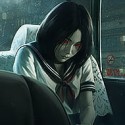
You pull away from a dark roadside stop with a stranger in the back seat. The town lights shrink in the mirror, and the treeline sits a little closer to the headlights than it did a minute ago. That is the ordinary rhythm of Road to Jukai, a first-person psychological horror about a night-shift taxi driver who carries passengers between small Japanese towns ringed by a vast, haunted forest. The pitch fits in one breath, but the dread grows out of how normal the job feels until a fare asks for something wrong. This game is built for players who prefer slow, creeping tension to chase sequences.
| Genre | Psychological horror, adventure |
| Perspective | First-person |
| Setting | Small Japanese towns and forest roads at night |
| Story Length | Six nights |
| Players | Single-player |
Driving the Night Shift in Road to Jukai
The core loop is the job itself. You accept a passenger after sunset, drive a forest route to the next town, and deal with whatever that fare turns out to be. The pitch keeps returning to one piece of advice, which is to keep your eyes on the road, and that line works as both a survival rule and a mood setter. Player tags lean toward driving, exploration, and walking-simulator territory, so the game reads closer to an interactive ghost story than to a survival shooter. Nothing in the pitch points to a weapon or a combat system.
Beginners usually make the same mistake and treat the taxi like a delivery van. A player who rushes each fare to get it over with misses the small details that make the atmosphere land. That means the quiet between towns, a passenger whose answers do not quite fit the question, and a road that looks emptier than it should.
Slowing down is not a penalty here. It is the whole point of the night shift, and the forest rewards players who are as patient as it is.
Passengers, Fares and What They Ask of You
Every fare works like a short story with a wrong detail hidden inside it. The description promises passengers whose stories and requests grow more unsettling every night, and it warns that not all of them are what they seem. Early in the game a fare may look like a routine ride home. Once the later nights arrive, the requests drift toward destinations the locals would rather not name.
Players who enjoy reading dialogue for clues will get the most out of these rides, because the horror seems tied to what passengers say as much as to what appears on screen. Fans of Japanese ghost stories will recognize the structure of a polite exchange, a slightly off detail, and a slow realization about who is sitting behind you.
A useful habit is to treat each fare as its own small scene before connecting it to the wider mystery. Completionists in particular should take notes, since a story that branches across several nights rewards anyone who remembers who said what.
Six Nights of a Non-Linear Story
The story is spread across six nights, and the description calls it non-linear. That matches the tags players attach to the game, which include multiple endings, choices that matter, and mystery. Six is a small number, and small counts usually mean every night carries real weight instead of padding. By the time the fourth night arrives, the roads and the forest are likely to feel very different from the first shift.
The pitch says the region is marked by tragedy and that the dead never left. Fans of Japanese horror will read that as the foundation rather than a twist. The dead are not hiding in the forest, they are riding along in your taxi.
Is it actually scary? It is psychological horror, and early press coverage singled out the unnerving mood over cheap shocks. Expect dread built from silence, conversation, and the forest edge instead of constant action. Whether the multiple endings are truly branching is something only the release can settle.
What Divides Players About Road to Jukai
The most divisive point will be pace. Driving between towns, listening to fares, and waiting for dread to build sits close to walking-simulator territory. Players who want mechanical challenge may find that too quiet, while story-first horror fans are the natural audience.
The second point is content. The developers list depictions of suicide in the content notice, and the forest that gives the game its name carries real-world associations that some players will find heavy. It is worth reading that notice before you commit to a full night shift.
The third point is uncertainty, because the game is not released yet and the six-night structure is still unproven. Early coverage compared the tone to Silent Hill and praised how well it understands what Japanese horror fans look for, which is a promising sign without being a verdict.
Road to Jukai asks a narrow question: how long can you keep your eyes on the road while the fare in the back seat keeps talking about the forest? If the six-night structure delivers on the promise of a non-linear story, the final sunrise should matter more than any single passenger. Until then, the taxi, the night shift, and the treeline in the headlights are the clearest signs of what kind of drive this will be.
Comments
There are no reviews yet. Be the first one to write one.