















Parking Fury 3D Beach City












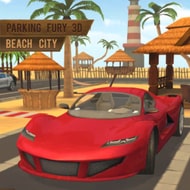
You line the car up with the glowing parking space, ease off the gas a little too late and tap the bumper of a parked convertible — level failed, three inches from success. Parking Fury 3D Beach City is full of those near-misses, because the spot is always visible and the margin for error is always tiny.
What Parking Fury 3D Beach City Changes About Parking
Compared with the city layouts of other entries, Parking Fury 3D Beach City swaps tight downtown blocks for seaside streets, promenades and lots packed with holiday traffic. The roads are wider in places, which feels easier at first, but parked vehicles sit at awkward angles and the routes to each spot twist around beach houses and palm-lined corners.
The core task stays the same: drive from the starting point to the highlighted space and stop inside it without touching anything. Touching a car, wall or barrier fails the level, so the whole challenge is precision rather than speed.
Players arriving from earlier entries usually notice two things within the first couple of minutes: the lots are more crowded, and the camera angles matter more because buildings occasionally block the view of the target space.
Camera, Throttle and the Final Meter
The camera is your most important tool. Switching between views lets you check distances on both sides of the car, and many failed attempts come from staying in one view that hides a corner of the parking space.
Throttle control matters more than steering. The car keeps rolling after you release the gas, so most players brake early and creep the last meter instead of trying to stop on the line at full speed.
- Approach spaces at a slight angle, then straighten up — square approaches leave no room for correction.
- Use reverse instead of forcing a tight turn; backing into a space is often easier on narrow streets.
- Check the opposite side of the car with a camera switch before the final push.
How Parking Fury 3D Beach City Ramps Up
Early levels give open lots and wide spaces. Later ones place the target between two parked cars on a narrow promenade, or require a multi-turn route through traffic just to reach the lot. The time limit becomes noticeable once routes get longer.
This is where the game divides players. Fans of simulation-style parking enjoy the precision, while others find the collision detection unforgiving, since even a light touch counts as a fail. Accepting that strictness early makes the later levels less frustrating.
Careful drivers tend to clear levels in fewer attempts than fast ones. Rushing through the route to save time usually ends with a scrape on the final turn.
Common Questions
- Why does a light tap fail the level? Any contact with another car, wall or barrier counts as a collision in Parking Fury 3D Beach City. Slow down earlier and creep into the space so the car stops before touching anything.
- Which camera view works best for parking? No single view works everywhere. Switch views on the final approach to check both sides of the car, especially when beach houses or parked vehicles block part of the target space.
- Is it easier to drive forward or reverse into spaces? Reversing into a tight space between two cars is often easier because the front wheels can swing the rear into position, while driving in forward leaves less room for correction on narrow promenade streets.
Every parking job here comes down to the last meter. Learn to brake early, check every camera angle and back into the tight promenade spaces, and those crowded seaside lots in Parking Fury 3D Beach City stop feeling like traps.
Comments
There are no reviews yet. Be the first one to write one.