
















One More Flight




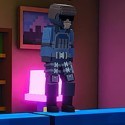







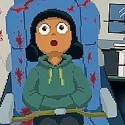
One More Flight looks like a cute pixel-art adventure set in a cramped plane cabin, but it plays like a case file where every death adds a new page of evidence. You board the same doomed flight again and again, and the only thing that survives each crash is whatever you managed to notice.
| Format | Side-scrolling adventure |
| Theme | Psychological horror in a time loop |
| Progress | Knowledge only, no items or stats |
| Visuals | Colorful 2D pixel art |
| Mode | Single-player |
Cute Pixels, Fatal Cabin: What One More Flight Asks of You
The setup is told in a few beats. The engines hum, the service cart rolls down the aisle, the plane goes down, and then the cycle starts over. Nothing you pick up or earn comes with you into the next loop, so the usual comfort of upgrades is gone. The colorful look invites you to relax, and that is exactly the trap.
The store page describes the design as driven by observation, timing, and cumulative knowledge, and that is a good way to read the plane itself. Passengers, compartments, and the cart all behave in patterns. Your job is to learn those patterns well enough to break them, and no amount of fast reflexes can substitute for understanding them.
Mystery fans who enjoy treating a scene like evidence will feel at home here. The horror is not loud, since some threats are not obvious at first glance, and that quiet uncertainty is what keeps the cabin uncomfortable even when nothing is attacking you.
Keeping a Mental Logbook Between Loops
Because memory is the only save file, how you organize it matters a lot. Many players of loop-based adventures end up keeping a real notebook, and this design makes that habit worthwhile. A few things are worth tracking on every run:
- Where the service cart is when something changes in the cabin
- Which passengers react to you and which ignore you completely
- Which compartments you opened and what happened afterward
- What exactly killed you, and what you were doing a few steps earlier
A sensible approach is to change one variable per loop and watch what shifts. Expect the earliest loops to end quickly, and do not treat that as failure, because a short run that teaches you one fact is a good run. Repeating the same plan with slightly different timing is usually less informative than trying something odd.
The developers mention fatal incidents such as explosions, poisoning, and fatal falls, and the store page invites you to experiment with chains of events that end badly. Cause and effect is the real subject. Every strange death is a clue about what the plane will do the next time you try something similar.
Reading the Passengers When Nobody Believes You
You can intervene in the fates of the passengers, but they will not listen to you and they will not understand what they see. Persuasion is off the table, so the tools you have are position and timing. Saving someone is less about explaining and more about being in the right spot before the moment arrives.
Some dangers are so bizarre that your mind refuses to accept them, and the game keeps hinting that you are being watched. No aisle or moment is described as truly safe. Slow, methodical players who like to observe before acting will get the most out of that tension.
The store page says every step can lead to a different ending, but it does not say how many endings exist. That uncertainty is useful, because it means rescuing everyone is not necessarily the only goal worth chasing. Part of the draw is finding out which outcomes are even possible.
Execution Checks, Repetition, and Sticking Points in One More Flight
Observation is only half the job. Some moments have you racing the clock, and others test dexterity and composure, with the description warning that even a split-second of hesitation can change everything. By the time you have mapped the cabin in your head, the remaining challenge is carrying out a plan cleanly.
That split divides players. People who prefer pure puzzle logic may find the execution sections irritating, since you can know the answer and still fail on a missed window. Players who like tight timing will see them as the moment where knowledge turns into skill.
The tone is another sticking point. The store tags include gore and violent, yet the developers describe the content as stylized pixel-art violence without graphic gore. Cute visuals paired with fatal incidents are intentional, and so is the repetition, so anyone who dislikes trial and error should know that going in.
Common Questions Before Takeoff
Can you keep items between loops in One More Flight?
No. You cannot rely on carried-over items or character stats, and the only advantage you keep is what you remember from earlier attempts. That makes your own notes and observations the real inventory.
Is there a demo to try first?
Yes, a demo is listed on Steam. It is a good way to see whether the loop structure, the timing sections, and the pixel-art cabin appeal to you before you commit to the full game.
How graphic is the violence?
The developers describe stylized 2D pixel-art depictions of fantasy violence and fatal incidents, along with psychological horror themes. They state that there is no graphic gore, realistic violence, nudity, or sexual content, although the premise of a crash that keeps happening can still be heavy.
Engines humming, the service cart on its way, and passengers who will never believe you: One More Flight turns a single doomed flight into a puzzle you solve with memory alone, one failed loop at a time.
Comments
There are no reviews yet. Be the first one to write one.
