















Goodly Trials
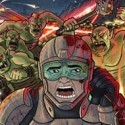
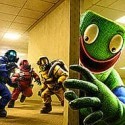


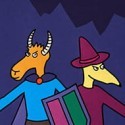










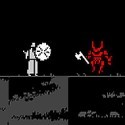
You open the bidding on a squire you desperately need, and the player across the table nudges the price up just to make you pay for it. That small moment of spite sums up Goodly Trials, a turn-based strategy game where hiring, haggling, and formation matter as much as the battle itself. The fighting plays out on its own, so the real game happens before the first blow lands.
| Genre | Turn-based strategy with roguelite and auto-battler elements |
| Single-player run | Twelve weeks, three difficulties |
| Multiplayer | 2 to 8 players, real-time or asynchronous |
| Factions | Bone Host, Below Born, and more |
Hiring a Leader and Building a Company in Goodly Trials
Every journey in Goodly Trials begins with a choice of leader, a storied figure you will trust to carry the company home. Around that leader you hire a peculiar company of knights, sell-swords, merchants, and wizards, and you arm them however you like. The store page makes the leader the one you rely on to survive the trip, so the people you recruit are there to support that goal.
Units and gear carry innate attributes and rolled traits, which means two hires that look alike can behave very differently once you read the details. An otherwise ordinary recruit can turn out to be the strange hinge on which the whole company turns. With more than 60 playable units and a large collection of items, reading traits before you spend is a habit worth building early.
Roguelite fans will recognize the structure: new leaders and new gear unlock by attempting harder trials, so every failed run feeds the next one. That progression gives even a bad draw a purpose, and it keeps the early hours moving.
The Twelve-Week Loop of Shop, Equip, Formation, and Battle
The single-player journey asks you to survive for twelve weeks, and each week follows the same cycle:
- Shop for units and gear.
- Equip your company.
- Set your formation.
- Battle, then return to the shop.
Early in a run, the loop feels light, with small skirmishes and simple choices about who to hire first. As the weeks pass, the decisions compound, because every purchase changes what your formation can do and what the next battle demands. Three difficulty levels let you decide how much pressure to take on.
Players who enjoy auto-battlers where the thinking happens between fights will like this rhythm, since the battle itself is a result of your planning rather than a test of reflexes.
Reading Range, Flanking, and Adjacency on the Battlefield
Fights are a tactical auto-battler: you arrange the line, then watch the clash play out. As the field and your company grow, small skirmishes become full formations where range, flanking, adjacency, and the shape of the opposing line all matter. The more units you bring, the more the board starts to reward a plan rather than a pile of strong bodies.
Beginners often make the same mistake, which is to stack their strongest hires and ignore placement. A ranged unit left exposed or a fighter stuck beside the wrong neighbor can undo a good purchase. Taking a moment to read the enemy line before locking your formation is the cheapest improvement available.
Tactics players who love tabletop-style positioning will find plenty to chew on, since the tags call out tactical RPG, tabletop, and turn-based combat. The depth comes from interacting stats and systems rather than from fast hands.
Bone Host, Below Born, and the Factions Beyond
Defeating bosses is how you unlock ranked modes, more units, and new factions, including the Bone Host and the treasure-obsessed Below Born. Each faction brings its own flavor to the company you build, so switching sides changes how you hire and how you arrange your line. Once bosses fall, the game opens up in a way that makes early runs feel like a tutorial for what follows.
The current plan is three playable factions, with a fourth in development to bring the planned roster to four. That is a modest number, and players who want a wide spread of factions may feel limited until more arrive.
Collectors have a lot to chase regardless, since roughly 30 hours of unlockable items, characters, and cosmetics are tied to progression. The hand-drawn pixel presentation is described as the finished look rather than a placeholder, which gives the unlock grind some visual reward.
Bidding Against the Table in Goodly Trials Multiplayer
In multiplayer, 2 to 8 players join a real-time or asynchronous tournament. Everyone shops in public and bids against the table for the same inventory, then arranges a strategy in peace and meets each rival in a league. Empty seats can be filled with AI armies, and you can wager on featured matches, which gives spectators something to care about.
Bidding wars are where grudges are born. If a rival raises the price on your squire, the whole table sees it, and everyone remembers who did it. A few habits help when the room gets competitive:
- Watch which units rivals keep inspecting, because competition will push those prices up.
- Ask whether a purchase fills a gap in your line or just adds another strong body.
- Decide how much of your budget one bidding war is actually worth.
Social players who like reading the table and playing mind games will get the most out of this mode, while solo players can skip the bidding drama and still enjoy the core loop.
Ranked Ladder, Balance Churn, and What Divides Players
Ranked mode pits your armies against companies built by ruthless AI and, eventually, other players, with a rating that follows every journey. Win and you climb the ladder to earn rare rewards. It is the most competitive way to test a company, and it rewards players who have learned how formation and bidding interact.
The honest caveat is that the game is a work in progress. The developer has pushed one or two balance patches each week, roughly 40 so far, and plans to keep that pace. That is good news for responsiveness, but it also means the meta can shift quickly, and a strategy that dominates one week may not hold the next.
Other friction points are worth knowing. Some features need a linked Discord account, the interface is English only, and a larger single-player campaign story is planned after the full release rather than before it. Players who want narrative will find a mechanics-first game for now, and players who want competition will find the opposite.
Goodly Trials rewards players who treat the shop as the real battlefield, from choosing a leader worth protecting to deciding how much a squire is worth in a bidding war. The Bone Host and Below Born factions give you reasons to keep climbing, and the twelve-week journey home is short enough to try again immediately. If a strategy game built on haggling, formation, and a little spite sounds appealing, this is a company worth assembling.
Comments
There are no reviews yet. Be the first one to write one.