
















Rat Game









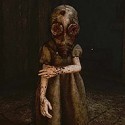






You slip under a kitchen shelf in Rat Game just as the Chef steps into the room, and a teammate’s squeak over proximity chat tells everyone exactly where you are hiding. That moment of panic is the heart of this asymmetrical comedy horror, where one Chef takes on a pack of rats in a match of up to eight players. The rats want the restaurant’s star rating to crash until the doors close, and the Chef wants every rat behind bars.
| Genre | Asymmetrical comedy horror |
| Players | Up to 8 per match |
| Sides | One Chef against a pack of rats |
| Solo option | Play as a rat against the robot Chef |
| Voice | Proximity chat |
| Platform | PC (Steam) |
Sabotage and Star Ratings in Rat Game
The rule behind every match is simple. Rats win by wrecking the restaurant until its star rating collapses, and the Chef wins by stopping them for long enough. Sabotage is mostly slapstick: you push objects over, make a mess, and give the Chef a scare. Most objectives are action input sequences, so a rat has to stay in one spot and finish a short string of inputs while the Chef is somewhere in the building.
That design keeps the Chef from guarding a single corner. Every objective takes effort, which means a rat who commits to one is also a rat who can be interrupted. Players who enjoy sneaky timing will like this part most, because the trick is picking the moment the Chef is furthest away.
The Chef has two main answers. Mouse traps cover the routes along the floor, and a direct catch stuns a rat so the Chef can drop it into a cage. You never see the Chef kill anything, so the tone stays closer to cartoon chaos than to dread.
What New Rats Get Wrong Early On
There is no tutorial, so the first few matches are mostly learning by getting caged. Early in a match, before the Chef has found a single rat, newcomers tend to rush the nearest objective as a group. The map is large and interconnected, and bunching up in one room hands the Chef the whole pack at once.
The same habits show up again and again among new players:
- Starting a sabotage sequence while the Chef is still close enough to hear the commotion.
- Ignoring hunger until a rat has no food left and becomes an easy catch.
- Chasing the Chef for a scare instead of finishing objectives that lower the star rating.
- Narrating every move over proximity chat, which tells the Chef where the pack is.
Fixing these takes a few rounds. A group that talks through each match afterwards improves quickly, mostly by learning when to stay quiet.
Hunger, Cages, and Coming Back Up
Rats cannot hide forever. They get hungry, so sooner or later every rat has to leave cover and look for food, and a rat that runs out of food is easy pickings for the Chef. That one rule kills the strategy of sitting in a corner and waiting, and it forces movement even when the Chef is close.
Once a rat lands in a cage it is largely helpless, so the first cage usually changes the tempo of a match. The remaining rats have to keep working on objectives while down a teammate. Stunned rats get a chance to recover, and the game even advertises that rats can come back from the dead, which keeps a lost teammate from feeling like the end of the round.
The balance is better than it first looks. The Chef never gets tired but has to juggle several rats at once, while the rats are fragile but numerous. Neither side feels permanently ahead, which is why a match with friends can swing late.
Proximity Chat and Pack Tactics
Proximity chat makes the game feel like a party and a trap at the same time. Voices are squeaky and only carry to nearby players, so a pack that splits up loses contact with its teammates, and a pack that stays together gets loud. Many groups settle on spreading across different corners of the restaurant so the Chef cannot interrupt every objective at once.
The more rats in a lobby, the more tasks the pack has to finish, so a bigger group is not automatically easier for the rats. Competitive players treat this as a coordination problem, and the sharpest groups send one rat to pull the Chef’s attention while the others work.
Once the star rating starts dropping, the pressure shifts onto the Chef and the pack can afford bolder sabotage. Casual players love this stage, because it is where the loud, ridiculous moments tend to happen.
Playing the Chef in Rat Game Lobbies
Playing the Chef is a different game inside the same restaurant. You are one person facing a pack, so catching every rat is unrealistic, and the real goal is to keep them separated and run out the clock. Interrupting a sabotage sequence is worth more than a long chase across the map.
Co-op lobbies can replace the human Chef with a robot Chef programmed to cook, clean, and kill. It is a far more menacing figure than a human player, and it almost always seems to know exactly where the rats are.
That leads to the most common complaint. There is no way to practice as the Chef alone, solo play means being a rat, and the robot Chef finds you almost every time. The honest truth is that the game is built around other people, and one review landed on a cautious 6 out of 10 for exactly that reason.
Secrets, Map Layout, and Replay Value
The map is sprawling and interconnected with many secrets, and that is where the replay value sits. Explorers will find that each match reveals another shortcut or hiding place, and knowing the layout becomes the biggest advantage for either side.
An early estimate puts total playtime near two hours, so the game works best as short bursts with friends rather than a long campaign. That fits the community label friendslop, used for chaotic multiplayer games built around voice chat and bad decisions.
Some players will want more depth, and that is a fair criticism. With no tutorial and no way to practice as the Chef, the whole loop leans on the people you bring along.
Rat Game Questions Players Keep Asking
- Can you play Rat Game alone? Yes, but only on the rat side, against the robot Chef in the co-op mode. The robot Chef tracks rats very well, so solo matches are harder than they look, and the game works much better with other players.
- How do rats win? Rats win by completing sabotage objectives, such as pushing objects over and scaring the Chef, until the star rating drops far enough to close the restaurant. The Chef wins by caging the rats or simply surviving until time runs out.
- How many players can join a match? Up to eight players can share a lobby, with one taking the Chef role and the rest playing as rats. Because proximity chat only carries over short distances, where each rat stands matters as much as how many rats there are.
Rat Game is at its best when the Chef has just caged one rat, two others are halfway through a sabotage sequence, and the star rating is sliding while everyone laughs over squeaky proximity chat. The hunger rule, the mouse traps, and the cage all push the match toward those loud, messy finishes, even if the robot Chef makes solo nights harder than they should be.
Comments
There are no reviews yet. Be the first one to write one.
