















Sir, We Have an Orc Problem

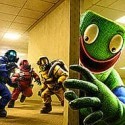
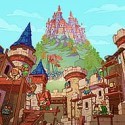









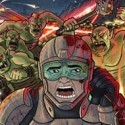
You drop a Cannon at the mouth of a corridor, sweep its firing arc a little too wide, and watch the first orc stream slip straight past it into your base. That is the opening lesson of Sir, We Have an Orc Problem, and it lands within the first couple of minutes. The orcs do not march in neat waves. They flow like liquid, and your turrets only matter where the liquid actually runs. The game is a tower defense with an incremental layer on top, so even a failed run feeds your upgrade tree.
| Genre | Tower defense with incremental meta-progression |
| Platform | PC (Steam) |
| Campaign length | Roughly 10–12 levels, about 4–6 hours by player reports |
| Core resource | Crystals earned from every run |
Sweep Arcs and Orc Flow in Sir, We Have an Orc Problem
Every level follows the same loop. You place turrets on the map, set how far each one sweeps, start the battle, and watch tens of thousands of orcs pour toward your base. Nobody tells you exactly where they will go, so the first run on a new map is partly a scouting trip. A turret aimed at an empty wall is worth nothing, while one covering a bottleneck can carry a whole lane.
Beginners usually assume the game is about buying more turrets. It is really about angles. A Gunner with a tight sweep over a corridor exit will outperform two turrets that spend half their time staring at stone. Players who enjoy tinkering with geometry get hooked here, because nudging a turret a few steps can double the kills on a route without spending a single crystal.
That feedback loop is the whole appeal of the early maps.
Gunner, Cannon, Flamethrower and Laser: Matching Turrets to Routes
The turret roster is small, and each one has a clear job. The community talks about roles rather than raw damage. Gunner is the dependable all-rounder, and the Rapid Fire upgrade adds five extra shots per second, which is the first real power spike many players feel. Cannon fires penetrating projectiles, so it shines on long straight stretches where orcs line up, and Power Shot pushes that further.
Flamethrower is the specialist for narrow corridors, where burning orcs bunch up and keep taking damage as they walk. Laser fires a beam that bounces off walls, which turns awkward hallways and hidden angles into kill zones, as long as you check the full beam path during your first run. Mortar and Tesla Coil cover crowded routes that the direct-fire turrets struggle with.
The classic mistake is chasing the biggest damage number. A Laser can rack up huge totals farming a route that was already safe while another lane quietly collapses, and the run still ends in defeat. If several routes fail before the battle reaches its later pressure, the cause is usually an upgrade tree that is behind the level, not your placement. Players who like clean geometry will enjoy fixing that, but it takes patience.
Crystals, Grind and the Upgrade Tree
Losing is not a setback here, it is farming. Every run pays out crystals whether you win or lose, and those go straight into the massive upgrade tree that unlocks new turrets and boosts stats. That design is what separates this game from a classic tower defense, where one bad decision can doom a run with nothing to show for it.
Upgrade order matters more than most players expect. Buying cheap stat bumps before another turret slot leaves you replaying the same level, and guides keep pointing players toward economy nodes before damage. By the time you reach Level 3.2, the first stall that earned its own walkthrough, you will feel whether your tree is ahead of the map or behind it.
This is also where opinions split. Some players love that every defeat pays out, and completionists chase the Fully Loaded achievement for buying every upgrade. Others call the grind tedious, saying it kills momentum between levels and drags the middle of the campaign. Both camps are describing the same loop, they just disagree on how long it should take.
Strafing Run, Orbital Laser and the Nuke
Turrets hold the lines, but the active abilities decide the close calls. Strafing Run covers a wide stretch of one route and works best when a long section is packed with orcs. It is not a patch for a lane that has no turret coverage. Orbital Laser delivers sustained beam damage, so it earns its slot when orcs stay inside a predictable line long enough for the beam to matter.
Nuke is the emergency button, and it takes visible time to land. Fire it late in a wave and the blast can hit empty ground, so most players save it for one dense breakthrough or a final push. Once the Nuke unlocks, the tension of a run shifts. You stop watching turrets and start watching the orc front, counting seconds.
An achievement called Overkill asks for 666K damage from a single Nuke, which shows how high the numbers climb later on. Chasing it rewards players who love big numbers and a perfectly timed blast. It also gives the late levels a clear target beyond simply surviving.
How Far Sir, We Have an Orc Problem Takes You and Where It Runs Thin
Player reports put the campaign at about 10–12 levels and roughly 4–6 hours, with levels such as 6.1 and 6.2 acting as the endgame checks. That is short, and it is the most common complaint. Several players say the price feels high for the length, while others argue the loop is worth every hour because the runs are so satisfying.
Presentation is the other talking point. The graphics are plain and players say so openly, but the orc streams, the chain of explosions and the mastermind feeling of a well-placed Laser carry the game. It suits relaxed, low-focus sessions, and plenty of people run it as a background game while doing something else.
Requests that keep showing up in feedback are a level editor and Steam Workshop support, since the loop already feels hungry for more maps. For now it is a compact, replayable tower defense rather than a long campaign, and it never pretends otherwise.
Questions Players Ask Before the First Run
Which turret should I buy first?
Gunner is a dependable first pick, especially once Rapid Fire adds five shots per second. Pair it with a Cannon for long straight routes, where penetrating shots hit several orcs at once. Add Laser later, when you meet hallways that bounce its beam well.
Does losing a run waste my time?
No, because every run pays out crystals whether you win or lose. A defeat on a hard level still funds the next upgrade, which is why many players treat early losses as farming. The only real waste is buying cheap stats when you needed another turret slot.
When should I fire the Nuke?
Save it for one dense breakthrough or a final acceleration. The Nuke takes visible time to land, so calling it late in a wave can send the blast into empty ground. Watch where the orc front will be, not where it is now.
Sir, We Have an Orc Problem rewards the player who treats every defeat as a crystal payout and every sweep arc as a puzzle. Put a Cannon on the long straight, let a bouncing Laser handle the hallway, and keep the Nuke for the moment the orc front finally cracks your wall. The game keeps handing you reasons to start one more run.
Comments
There are no reviews yet. Be the first one to write one.