















Crack The Pack











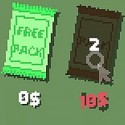
You tear open a booster, watch the cards flip face up, and spot a duplicate you can sell for coins on the spot. That small choice between keeping a card and cashing it in drives Crack The Pack, an incremental game where every opened pack pays for the upgrade that lets you open packs faster.
| Genre | Incremental card collector with automation |
| Players | Single-player |
| Collection size | 1,001 cards across 7 variants |
| Booster types | Up to 8 |
| Upgrades | More than 60 |
The Pack-Opening Loop in Crack The Pack
The loop is easy to state: open a booster, see which cards you pulled, sell the duplicates, and put the coins into the upgrade tree. Nothing in it demands fast reflexes, which is why the game sits comfortably under the idler and incremental labels. It works as well for a quick check between other tasks as for a long sitting. Each pass through the loop is short, but the numbers behind it are built to grow, and that growth is the whole point.
The first real decision is what to do with a duplicate. Selling is the default, and those coins pay for the early upgrades. But every card also counts toward a collection of 1,001, so it pays to know which copies are truly spare before you cash them in. Selling everything the moment it lands is the obvious move, and it is not always the smartest one.
Early on, every pack is opened by hand, so progress feels slow on purpose. The upgrades are what turn a handful of cards per pack into a flood, and Crack The Pack is built around that shift from clicking to producing.
Seven Variants and 1,001 Cards: Chasing the Full Collection
Every card exists in 7 variants, each rarer and more valuable than the last, and each variant carries its own special power. The total of 1,001 cards works out to 143 distinct cards multiplied by 7 variants, so the collection is far broader than it first looks. A pack that shows you a new variant is a different kind of pull from a pack full of common duplicates. Learning to tell those moments apart is the first real skill the game asks for.
Completionists are the natural audience, because the 1,001 target gives them a finish line that is visible from the first pack. Higher variants also raise what a card is worth, and that feeds straight back into the upgrade budget.
The honest downside is that chasing rare variants is luck-driven. Incremental fans tend to accept that and let automation smooth the grind. Anyone who dislikes repeating the same action while hoping for a rare pull will feel the pinch near the end of a collection this big.
Booster Types: Growing Packs, Mega-Packs and the 50/50 Gamble
Up to 8 different booster types can be unlocked, and they do not all behave the same way. Some improve with every use, some pack dozens of cards into a single opening, and some are a coin flip that can wreck your pull.
- Packs that improve with every use reward patience, since the more you open them, the better they get.
- Mega-packs contain dozens of cards at once, which makes them the quickest way to flood your duplicate pile and your coin total.
- The 50/50 packs carry an even chance of screwing you over, so they suit players who enjoy risk more than players protecting a steady income.
Which pack deserves your coins depends on what you are chasing at that moment. If you are hunting a particular rare variant, volume from mega-packs makes sense. If you are saving for an upgrade, the steady gain from packs that improve with use may serve you better.
The gamble pack is the likeliest to divide players. Risk lovers will enjoy the swing, while players who picked the game for its calm rhythm may simply leave the 50/50 option alone.
Upgrades, Cloning and Nuclear Fusion in Crack The Pack
More than 60 upgrades sit in the tree, and they cover the three things an incremental economy needs: opening packs on a massive scale, selling cards for top dollar, and unlocking new features. Buying order matters because each upgrade shortens the wait for the next one. A modest early boost can often beat a flashier purchase that arrives later.
The far end of the tree is where the game shows its sense of humor. The goal is a true automated booster factory, and the road there runs through cloning and nuclear fusion. Parody and funny are among the tags players see, so expect the escalation to be absurd rather than serious.
By the time you reach those late upgrades, opening packs by hand is a distant memory, and automation fans get the payoff they came for. Players who want hands-on control the whole way may find that stage watches more than it plays.
Employees, Card Battles, the Fusion Lab and the Museum
Beyond raw production, the upgrade tree opens whole new systems: employees, card battles, the Fusion Lab and the Museum. Each one gives your collection a second job, which keeps the loop from shrinking to opening and selling. Reaching them is as much a milestone as any card variant.
Employees fit the automated-factory idea, and in most incremental games a hired helper takes over work you used to do yourself. Once employees appear, you can expect to spend less time clicking. Card battles give cards value beyond their sale price, which will matter most to players who like seeing a collection actually do something.
The Fusion Lab and the Museum read as the collector’s endgame, one for transforming what you own and one for putting it on display. The exact rules are not spelled out in advance, so they are worth discovering as you go instead of planning around guesses.
Common Questions About Crack The Pack
How many cards can you collect in Crack The Pack?
The full collection is 1,001 cards. Every card comes in 7 variants of increasing rarity and value, which works out to 143 distinct cards. The rarer variants carry special powers, so completing the set means more than filling empty slots.
How many booster types are there?
You can unlock up to 8 booster types. They include packs that improve with every use, mega-packs with dozens of cards, and 50/50 packs that can go badly wrong. Switching between them as your upgrades improve is a big part of how the economy grows.
What do the upgrades unlock?
The tree has more than 60 upgrades that scale up pack opening and card sales. They also unlock employees, card battles, the Fusion Lab and the Museum. At the far end, the factory reaches cloning and nuclear fusion.
Crack The Pack rewards the player who keeps one eye on the Museum and the other on the next 50/50 pack. Collecting all 1,001 cards means balancing luck, patience and the upgrades that make the Fusion Lab worth reaching. If sorting duplicates and watching numbers climb sounds appealing, the first booster is the easiest way to find out.
Comments
There are no reviews yet. Be the first one to write one.