















Traks


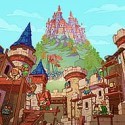












What happens when a racing game asks you to build the circuit before you drive it? In Traks, you snap track blocks together, tune a car to suit, and send the finished layout to a friend as a short text code. The idea sits somewhere between a physics racer and a construction toy, and it pulls more from 90s favorites like Stunts and Re-Volt than from modern simulation racing.
| Genre | Physics-based racing with a track editor |
| Cars | 7 tunable cars at the moment |
| Modes | Classic Race, Bunny Hunt |
| Opponents | Up to 20 bots, 4 difficulty levels |
| Multiplayer | Local and worldwide, split-screen in development |
Building a Circuit Before You Race It in Traks
The block-based editor is the heart of the game, and it is where most players lose their first hour. You place blocks in a linear chain, which keeps construction quick, and keyboard support means you can lay down a long stretch without constantly reaching for the mouse. Any placed block can be clicked and modified afterward, so a bad corner is fixable without tearing the whole road apart. Right now there are 4 track scenes and 4 road types to work with, plus many block variants.
Sharing is the part that surprises people. A finished track exports as a short text code that works through any messaging platform.
That answers the most common first question about sharing a custom track: paste the code into any chat and the recipient imports it on their side. Builders who care about flow will enjoy how fast the editor moves, while players who would rather drive than design can ignore it and race the premade circuits.
Tuning the Car: Drivetrain, Steering Angle, and Wheel Size
Cars can be customized in two directions. Visual changes cover paint jobs, textures, spoilers, and bumpers, while performance tuning lets you adjust steering angle, switch the drivetrain between FWD and RWD, and change wheel types and sizes. There are 7 cars at the moment and each one can be tuned, so the garage has more variety than a number like seven suggests.
The main menu doubles as a test track. You can change a setting and feel the difference immediately, without loading a full race.
That matters because the handling is physics-based, so a rear-wheel-drive setup behaves very differently from a front-wheel-drive one on a tight corner. Tuning-minded players will spend more time in this menu than in the editor, and newcomers can change one setting at a time to learn what each adjustment does. Early in the game, something simple like wheel size is the quickest way to notice how much the physics model shapes every turn.
Lakehouse to Western Canyons: The Premade Circuits
The premade tracks each carry a different atmosphere, so switching between them feels like slightly changing the rules. The list runs from grounded to strange, and every circuit has its own identity.
- Lakehouse: a technical lakeside forest track packed with sharp turns.
- Professional Racetrack: a classic circuit built around mastering curves.
- Urban City: diverse urban districts with skyscrapers and a massive docked ship.
- Space Track: a gravity-defying, otherworldly layout.
- Western Canyons: a canyon circuit featuring a steam train, an ancient village, and a mystical cavern.
Lakehouse is the natural place to learn braking discipline, because sharp turns punish anyone who arrives too fast. The Space Track goes in the opposite direction, promising a layout that defies gravity instead of asking for careful line choice.
Once you have raced Urban City, with its skyscrapers and the docked ship looming over the route, it is easy to see why players start thinking about scenery as well as corners. The premade circuits work as a reference for what a finished layout can look like, which is useful the moment you begin planning tracks of your own.
Bunny Hunt and the Bots That Fill the Grid
Classic Race is pure speed competition, while Bunny Hunt turns each track into a scavenger hunt for 10 hidden bunnies. Finding them unlocks exclusive customization options, which ties exploration directly back to how your car looks. That is the answer to the question of how to unlock more customization: stop hugging the racing line and start looking off it.
Bot races are the everyday mode. You can line up as many as 20 bots across Easy, Normal, Hard, and Extreme.
Solo players get a full grid without waiting for anyone, and competitive drivers can push the bots up to Extreme when they want a real fight. For a human crowd, local multiplayer handles face-to-face sessions, while worldwide races, leaderboards, and proximity voice chat cover the rest. Split-screen is still in development, so anyone planning a shared-screen evening should keep that in mind.
What Traks Still Lacks Right Now
Content is the obvious limit. With 7 cars and a small set of premade circuits, the game leans heavily on what the community builds and shares. Anyone expecting a deep roster of finished tracks will hit the ceiling quickly, and more cars, tracks, and editor blocks are planned based on player feedback.
Handling is another talking point. Physics-based driving divides players, and the balance is still being adjusted as feedback comes in.
For players who enjoy sharing, the limits sit easier, because a track code pasted into a chat can give a friend a brand new circuit in seconds. Whether that is enough depends on what you want from a racer: precision time trials down to the millisecond, or building and styling a dream ride. Both are supported, and the tuning menu and the editor both reward patience.
Traks is at its best when you design a track, tune a car on the main menu test track, and then dare a friend to beat your lap. The sharp turns of Lakehouse, the ten bunnies of Bunny Hunt, and the text codes that move a whole circuit through a chat window give the game a personality of its own.
Comments
There are no reviews yet. Be the first one to write one.