















Terrible Lizards
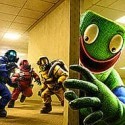



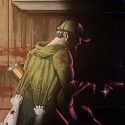


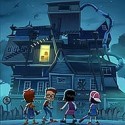




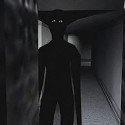
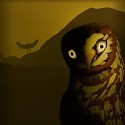

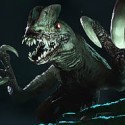
Dalton’s Dinos looks like a dead roadside attraction, but Terrible Lizards plays like something that never stopped watching you the moment you stepped through the gate. The premise is simple on paper: your car dies on a stretch of Route 66 in 1992, there’s no cell service, and the only shelter for miles is an abandoned dinosaur-themed tourist stop with a voice on an old telephone begging for help finding a missing child. What follows has almost nothing to do with tourism.
| Genre | Action, horror parkour |
| Perspective | First-person |
| Setting | Abandoned Route 66 attraction, 1992 |
| Status | Upcoming |
Where a lot of horror games hand you a weapon and call it empowerment, Terrible Lizards takes the opposite approach. There’s nothing to fight back with, which forces the entire game to live or die on its movement systems, and so far that’s exactly where its identity comes from.
Movement and Spatial Control in Terrible Lizards
The core loop is built around first-person parkour — running, climbing, wall-running, bouncing, and sliding through Dalton’s Dinos while something monstrous closes the distance behind you. It’s a horror game where your primary skill isn’t aim or inventory management, it’s reading terrain fast enough to keep moving without slowing down to think.
New players consistently underestimate how much the traversal demands precision under pressure. Wall-running looks simple in a quiet moment, but doing it correctly while a creature is charging changes everything about your timing and your nerve. The game doesn’t punish hesitation with a cheap instant death every time, but it punishes it often enough that players quickly learn to commit to a route the instant they see one.
As you get deeper into the attraction, the terrain itself becomes less forgiving. Early areas favor open sightlines and generous platforming, but later sections of Dalton’s Dinos compress the space, forcing tighter chains of movement with far less room for error. That escalation is where the difficulty curve really shows itself — it’s not that the creatures get faster, it’s that you get fewer clean options for escaping them.
The Creatures Hunting You Through Dalton’s Dinos
The attraction’s monstrous inhabitants don’t behave like typical horror stalkers. They shamble when they haven’t spotted you and charge hard the instant they have, which means the game trains you to read body language and posture rather than just listening for a cue. Players comparing notes after early demos describe the charge state as the moment the whole game “clicks” — it’s when Terrible Lizards stops being an exploration game and becomes a full sprint.
Speedrun-minded players are drawn to routes that bait a charge intentionally, using the creature’s aggression to funnel it into terrain that favors your traversal over its pursuit. Exploration-focused players tend to take the opposite approach, hanging back and waiting for patrol patterns to open up safer paths, which is slower but noticeably reduces how often you’re forced into a full-speed chase sequence.
One detail that only clicks once you’ve actually played it: the ambient sound design changes subtly before a creature notices you, not after. Players who’ve spent time with the demo talk about training their ear to that shift long before the visual cues confirm anything is wrong.
Environmental Storytelling and the Missing Child
Terrible Lizards leans heavily on collectible tapes, notes, and recordings scattered through the attraction to piece together what actually happened to the staff and to the child the voice on the telephone keeps asking about. None of it is delivered through cutscenes — you either find the tape or you don’t, and the story assembles itself out of fragments rather than exposition.
This structure is one of the more divisive choices the developers have made. Some players love piecing together the mystery at their own pace, treating every recording like a genuine discovery. Others find the fragmentary approach frustrating when a chase sequence forces them past a room they hadn’t finished searching, and there’s an honest tension in the design between “let players explore” and “keep the pace relentless.”
- Early tapes establish the day-to-day operation of Dalton’s Dinos before anything went wrong
- Mid-game recordings start documenting the staff’s growing awareness that something was living beneath the attraction
- Late discoveries tie directly back to the missing child and the voice guiding you through the telephone
What Beginners Get Wrong First
The single biggest early mistake is treating the first encounter like it’s the hardest thing the game will throw at you. It isn’t. Terrible Lizards is clearly structured to ease players into its movement systems before ramping up both creature aggression and terrain complexity, so an easy first chase can create dangerously false confidence heading into later stretches of the attraction.
Once the Depot Beneath Dalton’s Dinos Opens Up
By the time you find a way beneath the surface attraction, the tone shifts from “abandoned tourist trap” to something closer to a buried facility, and the game telegraphs that shift through smaller, more claustrophobic traversal puzzles rather than open sprints. It’s a deliberate pacing choice, and it’s where a lot of the game’s atmospheric horror carries more weight than its chase sequences.
Frequently Asked Questions
- Does Terrible Lizards have any weapons or combat? No. The game is built entirely around movement and evasion — outrunning and outmaneuvering the creatures inside Dalton’s Dinos is the only option, with no combat system to fall back on.
- What happens if a creature catches you in Terrible Lizards? Getting caught during a chase typically ends the run, sending you back to retry the sequence, which is why reading a creature’s shift from shambling to charging matters so much before you’re already cornered.
- Is Terrible Lizards a long game? It’s built around a single abandoned attraction rather than a sprawling open world, with pacing that favors tight, escalating chase sequences over lengthy exploration, though the exact runtime depends heavily on how thoroughly you search for tapes and recordings.
Terrible Lizards earns its horror not from what’s chasing you but from how little control you have once it starts — no gun, no last stand, just Dalton’s Dinos closing in around you and a telephone somewhere still asking you to find the child. That helplessness is the whole game, and it’s exactly why the chase sequences hit as hard as they do.
Comments
There are no reviews yet. Be the first one to write one.