















Project Threshold
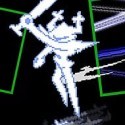

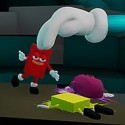








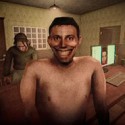

What actually happens when you pick the wrong door for the third time in a row? In Project Threshold, the answer is always the same — you die, and the entire run resets from the very beginning, because this experiment doesn’t believe in checkpoints.
| Genre | Psychological horror, walking simulator |
| Structure | 10 sets of doors |
| Checkpoints | None |
| Achievements | 31 |
Blue Doors, Red Doors, and No Way to Know
Every stage in Project Threshold presents the same core choice: a blue door and a red door, each leading to a completely different trial with no reliable indicator of which one is safer. The participant — that’s you — has no special knowledge going in, and the game is explicit that this uncertainty is the entire point rather than a design oversight.
Memory-Based Progression Across Ten Rooms
Because Project Threshold has no checkpoints, dying or getting caught at any point sends you all the way back to room one, meaning every attempt is really a memorization exercise disguised as horror. Beginners consistently treat early attempts as throwaway runs, when actually paying attention to which door led to which threat on a failed run is the only way later attempts get easier.
The Clown, the Woman in White, and Other Named Threats
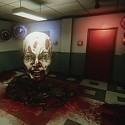
- The Clown patrols certain rooms with movement speed that’s been specifically tuned in updates to keep encounters tense without feeling unfair.
- The Woman in White triggers under specific conditions tied to player position, making her one of the harder threats to predict on a first exposure.
- Rooms featuring the snake, the fish with camera-based detection, and a nursery filled with unsettling baby props each demand a completely different survival approach, so success in one room rarely transfers directly to the next.
Facing the Devil at the Threshold’s End
Later rooms escalate toward encounters with a figure referred to simply as the Devil, whose waiting interval and appearance have both been adjusted through updates to keep the late-game tension from feeling either too predictable or too random. Community discussion around Project Threshold consistently flags this lack of any safety net as the single most divisive design choice — some players find the tension it creates genuinely unmatched, while others feel the total run-reset punishes exploration far too harshly.
Advanced Techniques for a Safe Run
Experienced players build a mental map of exactly which doors avoid the worst encounters across all ten sets, effectively speedrunning a route memorized from repeated failures rather than treating each attempt as a fresh gamble.
How many doors does a full playthrough of Project Threshold require?
The game consists of ten sets of doors, with each choice between blue and red locking out the alternative path for that specific attempt, meaning a full clear requires successfully navigating all ten in sequence without dying.
Why does dying send me all the way back to the start?
Project Threshold is intentionally designed around memory-based progression rather than checkpoint saves, so every death or capture resets the run entirely, forcing players to internalize patterns across repeated attempts.
Are there multiple endings depending on which doors I choose?
Yes — the game features multiple endings tied to the specific combination of doors selected across a full run, giving completionists a reason to plan entirely different routes on subsequent attempts.
Project Threshold succeeds precisely because it refuses to soften its own premise — the Clown, the Woman in White, and the Devil waiting somewhere behind ten sets of doors only become manageable once you’ve died enough times to know exactly which color to pick, and that hard-earned knowledge is the whole reward the experiment offers.
Comments
There are no reviews yet. Be the first one to write one.