















The Art Shop: DAY 2








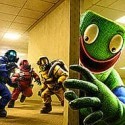
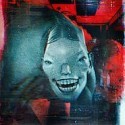


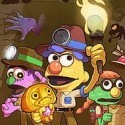



The Art Shop: DAY 2 looks like a quiet retail shift but plays like a psychological horror romance. You are the second person ever hired, you work beside two coworkers named Lialeb and Reficoul, and the warnings attached to this visual novel make clear that the cozy surface does not last.
Register or Cleaning: Your First Choice in The Art Shop: DAY 2
You begin as the new hire after months of job hunting, and the art shop is where you ended up because nobody else called back. The tone of the opening is self-deprecating and a little bleak, and it frames the shop as a place full of people who just barely scrape by. That setup makes the coworkers feel like fellow survivors rather than simple love interests, which is what gives the later turns their weight.
Early in the game you decide how to spend the shift: work the register beside Lialeb, handling customers and selling products, or help Reficoul clean and organize the shop. The two jobs sound equally mundane, yet they split the story in two. Whoever you stand next to becomes the person you get to know, and the person you do not choose stays a voice in the background.
Both coworkers can be touchy, and that is the closest thing the visual novel has to a core mechanic. You can talk with them and learn more about them, but you have to be careful about getting on their nerves. Lialeb’s harsher words in particular are a moment where your dialogue choices carry real consequences.
Story readers will want to see both routes. Each pick leaves something unseen.
Lialeb and Reficoul: Two Coworkers, Two Very Different Routes
Lialeb is the 20-year-old coworker at the register, with a sour attitude and a strong preference for alone time. The visual novel promises that players who get through her harshness will see something more special underneath. Many players name her route as their favorite, and the register shift is where her sharp edges are on full display.
Reficoul is 23 and handles the cleaning, with an awkward but talkative personality that rewards patience. He loves to chat if you give him a chance and do not judge him immediately, and players often mention how easily flustered he gets. Some say his route feels scarier than Lialeb’s, which fits the horror tags attached to the story.
The contrast between them is the point. One coworker keeps you at arm’s length, while the other fills every silence, and both reactions can curdle once the story gets heavier. Romance fans will see the appeal of each, but the yandere tag is a hint that closeness can turn obsessive.
Reading the Content Warnings Before Playing The Art Shop: DAY 2
The visual novel is marked 16+ and lists gore, body horror, self harm, themes of obsession and unhealthy relationships, religious allegories and minor intimate scenes among its warnings. Most of these do not appear until Day 2 and after, so the first day can feel milder than the story that follows. Anyone sensitive to these topics should read the full list on the download page before continuing.
Horror fans can treat the notes as a promise. The Horror, Psychological Horror, Romance and Yandere tags signal dread growing inside a relationship story, not a steady stream of monsters. Players do mention a small jump scare at the end of the first day, which works as a preview of what the second day escalates.
The warning list also explains why the game feels different from an ordinary workplace romance. A shop shift is about as ordinary as settings get, so every strange detail stands out. If one of the listed topics is a hard limit for you, stop there rather than pushing on.
Computer Names, Yellow Voices and the Details Players Remember
One moment players keep talking about is a yellow voice that addresses you by a full name. Players report that the name comes from the computer the game runs on, so a laptop named after a month gets called by that month. For some it is a clever horror trick and a funny one, and it is the kind of detail you only fully understand by playing.
For others it lands badly. Some players were unsettled when the name that appeared was one they no longer use, and the common advice in the comments is to check your device name before you start. That makes it one of the more divisive details in the game, since it breaks the wall between the shop and the person at the keyboard.
There is also a quieter kind of detail: the way a conversation with a coworker shifts after one wrong answer. Players describe re-reading scenes just to see how much a single line changes the mood. That is where the story’s horror grows, in small social slips rather than loud events.
Hand-Drawn Art and the End-of-Day Track
The hand-drawn art is the most praised part of the game, with gritty, expressive linework that suits both the shop scenes and the darker turns. Comments return again and again to the character designs of Lialeb and Reficoul, and several players say the art is what made them follow the project before it was released. No generative AI was used, which matters to many visual novel fans.
Sound plays its part as well. The end-of-day track is a separate piece of music that closes each shift, and it gives the quiet closing moments a weight that plain text would not. Players who listen closely tend to pick up how the mood of the music shifts as the story does.
The look is deliberately a little rough and tacky in places, as the author’s own note admits, and that suits a story about a shop where nothing is polished. Art-first players will find plenty to enjoy even before the plot gets going.
Pacing, Length and the Android Question
Pacing is the most common complaint. The game is still in development, so you finish a day and then wait, and most comments end with a request for more. Players who prefer a complete story in one sitting may want to hold off, while those happy to follow updates will enjoy watching it grow.
The two-route structure helps with replay value. Playing the register shift with Lialeb and the cleaning shift with Reficoul gives you two different versions of the same day, and plenty of players report doing exactly that. Completion-minded players will find that the second playthrough catches details the first one hid.
Players also ask about an Android release. For now the game is available on Windows and macOS only, since special notes and videos appear only on computer, and the author has said a phone release may not be possible without removing them.
The Art Shop: DAY 2 rewards players who care about characters more than mechanics: Lialeb’s sharp edges, Reficoul’s flustered chatter, and the quiet dread that builds behind the shop counter. Choose between the register and the cleaning duties with care, read the warnings first, and expect the story to turn heavier once the second day begins. Few visual novels make a part-time job feel this uneasy.
Comments
There are no reviews yet. Be the first one to write one.