















Slotbound
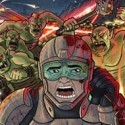
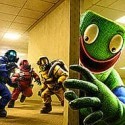
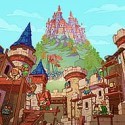

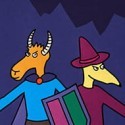









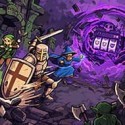
You pull the lever on the 3×3 slot machine, the symbols line up, and a fresh unit drops onto your defense line before the next wave arrives. That single motion is the heartbeat of Slotbound, a roguelite auto-battler where the reels do the job a shop screen does in most strategy games. If you have ever wondered whether gambling and tactics can share one loop without wrecking each other, this is where the question gets tested.
| Genre | Roguelite auto-battler defense |
| Mode | Single-player |
| Core loop | Spin a 3×3 slot machine, summon units, absorb and promote them |
| Campaign | Six stages with multiple difficulty levels |
| Platform | PC |
Pulling the Lever: How Slotbound Turns Spins into Armies
Every run starts with the slot machine, and it never really leaves the center of the screen. Instead of buying units from a menu, you spin a 3×3 grid, match lines, and summon whatever the reels deliver. Early in a run the spins feel generous because almost any unit helps, but the game quickly teaches you that a pile of random summons is not the same as an army. The reels give you raw material, and the real work starts once you decide what to do with it.
Each unit also rolls its own Random Stats from a pool of dozens, so two units of the same class are rarely identical. Layer on the unique Imprints that certain units carry, and a single summon can quietly change what your whole roster wants next. Tower defense fans will recognize the pressure of building around what you are handed, but here the hand arrives through a lever pull rather than a build menu.
That is also where the RNG argument starts. A cold streak of reels can stall a run before a build forms, and players who want full control may bounce off it, while jackpot chasers treat those swings as the whole appeal.
Absorption, Promotion, and Branching Classes
Absorption is the system that turns Slotbound from a slot machine into a strategy game. Weaker units are sacrificed to feed stronger ones, so no summon is truly dead weight, and an ordinary 1-star Warrior can be folded into something far more dangerous. The classic beginner mistake is keeping a wide board of low-tier units because it looks powerful, when the system is built to concentrate strength into fewer, better units. Treat every unwanted spin result as food rather than failure, and the game starts to feel a lot kinder.
Branching class choices sit on top of absorption. When a unit grows, the path you pick can shift what that unit does for the rest of the run, so it pays to decide on a direction before you feed anything. Theorycrafters will find plenty to chew on here, since the same Warrior can end up in very different roles depending on your choices.
A good habit is to check Random Stats before you absorb anything. An awkward roll is a natural meal, while a lucky one deserves protection.
Items, Cores, and Bending the Odds in Slotbound
Items and Cores are what keep the luck from feeling arbitrary. Items give you direct ways to nudge a bad situation, while Cores are the pieces that trigger the larger synergies the game is built around. Together they let you manipulate the odds instead of simply hoping, which is the entire pitch behind Slotbound: luck gets you started, and planning gets you through.
Early in a run, resist the urge to chase a jackpot with every decision. A steady roster that survives the first judgement waves gives your Cores time to come online, and a Prism unit arriving late is worth far more than one arriving into a collapsed defense. Players who enjoy grinding permanent progression will like that experiments carry forward even after a defeat.
Because the game is in Early Access, the pool of Items and Cores is still growing and balance can shift between updates. Treat any strategy you read as a snapshot rather than a rule.
Judgement Waves and Boss Waves Across Six Stages
The campaign runs across six stages, and each stage brings its own enemies, bosses, and mechanics, so a build that cruised through the first stage can look fragile in the next. Multiple difficulty levels let you decide how hard the waves push back, which keeps the campaign approachable for newcomers and still demanding for repeat runners. The structure rewards players who adapt their roster between stages instead of carrying one plan forward blindly.
Judgement waves and boss waves are the checkpoints where a run gets honest. By the time a judgement wave arrives, the units you absorbed and the Cores you chose are doing the talking, and no amount of reel luck can hide a weak plan. Once a boss wave appears, stage-specific mechanics matter as much as raw stats, so check what your army can actually handle before it starts.
Losing here is part of the loop, not the end of it. Permanent progression turns each defeat into a slightly stronger next attempt.
Common Questions Before a First Slotbound Run
How do you get a Prism unit?
Prism units are the legendary payoff for a massive jackpot on the 3×3 grid, so you cannot simply buy one. What you can do is lean on Items and Cores that bend the odds toward big lines, and keep your roster healthy enough to survive until a jackpot lands.
How does unit absorption work?
Weaker units are sacrificed to feed stronger ones, and the receiving unit grows in power and can ascend. A 1-star Warrior is the usual example, since it can be promoted into a stronger class, and your branching class choices decide what it becomes. Check Random Stats first so you feed away the awkward rolls and keep the good ones.
Is the whole thing just luck?
No. The reels decide what shows up, but Imprints, Items, Cores, absorption, and class choices decide what you do with it. Judgement waves and boss waves punish a run that relied on spins alone, which is why planning matters as much as the lever.
Slotbound works because every lever pull feeds a larger plan: a Warrior absorbed here, a Core slotted there, and a judgement wave waiting to see whether it holds. Players who enjoy swinging between a cold streak and a Prism jackpot will find a loop that stays tense across all six stages, and the planned additions of more Cores and Items should keep that loop fresh.
Comments
There are no reviews yet. Be the first one to write one.