















Late Order
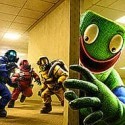















What do you do when a routine fast-food job starts handing you rules the employee handbook never mentioned? Late Order puts you on the night shift of a cursed 24/7 diner where the mascot’s body is occupied by Ol’Jerry, and your only way out is to keep the orders flowing until dawn arrives. It looks like a cooking simulator on the surface, yet every plated burger is also a small test of whether you were paying attention.
| Genre | Horror, cooking simulation |
| Perspective | First-person, 3D |
| Players | Single-player |
| Setting | A 24/7 diner on the night shift |
| Goal | Survive until dawn |
Taking Orders at the Terminal in Late Order
The work starts at the interactive terminal, where guests place their orders and you decide how to turn each ticket into food. Burgers are built according to recipes, but guests also bring their own whims, so a ticket is rarely a copy of the last one. The game rewards players who read the whole order before touching a single ingredient, because rushing a recipe is the quickest way to make the mistake the diner will not forgive. This loop of terminal, kitchen and counter is the backbone that every nightly rule is layered on top of.
Order first, cook second. Hand over last.
That sequence sounds simple until a rule changes what counts as correct. Time management fans will recognise the pressure of juggling several tickets at once, while the first-person view keeps you physically inside the diner rather than watching a menu from above. The retro, stylized 3D look gives the place a slightly off feeling, which makes ordinary kitchen details feel less safe than they should.
Ol’Jerry and the Nightly Rule Changes
Every night brings a new set of rules and a fresh round of unsettling events, which means muscle memory from the previous shift can work against you. Ol’Jerry is the supernatural presence inside the restaurant’s mascot body, and he watches your every step, dictates the rules and waits for a mistake. Nothing about the premise suggests he can be bargained with. Following the rules is not optional flavour, it is the survival mechanic.
The tags on the page, including Choices Matter, Nonlinear and Mystery, hint that the rules are doing more than limiting your actions. They feed a story about why this diner works the way it does, and uncovering that story appears to be part of the pull. That is what lets a cooking loop double as a puzzle about attention.
Treat every new night as a clean slate. Do not assume the last shift’s habits still apply.
Where New Hires Slip Up
Early in the game, the usual error is cooking from memory. Guests ask for variations on burgers, and a player who assembles the default recipe by habit will serve the wrong thing with total confidence. The terminal is the source of truth for each ticket, and the recipe is only the starting point. Once you treat every order as a fresh set of instructions, a lot of avoidable mistakes disappear.
The second slip is treating the rules as background noise. Because they change every night, skimming them is more dangerous here than in a typical simulator. Cooking sim fans may expect the fail state to be a burnt patty, when the real danger is Ol’Jerry’s displeasure.
One careless ticket is enough to turn a smooth shift into a bad one.
Building Your Own Workflow Inside the Diner
The page promises immersive gameplay in which you find your own way to organise the work process, which is a polite way of saying nobody hands you a perfect system. You decide how to sequence tickets and which tasks to batch together. Horror fans who like to plan will enjoy that flexibility, since a calm routine leaves more attention free for the unsettling details around you.
- Read the full ticket on the terminal before touching any ingredient.
- Keep the night’s rules in mind while you cook, not only when you first read them.
- Settle on one repeatable order of tasks, then adjust only when a rule forces you to.
These habits matter more as shifts get stranger, because speed without accuracy is exactly what Ol’Jerry is waiting for.
Advanced play comes down to consistency. The players who last longest are usually the ones whose routine is so settled that they still have attention left over for whatever the night throws at them.
Why Reactions to Late Order Are Mixed
Early player reactions have been mixed, and the design explains why. A game that asks you to cook accurately and stay afraid at the same time will always split people: some love the pressure of the rules, while others feel the two halves pull against each other.
Rule-heavy horror also asks for patience. Reading, remembering and applying new instructions every night is the point, but it can feel like homework for players who want to be scared without taking notes.
The fair verdict is that Late Order suits players who enjoy attention as a mechanic. If you like the idea of surviving through procedure, the diner has plenty to offer, but if you want constant action, expect a slower burn.
Questions From Players Before Their First Shift
- Is Late Order more of a cooking game or a horror game? It is both at the same time. You take orders at the terminal and cook burgers to the recipe while Ol’Jerry watches from the mascot’s body and waits for any mistake. The cooking provides the routine and the horror provides the reason to take it seriously.
- Do the rules stay the same from night to night? No, every night brings new rules and new unsettling events. A routine that worked on one shift may need to change on the next, so rereading the rules before you open the terminal is worth the few seconds.
- What happens when you get an order wrong? The page frames mistakes as the thing Ol’Jerry is waiting for, and the stakes are described as survival rather than a lower score. Reading each ticket carefully, following the night’s rules and keeping your burgers accurate is how you reach dawn.
Late Order is built around a simple tension: a burger can be assembled perfectly and the night can still go wrong if you forgot a rule. Learn to read each ticket at the terminal, respect what Ol’Jerry expects from you, and the road to dawn becomes far more manageable.
Comments
There are no reviews yet. Be the first one to write one.