















Click Clock
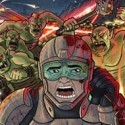
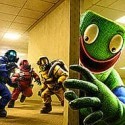



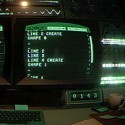




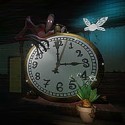
You click the clock in Click Clock and time pours out one tick at a time, as if the room were handing you a debt you have not noticed yet. On the surface this is an incremental game with a calm loop of click, collect, buy and repeat. Underneath, the currency that makes time faster is blood, and that detail changes the mood of everything. Anyone expecting a purely soothing idler should know that the first few minutes already hint at something watching from behind the glass.
| Genre | Incremental, simulation |
| Perspective | First-person, 3D |
| Mode | Single-player |
| Core loop | Click the clock, unlock time makers, spend blood, reincarnate |
| Mood | Atmospheric, surreal, psychological horror |
Producing Time From the Clock in Click Clock
The core action is easy to explain in one breath: you click the clock and time comes out. Early on, every click is the entire economy, and the first time makers you unlock turn manual effort into a steady trickle that keeps running while your hand rests. Anyone who has played an idler will recognise the rhythm, where the opening minutes are about replacing your own finger with machinery. What separates this game from a flat clicker is that the clock sits inside a first-person room instead of a menu, so each upgrade feels like a change to the space around you.
Beginners usually keep hammering the clock long after their time makers should have taken over.
A better early rhythm is to click only until the next time maker is affordable, buy it, and then look around before clicking again. Incremental veterans will want to jump straight into optimising purchase order, and that instinct is sound, but the room also hides clues, so a quick look after every purchase is worth the few seconds. Tracking three things from the start, time, blood and skulls, keeps the whole loop readable.
Blood Sources and the Time Makers They Boost
Blood is the second layer of the loop. The store text says blood is what it takes to make time even faster, and the feature list spells out the chain: acquire blood sources, then use blood to boost your time makers. In plain terms, time makers produce time and blood multiplies how well they do it. Treat blood sources as an investment instead of a side resource, because ignoring them leaves your time makers running well below their potential.
Steam players have tagged Click Clock with Capitalism and Farming Sim, which fits the feeling of tending a machine that always wants feeding.
The tone is genuinely divisive. Horror fans enjoy the way an innocent clicking loop is paid for with something grim, while pure idler fans sometimes find the dark theme out of place next to relaxing number climbing. Both reactions are fair, and the demo is the sensible way to find out which camp you fall into before committing to a long grind.
Skulls, Ascending and Reincarnating Stronger
Once enough time has piled up, skulls enter the picture. According to the store page you acquire skulls as you accumulate time, and they unlock permanent skull talents. You ascend to ignite those talents and then reincarnate to restart stronger than before, a structure idler fans would simply call a prestige loop.
By the time you reincarnate for the first time, the lesson is that a reset works as a promotion and not a punishment. The run restarts, but the skull talents stay with you.
Resets are the part of the genre that splits players most. Some love watching the second run blow past the first, while others feel the opening minutes turn into a chore once they have seen them a few times. Completionists get extra motivation here, since Multiple Endings appears among the tags and replaying runs is how you would chase them.
Searching the Room for Clues in Click Clock
Beyond the numbers, the game wants you to move. The feature list promises that you explore your space, and your time, to find clues and uncover the mysteries of this world as you progress. That is an unusual ask for an idler, because most of the genre lets you leave the screen alone for an hour. Here the room is part of the progression, and the first-person view turns every corner into a possible lead.
The store page teases a presence in the room that is not quite a person, and it is wise to treat that as a reason to keep looking.
Players who like atmospheric puzzles will probably enjoy the slow reveal, whereas anyone who wants pure optimisation may see exploration as an interruption. The mix is the whole point, and the quality of the clues will decide whether the balance works for you.
Common Questions About Time, Blood and Skulls
How do you make time faster in Click Clock?
Unlock more time makers and then boost them with blood from your blood sources. Clicking the clock matters at the very start, but the bigger gains come from the makers and the blood multiplier working together.
What are skulls used for?
Skulls are acquired as you accumulate time, and they feed the permanent skull talents. You ignite those talents when you ascend, which makes them the main reason a long run pays off.
Does reincarnating wipe your progress?
Reincarnating restarts the run, but the permanent skull talents remain, so each new loop begins from a stronger place. Treat your first reincarnation as a milestone rather than a loss.
Click Clock rewards players who treat the clock as the start of the puzzle and not the whole of it. Time makers, blood sources and skull talents form a loop that is easy to read and hard to put down, while the clues scattered through the room keep reminding you that something else is paying attention. Whether you stay for the prestige grind of reincarnation or for the mystery, the demo is a low-risk way to see which one pulls harder.
Comments
There are no reviews yet. Be the first one to write one.