















Among Us
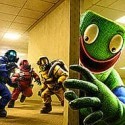














In Among Us you start every round the same way: a colored crewmate dropped into a shared map with a randomized task list, no idea who among your fellow players is secretly working against the group, and a countdown to your first real decision — trust everyone, or start watching for cracks.
| Genre | Social Deduction |
| Platform | Mobile / Desktop |
| Controls | Tap or click to move and interact |
| Core Mechanic | Completing tasks as a Crewmate or sabotaging and eliminating players as an Impostor |
Crewmates, Impostors, and What Each Side Actually Wants
Every round of Among Us splits players into Crewmates, who win by finishing their assigned tasks or identifying every Impostor, and Impostors, who win by eliminating enough Crewmates or sabotaging the map into an unrecoverable state. The asymmetry is the entire point — Crewmates are working with incomplete information the whole game, while Impostors know exactly who the threat is because they are it.
Beginners playing Crewmate tend to wander the map completing tasks without paying attention to who else was nearby when a body gets reported, which throws away one of the only real pieces of evidence available. Beginners playing Impostor make the opposite mistake, killing too aggressively early and getting caught near a body with no alibi.
Players who enjoy the deduction side tend to focus on tracking movement and cross-referencing alibis during meetings, while players drawn to the tension of Impostor rounds usually prioritize timing kills around sabotages like lights or oxygen to create confusion.
Sabotages and Why They Matter More Than Kills
Impostors in Among Us aren’t limited to eliminating players directly — sabotages like lights, reactor, oxygen, and communications each create pressure in a different way. Lights darken vision across most of the map, oxygen and reactor sabotages force Crewmates to split up and race a timer at two separate stations, and a well-timed sabotage can isolate a target far more safely than chasing them down in the open.
Communications sabotage is quieter but often more dangerous long-term, since it disables the task tracker and admin map, stripping Crewmates of the tools they’d normally use to notice something’s wrong.
What Beginners Consistently Get Wrong
- Reporting a body without noting who was nearby or which direction they came from
- Venting immediately after a kill in a room with witnesses nearby
- Ignoring the admin map and cams tasks that reveal player activity across the map
Reading the Room During Meetings
Emergency meetings are where Among Us actually gets decided, and they’re limited per game, which means calling one on weak evidence can cost the group its only real chance to catch an Impostor later. Experienced players track task completion patterns closely, since a player claiming to have finished a long visual task like the wiring puzzle should be able to describe what they saw others doing nearby.
Self-reporting — an Impostor finding their own kill and reporting it before anyone else does — is one of the more debated strategies in the community. Some players see it as a legitimate way to control the narrative of a meeting, while others consider it a cheap tactic that exploits how little real information Crewmates have to work with.
Maps and How They Change the Pace
The Skeld plays tighter and faster than newer maps like Polus or The Airship, both of which spread tasks across more rooms and give Impostors more room to maneuver between kills. The Fungle leans into vertical movement and hazards that neither original map has, which changes how sabotages and chases play out entirely.
Frequently Asked Questions
- How many Impostors are in a typical Among Us match? Lobby settings determine the number, but one or two Impostors per match is standard, with larger lobbies sometimes running three to keep the odds balanced against a bigger Crewmate pool.
- What happens when a player gets ejected in Among Us? The ejected player is removed from the round and the game reveals whether they were a Crewmate or an Impostor, which either confirms a correct read or forces the remaining Crewmates to rethink their suspicions entirely.
- How do sabotages work if no one fixes them in time? Sabotages like oxygen and reactor end the round in the Impostors’ favor if the timer runs out before Crewmates reach both required stations, which is exactly why Impostors use them to force players away from a target.
Among Us stays interesting because no two meetings play out the same way — a single unnoticed vent near the reactor can unravel an Impostor’s entire round, and that kind of small, game-specific detail is what keeps regulars replaying the same handful of maps long after they’ve memorized every task.
Comments
There are no reviews yet. Be the first one to write one.