















Hold Your King










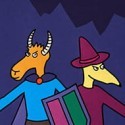

You lift the stretcher, take two quick steps toward the first ledge, and the King slides sideways before your partner reaches the edge. Someone shouts, someone else overcorrects, and royalty ends up face down on the floor. That is a normal first minute in Hold Your King, and it shows how seriously this physics-based co-op platformer takes momentum.
| Genre | Physics-based co-op platformer |
| Players | Two carriers, local or remote co-op |
| Setting | Stylized medieval courses with traps and moving platforms |
| Goal | Carry the King to the throne room |
| Core tools | Stretcher, bonk, pick up and drag |
Balance Physics on the Stretcher in Hold Your King
Every course comes down to one job: get the King to the throne room while he lies on a stretcher that you and a partner carry at opposite ends. Your speed, your acceleration, and the angular momentum you build while turning all decide how steady he stays. Lifting one end, lowering the other, and rotating the stretcher left or right are your only real tools, so every small input changes the outcome for both of you. That is why the game feels less like a platformer and more like a shared balancing act.
Smooth movement beats fast movement almost every time. Even a short sprint can undo a whole careful approach.
Beginners tend to treat the stretcher like a shopping cart and run. Early in the game that survives flat ground, but the first ledge punishes it, because stopping suddenly sends the King sliding in the direction you were moving. Players who love rushing courses have to unlearn that habit first, and the pairs that succeed usually announce every turn and stop out loud before it happens.
Bonking, Anger, and Dragging the King Back
Bonking is the move everyone talks about. A well-timed bonk steadies the King when he starts to tilt, but he is short-tempered, and an angry King makes your next few seconds much worse. Most pairs learn to save the bonk for moments when the alternative is a fall, treating it as a repair tool rather than a habit.
When he tumbles off anyway, you pick him up and drag him back onto the stretcher. One partner should hold the stretcher still while the other handles the King, because moving both ends at once makes the recovery far harder.
The honest downside is that physics chaos divides players. Some find a single slip at a ledge hilarious, while others feel a run is lost to a bounce nobody could have predicted. Anyone who enjoys precise platforming may bristle at that looseness, and the comedy only lands once you accept that the King, not your skill, is sometimes the problem.
Traps and Moving Platforms in Hold Your King
Difficulty climbs through obstacles rather than new buttons. Once you reach the castle sections, moving platforms and deadly traps demand timing from both carriers at once, and a mistimed step from either side can drag the stretcher into danger. The courses never ask you to learn new moves, only to repeat the same few moves while the ground refuses to hold still.
The stretcher also works as a tool. Dynamic obstacles can be cleared by using it deliberately, so the same object that carries the King doubles as your way through the course.
A few habits help most pairs:
- Slow down before every ledge, not at it.
- Decide who leads each turn so the stretcher is not pulled two ways.
- Call out moving platforms before stepping onto them.
Streamers and party groups get the most out of these stretches, since every failure is loud, visible, and easy for viewers to follow. Watching a calm pair clear a trap sequence is also a good way to see how much patience the physics rewards.
Questions Players Ask About Hold Your King
Can you play Hold Your King without a partner?
The core design puts two people at opposite ends of the stretcher, so the game is built around a partner, either on the same couch or over a remote co-op connection. Every mechanic from tilting to bonking assumes someone else is holding the other end. Line up a friend first and treat coordination as the real puzzle.
How do you stop the King from sliding off the stretcher?
Keep your speed steady, slow down before turns, and tilt the stretcher gently with the lift and rotate controls instead of snapping it. Calling out each stop matters as much as the controls, because angular momentum from a sharp turn is what usually launches him.
What happens when you bonk the King?
A bonk steadies his balance, but he can get angry, so it works best as a last-second rescue. If he falls anyway, drag him back onto the stretcher before you move on.
Hold Your King rewards the pairs who learn to move as one, because the throne room only gets closer for carriers who can steady a tilting stretcher without panicking. Once you know how much a single bonk can cost, every ledge becomes a negotiation with your partner, and every safe landing feels earned.
Comments
There are no reviews yet. Be the first one to write one.