















Turboprop Flight Simulator





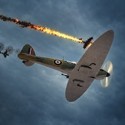





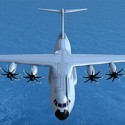
The C-400 in Turboprop Flight Simulator does more than carry cargo: its ramp opens for airdrops of supplies and vehicles, and that one feature changes what a flight is even for. Inspired by a real-world tactical airlifter, the C-400 is one of fourteen aircraft in a mobile pilot sandbox that mixes airliners, rescue planes, VTOLs, and seaplanes. Instead of a single career path, you get missions, several islands, and a lot of planes to try.
| Genre | Flight and vehicle simulation |
| Platform | Android |
| Mode | Single-player, playable offline |
| Aircraft | 14, plus ground vehicles |
Training Missions and Your First Takeoff in Turboprop Flight Simulator
Early in the game, the training missions teach the basics: flying, taxiing, takeoff, and landing. Beginners often skip them and then wonder why the plane drifts off the centerline, and even enthusiastic players admit the controls felt confusing until they learned the layout. A few minutes spent here saves a lot of frustration later.
Steering choices matter from the first minute. Controls can mix a tilt sensor with a stick or yoke, so you can pick whichever feels natural on a phone. Aviators who like to practice procedures will appreciate that the cockpit cameras include both captain and copilot positions.
Taxiing is where most beginners lose time. The plane is heavy and slow to turn, so smooth rudder input beats sharp corrections.
Fourteen Aircraft: C-400, RL-72, XV-40, and the Seaplanes
The roster is organized into families. The C-400 tactical airlifter has a coastguard search and rescue variant called the HC-400 and a special operations variant called the MC-400, and the C-130 family follows the same pattern with the HC-130 and MC-130. The regional airliners are the RL-42 and RL-72, inspired by well-known real turboprops, and the E-42 early warning aircraft is derived from the RL-42.
The unusual machines come next. The XV-40 is a concept tilt-wing VTOL cargo plane, and it spawns the PV-40 private luxury VTOL and the MV-40 special operations VTOL. On the water side, the PS-26 is a concept private seaplane, with the MS-26 as its special operations variant.
Plane enthusiasts get the most from this lineup because each family teaches a different habit. Airliner fans can practice smooth approaches in the RL-72, while the VTOL models reward players who like to experiment with how a machine takes off and lands.
Cargo Ramps, Airdrops, and Ground Vehicles
Cargo planes can load, unload, and airdrop supplies and vehicles, which turns a delivery mission into a small logistics puzzle. You are not limited to the cockpit either. In most levels and in the unrestricted flight mode, you can walk through the plane interior in first person and interact with doors, the cargo ramp, strobes, and main lights.
The game also lets you drive ground vehicles, so a mission can start on foot or on wheels before you ever reach a runway. Once the ramp opens, the plane stops feeling like a vehicle and starts feeling like a workplace.
An advanced habit that many players miss is checking the interior before a cargo flight. Walking back to the ramp and confirming the load saves you a rushed fix mid-mission, and players who enjoy logistics will find this the most satisfying part of the whole game.
Controls: Rudder, Flaps, Spoilers, and Thrust Reversers
The control set is more complete than most mobile flight games, and it is the reason the game feels like a simulator rather than an arcade toy. Learning what each control does is the difference between a bouncy landing and a clean one.
- Rudder keeps the nose straight on the runway and handles crosswind corrections.
- Flaps add lift for slower, steadier approaches.
- Spoilers dump lift and help you lose altitude or speed when you are too high.
- Thrust reversers and auto-brakes shorten the landing roll.
- Landing gear must be down before touchdown, and forgetting it ends the landing quickly.
The most common beginner mistake is forgetting flaps or gear during a busy approach. You can also change how speed, altitude, and distance are displayed, choosing between metric, aviation standard, and imperial units.
Improvised Runways, JATO/L, and the Islands
The game does not stop at paved airports. Cargo planes can take off and land on improvised runways, and JATO/L, short for Jet Assisted Take-Off and Landing, helps with the shortest strips. Several islands with many airports give you room to try both ordinary and unusual approaches.
A sensible order for a first session looks like this:
- Finish the training missions so taxiing and landing feel automatic.
- Fly an airliner between two airports using the on-screen route.
- Try a cargo mission and practice an airdrop with the ramp open.
- Attempt an improvised runway with JATO/L once your approaches are steady.
You can also build your own routes on the map and fly at different times of day, which changes how readable the runway is during the final approach.
Damage, Engine Sound, and Cockpit Detail
Crashes are not binary. The game models partial and total destruction, including clipped wing tips, full wing separation, tail separation, and main fuselage breakage, so a bad landing can leave you with a damaged plane rather than a simple reset.
The cockpits are detailed on every aircraft, and engine sound is close to real recordings of turbines and propellers. Pilots who care about atmosphere will notice this early, because spooling up a propeller feels different from the whistle of a jet.
Physics lean toward realism without becoming punishing. That balance is why casual players stay while aviation fans keep coming back to compare how each plane feels on the same strip.
Where Turboprop Flight Simulator Divides Players
Ads are the most debated element. The store listing carries an ads label, but the ads are optional and rewarded, appearing between flights as a way to earn tokens. Many players call that fair, while others would rather skip them entirely.
Players also ask for more. Common requests include additional maps, more civilian planes, airline liveries, system failures, and extra missions. With a rating of 4.6 across more than 327,000 reviews and over ten million downloads, the audience is large, but the wish list shows where the sandbox still feels thin.
Newcomers should expect some learning time and a limited number of islands, but the combination of cargo work, rescue planes, and VTOL oddities keeps the formula interesting.
Turboprop Flight Simulator gives mobile pilots a surprisingly deep hangar, from the airdrop-ready C-400 to the strange XV-40 and the seaplane MS-26. Mastering flaps, spoilers, and JATO/L on a tiny improvised runway is the kind of small victory that keeps players coming back for one more flight.
Comments
There are no reviews yet. Be the first one to write one.